
Blog
The exploited female workers behind the glitter of Indonesia’s Islamic fashion – Academia – The Jakarta Post

The Jakarta Post
Please Update your browser
Your browser is out of date, and may not be compatible with our website. A list of the most popular web browsers can be found below.
Just click on the icons to get to the download page

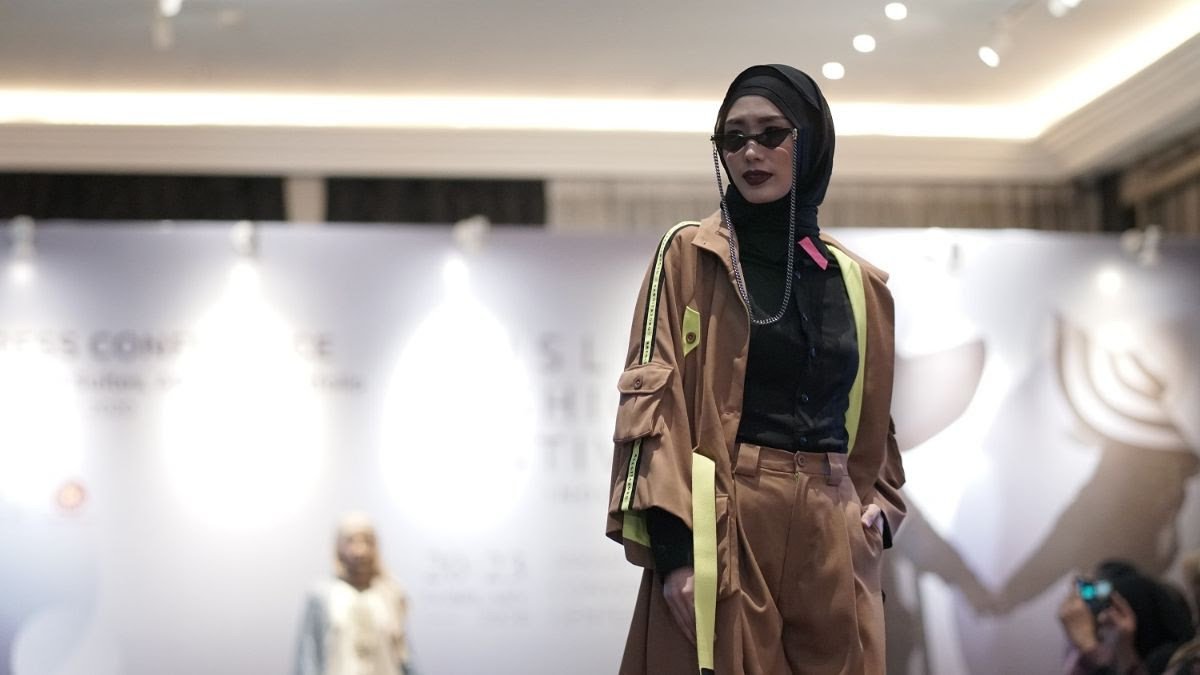
With the world’s largest Muslim population, Indonesia is a huge market for Islamic fashion, valued at around US$12.69 billion. Many female designers and businesswomen have been touted as the locomotive behind the growth of the local Islamic fashion industry
But while women designers are celebrated for their accomplishments, the plight of underpaid female workers in home-based garment workshops, or konveksi labourers, often goes unnoticed.
My research shows that behind Indonesia’s glittering Islamic fashion business women labourers are being exploited. Worse still, designers and business owners are indifferent to the workers’ condition
Women are driving Indonesia’s Islamic fashion business
Indonesia has long aspired to become the Mecca of Islamic fashion. Then-President Yudhoyono’s desire to develop the country’s creative economy played a central role in kick-starting the industry. Along with the Indonesia Islamic Fashion Consortium (IIFC) and the Fashion Designer Entrepreneurship Indonesia (APMII), the country regularly holds events to promote Muslim fashion, such as the Indonesian Islamic Fashion Fair.
Young women entrepreneurs are often linked with the success of the industry. Notable designers like Dian Pelangi and Ria Miranda rose to fame in the 2010s. They represented Indonesia abroad by holding shows in the US, Europe and Middle East
From a simplistic gender perspective, the recognition of young female Muslims’ talents in the Islamic fashion industry indicates that Indonesia’s creative economy is improving. To date, women make up 20% of creative economy entrepreneurs
These young designers display prosperous and cosmopolitan lifestyles wrapped in Islamic values. From a nationalistic perspective, these successful women entrepreneurs have made the nation proud
Designers indifferent to workers’ plight
But, if we scrutinise further, we find half of Indonesia’s creative economy workers are not business owners or leaders: they are labourers
We need to ask: why does the public attention on the Islamic fashion industry focus on the designers’ accomplishments and not on their workers’ quality of life?
Most informal konveksi workers are women who live in rural areas. They make around Rp 500,000 (US$35) a month as seamstresses. This figure is far below the country’s average wage for casual workers of around Rp 1.4 million a month
In short, there is blatant inequality between the prosperity and popularity garnered by the young female Muslim fashion designers and the economic condition of seamstresses and konveksi workers
My study finds young middle-class women working in the Islamic fashion industry in Indonesia support the concept of “ethical entrepreneurship”. The designers conflate ethical entrepreneurship with promoting symbolic Islamic lifestyle through business. Ethical entrepreneurship justifies their success while sidelining the condition of labourers
The stories of three Islamic fashion entrepreneurs (all designers’ names and trademarks have been changed to protect their identities) below offer an illustration
At a Quran recitation organised by the Hijabers Community in Bandung, West Java, Queen Hijab owner Rani told the audience how she found success not long after inadvertently setting up an online hijab business. About 100 young females attending the event listened to her attentively
At first, Rani followed the latest hijab trends by sewing some for herself. Rani’s creations attracted her friends’ attention
Now, years after she established her own company, she is confident that her success is a blessing from God due to her piety. She said she was committed to contributing to Muslim society
When one of the participants asked about her management of the workers, Rani admitted she was still learning to delegate work and train her employees
“I learned to delegate, to educate, and also to allow my employees to make mistakes once or twice. But not more than two times,” she said, “If my employee makes mistakes more than two times, that means that they are not compatible, and I would let them go.”
Dewi, the owner of Batik Merdu in Yogyakarta, explained her commitment to her workers’ welfare. She built a studio with a spacious living room to pray together or hold gatherings. Her business has grown rapidly
Dewi admitted that sometimes her studio was so swamped with requests that she had to resort to using konveksi services. However, she insisted she paid the konveksi labourers fairly
“Other companies would pay the workers under 10,000 rupiahs. I pay the workers 15-20,000 rupiahs per item, and I only sell the product for 100,000,” she said
As successful business owners, Rani and Dewi position themselves as young entrepreneurs practising ethical entrepreneurship, although their emphasis is more on personalised pious performance. Serious consideration about employment practices, such as firing workers for making more than two mistakes or paying konveksi workers only Rp 20,000, is absent. Their individual commitment to religion is more important in their narratives of success.
This focus on pious performance has inspired other young women
Astri, an undergraduate student from the province of Jambi on the eastern coast of Sumatra, dreams of becoming a prosperous fashion business owner
Because she never studied fashion or design, Astri relies on clothing distributors’ catalogues from the country’s capital, Jakarta, in Java. She then orders dresses that are trending and ships them to Jambi
This business model is proven effective. Astri generates significant profit during the fasting month of Ramadan because consumers in her town are eager to buy new dresses to celebrate the Idul Fitri festivity
When asked about who produces the clothes she sells, Astri admitted she did not know and had no intention of finding out
She justifies her way of thinking because many young Muslim designers use the same tactic and do not bother about the condition of textile or sewing labourers. What is essential for Astri is her future; one day, she will get married and become a pious stay-at-home wife who runs her own thriving online fashion business
For the three women above, their business success in promoting Islamic fashion is a form of piety. They downplayed the disparity between their economic and social circumstances and those of the workers
The public pay less attention to the continuous exploitation of textile and konveksi workers than to the international careers of young Islamic fashion designers
Pay more attention to workers’ welfare
Creating job opportunities and improving workers’ welfare, especially women workers, are part of the Sustainable Development Goals (SDGs) that countries committed to achieving by 2030
If the government is serious about making Indonesia the world’s capital of Islamic fashion, they should pay more attention to the welfare of konveksi workers, the backbone of the industry. The government should protect workers and ensure they have a safety net
Meanwhile, if pious performance is the core of Islamic fashion businesses, designers need to heed konveksi labourers’ condition. These labourers directly contribute to producing the commercialised goods and images created by the designers
Fairness is a central issue in the Islamic framework of labour. Islam treats workers as equal partners; thus, their welfare needs to be the designers’ priority
—
Annisa R. Beta, Lecturer in Cultural Studies, School of Culture and Communication, Faculty of Arts, The University of Melbourne
This article is republished from The Conversation under a Creative Commons license. Read the original article