Blog
Frontiers | From necessity to identity: entrepreneurial perspectives on key drivers of second-hand clothing consumption in the Philippines’ ukay-ukay sector

From necessity to identity: entrepreneurial perspectives on key drivers of second-hand clothing consumption in the Philippines’ ukay-ukay sector
-
School of Fashion and Textiles, Royal Melbourne Institute of Technology (RMIT) University, Melbourne, VIC, Australia
Article metrics
View details
Abstract
Introduction:
The global crisis of textile waste stemming from the fast fashion industry has necessitated a rapid transition toward circular economies. In the Philippines, the ukay-ukay market represents a culturally embedded, grassroots model of circularity that has historically been viewed primarily through a lens of economic necessity. However, the contemporary motivations driving this sector remain largely misunderstood. This study addresses this gap by investigating the drivers behind Filipino consumers’ engagement with second-hand apparel from the “market-facing” perspective of business owners. By treating sellers as expert observers of consumer psychographics, the research seeks to move beyond traditional assumptions and explore how this informal market facilitates a shift from survival-based consumption to sophisticated identity construction.
Methods:
This study utilized a qualitative approach grounded in reflexive thematic analysis. Primary data were collected through in-depth interviews with 17 ukay-ukay entrepreneurs, a sample size determined by reaching thematic saturation. The participant pool was intentionally diverse, featuring legacy entrepreneurs who provided longitudinal depth and newer entrants who validated current, trend-driven shifts such as digital commerce. To interpret the findings, the study introduced a dual-theory lens that integrates the Theory of Planned Behavior (TPB) and the Diffusion of Innovation (DOI). This framework allowed for a simultaneous analysis of micro-level intentions, such as attitudes and subjective norms and macro-level adoption dynamics, including relative advantage and complexity.
Results:
The analysis revealed seven interconnected motivational themes that define the ukay-ukay landscape: redefined affordability, social influences, the pursuit of uniqueness, perceptions of quality, growing environmental awareness, the thrill of discovery, and the importance of trust. These findings indicate a significant evolution in the market, where consumers increasingly use second-hand items for identity construction rather than mere cost-saving. A critical finding was the role of “Trust” as a proxy for Perceived Behavioral Control (PBC), which is essential in an informal market where relational reliability serves as the primary mechanism for facilitating consumer control over transactions.
Discussion:
The integrated TPB–DOI model clarifies how modern market innovations, such as professional curation and live selling on social media, have reduced the perceived complexity of second-hand shopping while increasing behavioral control. By showing how affordability and uniqueness simultaneously shape both consumer attitudes and the perceived relative advantage of the goods, the study demonstrates the tension between economic necessity and identity-driven adoption. This contextual adaptation of established behavioral theories highlights how informal, culturally embedded markets challenge conventional assumptions of innovation diffusion. Ultimately, the research provides a context-specific framework that advances the understanding of sustainable fashion in emerging economies, offering actionable insights for both entrepreneurship and policy-making.
1 Introduction
The fashion industry is a significant contributor to global environmental challenges, including carbon emissions, excessive water consumption, and textile waste (Centobelli et al., 2022). Textile waste, composed of discarded clothing and other materials, typically ends up in landfill (Tang, 2023). Globally, around 92 million tons of textile waste are produced annually, yet only 15% is recycled, repaired, or reused (Ruiz, 2024). Compounding this issue is the release of polluting microplastics from synthetic materials, which further highlights the urgent need for more sustainable consumption patterns (European Environment Agency, 2022).
In response to these concerns, the second-hand clothing (SHC) market has grown from a niche sector into a fast, developing segment of the fashion supply chain, driven by increasing awareness of environmental responsibility and economic accessibility (Schumacher and Forster, 2022). Emphasizing the extension of product life through reuse, repair, and recycling (Chen et al., 2021), this movement is central to the broader transition toward circular economies. Growing three times faster than the global apparel market, the SHC sector is projected to surpass USD 350 billion by 2028, up from USD 197 billion in 2023 (ThredUp, 2025), reflecting a significant shift in consumer preferences.
Within this global context, Southeast Asia, and particularly the Philippines, offers a compelling case study. The local SHC market, known as ukay-ukay, derives its name from the Filipino word hukay or halukay, meaning “to dig” or “sift through.” What began as a pragmatic solution has evolved into a culturally embedded and commercially significant phenomenon (Isla, 2013). SHC, also referred to as pre-loved, pre-owned, or thrifted apparel, is defined as garments that have been previously owned, cared for, or used (Tymoshchuk et al., 2024).
Historically, ukay-ukay originated from public donations sent to the Philippines by organizations such as The Salvation Army and the United Nations Relief and Rehabilitation Administration (UNRRA) to support World War II victims and disaster, stricken communities (Sing and Esquivias, 2019). The practice gained commercial traction in the 1980s in Baguio City, where donated garments were sold tax-free to raise funds (Locsin, 2007). These garments are typically distributed through charitable networks, sorted in reclaiming facilities, and eventually sold in local markets (Lampel, 2020). Over time, ukay-ukay has expanded from rural street stalls to metropolitan business districts, driven by a complex interplay of cultural, economic, and environmental factors (Locsin, 2007; Fernandez, 2021).
Despite its widespread popularity, ukay-ukay operates within a legal grey area. Republic Act No. 4653, enacted in 1966, prohibits the commercial importation of worn clothing (Philippines, 1966; Abueg, 2005). This regulatory ambiguity has fostered an informal market system that affects taxation and oversight, often resulting in lower prices (Tomoling and Abueg, 2024)
Existing literature identifies several global motivations for second-hand consumption, including environmental concerns (Persson and Hinton, 2023; Yang et al., 2024; Prisco et al., 2025), personal values (Gupta et al., 2023; Halicki et al., 2024), social context (Ek Styvén and Mariani, 2020; Gilal et al., 2024; Koay et al., 2024), and financial considerations (Ciechelska et al., 2024; Frahm et al., 2024; Wang et al., 2024; Mobarak et al., 2025). However, there remains a clear gap in contemporary research focused on the distinct Filipino experience (Biana, 2020; Bengzon et al., 2022). Much of the existing research on ukay-ukay is over a decade old and may not fully capture the dynamic shifts in consumer attitudes, the country’s rapid economic growth, or the influence of digital platforms (Isla, 2013). Indeed, the rapid rise of social commerce and e-commerce has fundamentally reshaped the ukay-ukay landscape, representing a key technological innovation that warrants deeper investigation.
Although broader consumer behavior theories, such as the Diffusion of Innovation (DOI) Theory (Kristensson et al., 2020) and the Theory of Planned Behavior (TPB) (Ajzen, 1991; Koay et al., 2024; Wicaksono et al., 2024), offer useful models for examining purchasing intentions, their direct application to the specific characteristics of Filipino ukay-ukay culture requires further empirical validation. TPB, for example, has successfully identified environmentally conscious purchasing patterns in the Philippines (Ilagan et al., 2024), suggesting its relevance in analyzing second-hand consumption as a sustainable practice. Meanwhile, although some studies emphasize sentimental value and the narratives behind pre, loved items in other contexts (Salem and Shawtari, 2023; Yang et al., 2024), research in the Philippines tends to highlight esthetic appeal and rarity as key motivators (Villarente, 2024; Benavidez, 2025). Furthermore, the environmental impact of ukay-ukay, including its importation footprint and disposal practices, requires careful long-term evaluation (Biana, 2020).
This study aims to address these gaps by identifying the underlying motivations that drive Filipino consumers to purchase second-hand apparel. Beyond observing consumption behaviors, it explores the cognitive, cultural, economic, and environmental motivations behind purchasing decisions. By employing a qualitative method focused on interviews with ukay-ukay business owners, the research captures unique perspectives from those directly engaged in the market (Healey and Rawlinson, 1993). The findings represent “market-facing” insights, where sellers act as expert observers of consumer behavior and psychographics. This approach was chosen because business owners possess a dual perspective: they not only observe consumer trends daily but also actively shape the market through their curation, pricing, and marketing strategies. This strategy acknowledges that in informal, semi-legal economies such as the ukay-ukay sector, entrepreneurs function as “market gatekeepers” whose business decisions are direct responses to observed shifts in consumer psychology. The findings reveal a hierarchy of motivation, with economic necessity often serving as a foundational driver, increasingly shaped by social, cultural, psychological, and environmental factors. These insights contribute to a deeper understanding of second-hand consumption in emerging economies and inform sustainable practices across the broader apparel sector.
Despite the vibrancy of this sector, existing literature remains fragmented, often relying on outdated data that predates the digital shift in retail or applying Western-centric models without local validation. While some studies emphasize sentimental value in other contexts, research in the Philippines has yet to fully capture the dynamic interplay between the country’s rapid economic growth, the influence of digital platforms, and evolving consumer attitudes.
While TPB assumes stable normative structures and DOI presumes formal innovation channels, the Philippine ukay-ukay market complicates these assumptions through informality, semi-legality, and cultural resourcefulness. Perceived behavioral control (PBC) is influenced less by infrastructure and more by trust networks, while DOI’s complexity construct is mitigated by live-selling practices that merge entertainment and commerce. These dynamics underscore the need to adapt existing theories to account for informal, culturally embedded markets where innovation and behavior are shaped by social trust and improvisation rather than institutional norms.
To address these gaps, this study investigates the cognitive, cultural, and economic motivations driving the ukay-ukay market. Specifically, this study aims to answer the following research questions:
RQ1: What are the key motivations that drive Filipino consumers to engage with second-hand clothing (ukay-ukay), as interpreted through the observation and market intelligence of business owners?
RQ2: How do these entrepreneurial interpretations of consumer motivations relate to psychological, cultural, economic, and environmental factors within the TPB and DOI frameworks?
2 Theoretical framework
This section explores in greater depth how established models of consumer behavior can illuminate the motivations behind SHC consumption in the Philippine ukay-ukay context. These frameworks enable a more nuanced understanding of the psychological, social, and cultural factors that shape purchasing decisions, particularly as ukay-ukay evolves from a necessity, driven practice to a dynamic and identity, based form of sustainable consumption (Toebast-Wensink et al., 2025).
2.1 Theory of planned behavior
The TPB, developed by Ajzen (1991), has been widely applied to predict consumer intentions and behaviors. TPB suggests that an individual’s intention to engage in a particular activity is shaped by three key components: their attitude toward the behavior, the perceived social norms surrounding it, and their sense of control over performing it. In the context of SHC, a consumer’s attitude reflects their evaluation of second-hand purchasing, whether they view it positively in terms of affordability, uniqueness, and sustainability (Borusiak et al., 2020; Koay et al., 2024). Subjective norms refer to the perceived expectations of others, such as family, friends, or society, which can either encourage or discourage second-hand buying (Ajzen, 1991; Borusiak et al., 2020). As thrifting becomes more socially accepted and even fashionable, the stigma traditionally associated with used clothing is gradually diminishing (Villarente, 2024). PBC meanwhile relates to the consumer’s assessment of how easy or difficult it is to access and purchase second-hand items, whether through physical ukay-ukay stores or online platforms.
Numerous studies have confirmed the robustness of TPB across different consumer behaviors, with later modifications incorporating moral standards and personal values to improve predictive accuracy (Ajzen, 2011; Mohi Ud Din and Zhang, 2023). In the Philippine context, TPB has demonstrated strong relevance in identifying environmentally conscious purchasing patterns, particularly in relation to sustainable consumption practices (Ilagan et al., 2024). In the ukay-ukay context, PBC is not determined by formal retail infrastructure but by trust-based relationships and seller transparency. Specifically, we argue that trust serves as a proxy for behavioral control; in an informal market characterized by “digging” and lack of formal warranties, a consumer’s sense of control over a successful transaction is entirely dependent on the perceived reliability and curation of the seller. By reducing the “perceived risk” of hygiene or quality issues, trust directly increases the ease with which a consumer can perform the purchasing behavior.
2.2 Diffusion of innovation theory
Complementing this psychological lens is the DOI Theory, which offers a broader perspective on how second-hand fashion practices spread and evolve over time. Originally developed by Everett Rogers and expanded by scholars such as Kristensson et al. (2020), DOI explains how new ideas, products, or behaviors are adopted by different segments of a population. Consumers are typically grouped into categories, Innovators, Early Adopters, Early Majority, Late Majority, and Laggards, based on their willingness to embrace change (García-Avilés, 2020; Takahashi et al., 2024).
The rate of adoption is influenced by several perceived attributes of the innovation, including its relative advantage over existing options, its compatibility with established values and practices, its complexity, the ease with which it can be tried, and the visibility of its benefits (Oturakci and Yuregir, 2018; Akwa-Mensah, 2023). In the case of ukay-ukay, DOI helps explain how second-hand fashion has transitioned from a marginal, necessity, driven practice to a mainstream and even aspirational form of consumption. Early adopters may be drawn to the uniqueness and countercultural appeal of vintage or rare items, while the late majority may engage once affordability and social acceptance are firmly established. The rise of online ukay-ukay platforms and curated thrift experiences further illustrates how innovation within the sector continues to reshape consumer engagement.
Together, these theoretical perspectives provide a comprehensive framework for analyzing second-hand consumption in the Philippines. TPB offers insight into individual, level motivations and perceived barriers, while DOI situates these behaviors within broader patterns of cultural diffusion and market evolution. This dual-theory approach enables a deeper understanding of how Filipino consumers make decisions in a dynamic second-hand economy shaped by social, psychological, and ethical considerations.
While TPB effectively predicts individual intent based on psychological antecedents (attitude, norms, control), it often views the consumer in a static vacuum. Conversely, DOI explains the macro-level spread of the practice but may overlook the specific psychological triggers of the individual. By integrating these theories, this study compensates for the limitations of each: TPB captures the “why” of the individual purchase, while DOI captures the “how” of the market’s broader evolution from niche to mainstream. This dual lens is particularly necessary in the Philippines, where ukay-ukay is transitioning from a survivalist activity (necessity) to a trend-driven behavior (innovation) (Ajzen, 1991; Borusiak et al., 2020).
Drawing on prior research, Table 1 synthesizes commonly identified motivational drivers of second-hand clothing consumption and their alignment with TPB and DOI constructs. This conceptual mapping guided the development of the interview protocol and subsequent analysis. This study extends TPB and DOI by examining their boundary conditions in informal economies. In the ukay-ukay context, PBC (TPB) is not determined by formal retail infrastructure but by trust-based relationships and seller transparency. Similarly, DOI’s complexity and compatibility constructs are reframed: live-selling and social commerce reduce complexity, while cultural values such as diskarte (resourcefulness) enhance compatibility with thrift practices. These adaptations illustrate how informal markets challenge assumptions of predictability and structured diffusion, requiring a more flexible interpretation of both theories.
| Motivational driver (from prior studies) | Supporting references | TPB construct | DOI construct |
|---|---|---|---|
| Affordability/value for money | Hur (2020), Koay et al. (2024), and Gilal et al. (2024) | Attitude | Relative advantage |
| Social influence/peer norms | Ek Styvén and Mariani (2020) and Villarente (2024) | Subjective norms | Observability |
| Uniqueness/identity expression | Guiot and Roux (2010) and Mandal and Kumar (2022) | Attitude | Compatibility and relative advantage |
| Perceived quality/durability | Mobarak et al. (2025) and Frahm et al. (2024) | Attitude | Relative advantage |
| Environmental concern | Borusiak et al. (2021) and Yang et al. (2024) | Attitude | Compatibility |
| Hedonic value/thrill of the hunt | Halicki et al. (2024) and Ross et al. (2022) | Attitude | Relative advantage |
| Trust/risk reduction | García et al. (2024) and Hipólito et al. (2025) | Perceived behavioral control | Complexity and trialability |
Motivational drivers from literature and their alignment with TPB and DOI constructs
3 Literature review
3.1 Perceived product factors and risks
3.1.1 Quality of perception of second-hand clothing
In the Philippines, the consumer’s perception of quality influences their decision on where to buy SHC (Mobarak et al., 2025). One of the main draws of ukay-ukay is the possibility to find premium goods, including authentic branded clothing (Hur, 2020) for prices lower than new retail (Biana, 2020). However, quality is not always favorable and can be very erratic. A primary obstacle is the perception of low product quality, including concerns about items being stretched, faded, or worn out (Frahm et al., 2025).
There is often an unofficial system of quality classification inside the ukay-ukay trade itself. Using names such as “Class A” for high quality with minimal usage, “Class B” for items with signs of wear (e.g., fading or marks) and “Class C” for the lowest quality (e.g., damage, missing pieces) sellers may classify items depending on their perceived quality (Abueg, 2005; Benavidez, 2025).
3.1.2 Cleanliness and hygiene
The most common issues of second-hand consumption are sanitation and cleanliness (Silva et al., 2022). Concerns about sanitation and hygiene, such as bad odors (Frahm et al., 2025), or the idea of wearing clothing previously owned by unknown or deceased individuals (Kim et al., 2023), can cause discomfort. This is often due to the potential for garments to retain dirt, germs, or toxins (Singh et al., 2024) that could cause skin irritation or illness (Mobarak et al., 2025). Republic Act No. 4653, the law in the Philippines prohibiting the commercial importation of used clothing, was designed to safeguard the health of the people from potential hazards these items might carry (Philippines, 1966).
Those who do buy ukay-ukay usually use mitigating techniques. Before using SHC, a frequent habit is to carefully clean and disinfect the products (Singh et al., 2024). Research indicates that online buyers are more inclined to buy from vendors who specifically mention that items have been cleaned (Koay et al., 2024; Mobarak et al., 2025)
3.1.3 Overcoming stigma associated with used clothing
Historically, wearing old or second-hand clothing was often associated with social stigma. However, the perception and acceptance of second-hand fashion have evolved significantly worldwide. In the Philippines, the rise of ukay-ukay, has played a notable role in reshaping attitudes (Milgram, 2004). Despite its growing popularity, the stigma surrounding second-hand clothing persists for many Filipinos and has yet to be fully dismantled (Villarente, 2024).
There are factors behind this destigmatization. Affordability brings ukay-ukay into line across social classes. Framing an ukay-ukay purchase as a “smart” and “re21). Using positive terminology, such as “pre-loved” instead of “used,” helps soften consumer attitudes
The younger generation find less stigma when they embrace creativity and use ukay-ukay to communicate uniqueness. The “thrill of the find” and building an interesting and stimulating narrative. The emphasis, therefore, moves from the pre-owned characteristics to its aesthetic and symbolic value. Furthermore, the global debate on sustainable fashion challenges old stigmas and offers second-hand consumption ethical relevance (Corbos et al., 2023; Sepe et al., 2024). For others, functional need always prevails over any stigma. The overall trend demonstrates a clear decrease of stigma and increased social acceptability of ukay-ukay as a respectable, often praised, kind of fashion consumption (Zahid et al., 2022; Boyer et al., 2024).
4 Drivers of second-hand consumption
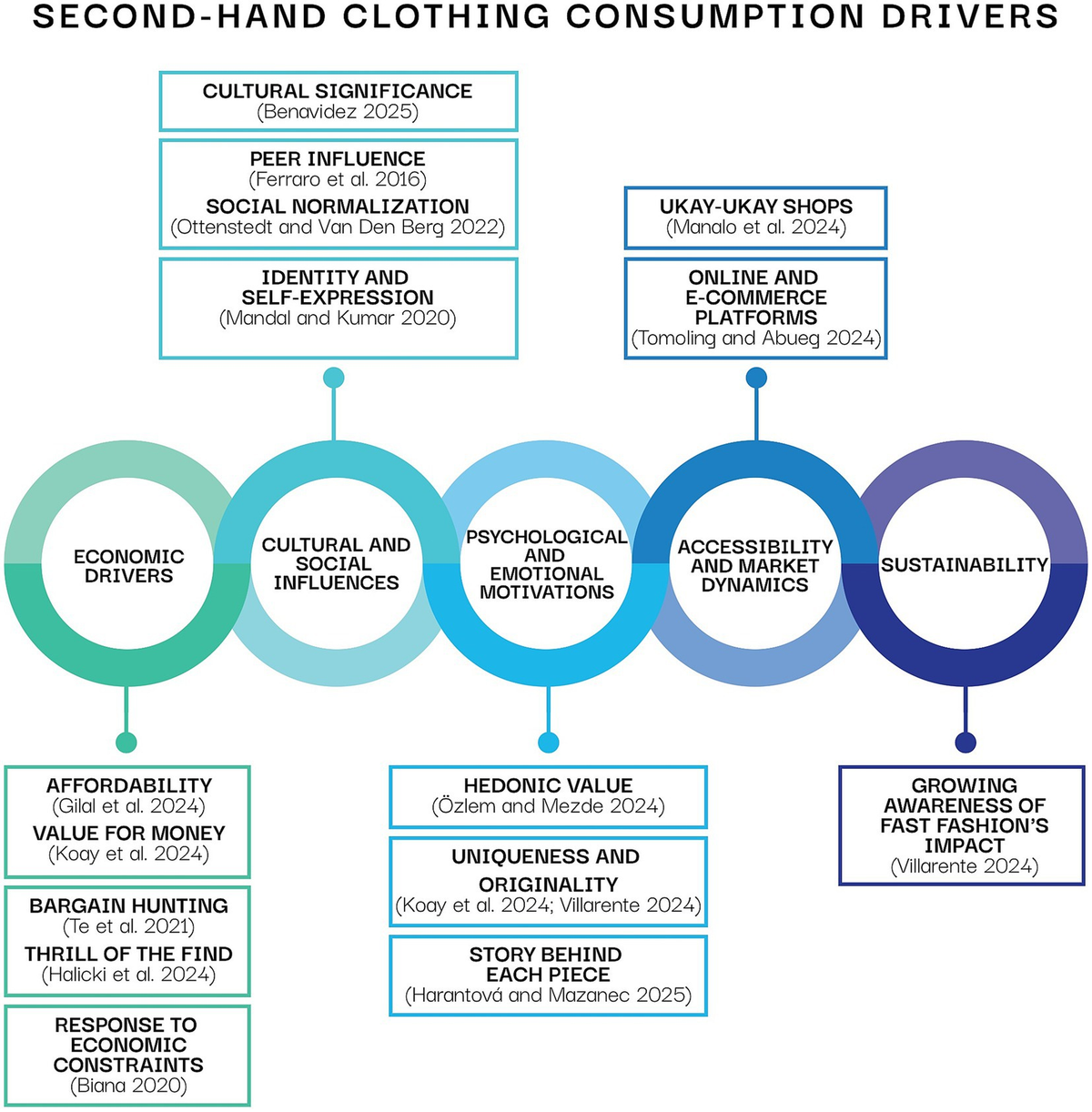
A confluence of several factors drives ukay-ukay’s continued popularity and broad patronage in the Philippines. Each of these motivations, economic (Hur, 2020; Koay et al., 2022; Gilal et al., 2024), social and cultural (Yeboah, 2023; Prisco et al., 2025) psychological and emotional (Auxtova et al., 2024; Stankevičiūtė and Jarmalavičiūtė, 2025) accessibility (Hur, 2020; Villarente, 2024), and environmental (Sepe et al., 2024; Villarente, 2024), adds to the diversified attractiveness of this second-hand consumption behavior. Figure 1 shows a summary of the 12 key drivers of second-hand clothing consumption, which is explained further in sections 4.1–4.5.
4.1 Economic drivers
4.1.1 Affordability and value for money
The affordability of ukay-ukay is the most frequently investigated factor, as it offers products at lower prices than new retail items (Hur, 2020; Stolz, 2022; Gilal et al., 2024; Villarente, 2024). This allows budget-conscious consumers, including students (Benavidez, 2025), low-income families (Tomoling and Abueg, 2024), and anyone actively trying to control their spending (Shirai, 2015). According to a report by Carousell (2021), 92% of Filipino consumers have purchased second-hand items, with 74% identifying affordability as their main motivation.
Beyond mere affordability, ukay-ukay is strongly related to value for money (Koay et al., 2024). Consumers often find decent quality, durable, or even branded products (Biana, 2020) at a fraction of their original cost. The incentive is to find good-quality, original, or trendy like-new clothing without the high price tag (Murtas and Pedeliento, 2025). This represents a “smart shopping” mindset (Medalla et al., 2021; Demir et al., 2023), in which consumers are constantly looking for quality and style relative to cost, therefore appreciating their discovery of excellent deals (Ki et al., 2024).
4.1.2 Bargain hunting and the thrill of the find
Bargain hunting, commonly referred to in the Philippines as tawad, meaning price negotiation or haggling, is a deeply rooted cultural practice associated with the pursuit of fairly priced items (Castillo, 2018; van Laar and Krabbe, 2018; Butiu et al., 2025). Beyond affordability, ukay-ukay shopping also carries a hedonic dimension, offering emotional and psychological rewards (Çavuşoğlu et al., 2021; Te et al., 2022). This experience is often likened to treasure hunting, where the excitement of discovering rare, high, quality, or branded items at a low price provides significant psychological satisfaction (Kashdan et al., 2018; Ross et al., 2022; Rüffel and Dinh, 2024). The “thrill of the find” (Halicki et al., 2024) transforms shopping into a leisure activity, as customers sift through piles of clothing and negotiate prices, enhancing their sense of accomplishment and enjoyment (Aycock, 2021; Kuupole et al., 2025).
4.1.3 SHC as a response to financial constraints
The financial constraints and overall economic conditions faced by many individuals significantly influence the popularity of SHC consumption in the Philippines (Persson and Hinton, 2023; Frahm et al., 2024). SHC serves as a practical solution for those affected by rising prices of new apparel, offering accessible, affordable, stylish, and durable clothing options for people with limited financial resources (Biana, 2020; Bengzon et al., 2022; Moon, 2024). Research indicates that consumers who shop at ukay-ukay stores often face financial hardship (Biana, 2020; Te et al., 2022; Tomoling and Abueg, 2025), and this form of consumption can function as a necessary coping strategy in response to economic pressure (Borusiak et al., 2020).
4.2 Cultural and social influences
4.2.1 Cultural significance of ukay-ukay in the Philippines
Beyond mere economic necessity, ukay-ukay has evolved into a prominent cultural trend in the Philippines, reflecting core Filipino values such as ingenuity and resourcefulness (Benavidez, 2025). This trend has helped to destigmatize the negative connotations traditionally associated with second-hand clothing, leading to broader acceptance of wearing pre-owned garments (Ferraro et al., 2016; Le Zotte, 2023; Villarente, 2024).
Furthermore, the traditional cultural practice of digging through stacks of clothes transforms the act of buying garments into a playful and serendipitous experience (Locsin, 2007). It is not merely a static tradition but an active cultural practice that repurposes and reuses clothing (Biana, 2020) and can be seen as a form of intangible cultural heritage (Han and Sweet, 2020; Lu, 2024)
4.2.2 Peer influence and social normalization
Driven by its popularity, buying SHC has become socially acceptable in the Philippines (Isla, 2013) and is now seen as a smart and frugal shopping strategy (Abueg, 2005; Gonzales, 2024; Manalo et al., 2024). By simply changing the terminology to “pre, loved,” this shift in language reflects the growing acceptance of second-hand clothing (Healy, 2024), which is now appreciated across various sectors. A key driver of this acceptance is peer influence (Woo et al., 2024). Social media (Luoma, 2024) amplifies these societal trends, shaping consumer attitudes toward frugal buying (Villarente, 2024). Peer, driven content and peer, validated platforms help to normalize ukay-ukay, thereby redefining fashion norms.
4.2.3 Identity construction and self-expression through second-hand fashion
Fashion is a powerful instrument for self-expression (Mandal and Kumar, 2022; Nunes, 2023; Amekplenu, 2024). Second-hand fashion provides Filipinos with a rich and accessible way to express their personal style and actively participate in identity formation (Medalla et al., 2021; Te et al., 2022). Moreover, it offers opportunities to discover unique and creative items that are rarely found in conventional retail stores (Guiot and Roux, 2010; Evans et al., 2022).
Ukay-ukay also stands in contrast to mass, produced fast fashion, which often features repetitive designs (Truong, 2022; Persson and Hinton, 2023). It encourages innovative thinking and experimentation (Lichy et al., 2023), allowing consumers to mix and match pieces (Lang and Zhang, 2019; Taylor et al., 2023), and engage in upcycling to create distinctive looks. Importantly, it democratizes fashion, enabling individuals whose choices might otherwise be limited by financial constraints to express themselves freely (Ferraro et al., 2016). For some, ukay-ukay represents a subtle form of rebellion against mainstream fashion norms (Rüffel and Dinh, 2024), fostering alternative or subcultural identities (Abad et al., 2025).
4.3 Psychological and emotional motivations
4.3.1 Hedonic value
Hedonic value fulfills needs for pleasure, excitement, and happiness, and is closely tied to psychological and emotional motivations (Aruldoss et al., 2024). This is especially evident in the “thrill of the find,” which resembles a form of “treasure hunting,” where the anticipation and surprise of discovering rare, valuable “hidden gems” at low prices deliver significant psychological rewards (Ross et al., 2022; Halicki et al., 2024). Strong emotional attachments (Nopnukulvised et al., 2019) emerge from the element of surprise (Mashilo et al., 2025) and the sense of discovery during the search, making the shopping experience engaging and emotionally rewarding beyond mere transactions.
4.3.2 Uniqueness and originality
Second-hand fashion consumption in the Philippines (Biana, 2020) is largely driven by a psychological desire for originality and uniqueness. The act of discovering one-of-a-kind items stands in contrast to the ubiquity of rapid fashion, and this pursuit of distinctiveness is closely tied to personal identity expression. Access to signature pieces (Cainoy et al., 2023) is facilitated by ukay-ukay and is particularly popular among younger consumers. For these consumers, finding a rare item offers personal satisfaction and a sense of social distinction (Villarente, 2024). In this context, the demand for individuality can be seen as a quiet protest against the homogeneity of fast fashion.
4.3.3 Sentimental value and stories behind SHC
Pre-loved objects carry significant emotional value, often deeply entwined with nostalgia. For example, vintage clothing evokes a longing for times gone by Sarial-Abi et al. (2017). These items act as recovery signals, reminding individuals of personal experiences or historical narratives, such as the scarcity of a particular garment (Frahm et al., 2024). When triggered, nostalgia can enhance mood, boost self, esteem, and foster social connectedness, thereby promoting a sense of continuity in identity (Abakoumkin et al., 2019). This emotional connection allows the item to transcend its physical form, becoming a powerful emotional conduit rather than merely a piece of fabric. Acting as a touchstone (Karagöz and Ramkissoon, 2023), the tangible object anchors abstract memories and emotions in a concrete reality, enabling the past to be felt vividly in the present.
4.4 Accessibility and market dynamics
4.4.1 Brick-and-mortar stores
Physical ukay-ukay boutiques provide a familiar and accessible shopping infrastructure (Biana, 2020). The traditional shopping experience is characterized by active “digging” through piles of clothing (Tomoling and Abueg, 2024) in search of reasonably priced, unique, branded, or high, quality items (Flores et al., 2025). Replicating this sensory and social engagement online, such as feeling fabrics or assessing quality, is challenging (Carlsson and Lundqvist, 2023). Many consumers prefer physical boutiques (Manalo et al., 2024) because they can try on garments (Mobarak et al., 2025) and personally inspect their quality (Hur, 2020). These physical stores also serve as important “third places,” social environments beyond home and work, thereby fostering community connections (Farahani and Beynon, 2019).
4.4.2 Online and E-commerce platforms for second-hand fashion
Ostermann et al. (2021) emphasize how fashion startups are innovating circular business models through digital platforms, aligning with the rise of online ukay-ukay commerce in the Philippines. These models promote reuse and community engagement, echoing the social commerce dynamics observed in local markets
The rise of the internet, particularly social media and e-commerce platforms, has significantly transformed the SHC landscape in the Philippines, with many shops actively moving online (Bengzon et al., 2022). A sudden behavioral shift, largely driven by the COVID-19 pandemic, has led people to increase their smartphone usage for shopping and browsing (Tomoling and Abueg, 2024). SHC now dominates platforms such as Facebook, Instagram, Shopee, Lazada, and Carousell (Turunen and Gossen, 2024), offering consumers a wider range of choices.
The rise of “live selling” has fostered a form of social commerce (Herzallah et al., 2025), which began on Facebook (Gonzales, 2024). This technological innovation in retail is particularly significant, as it merges entertainment with direct sales, building trust and community in a digital space that traditional e-commerce often lacks. This format combines entertainment with shopping, creating a dynamic and engaging purchasing experience while enabling real, time personal interactions (Actub-Parungao and Balgoa, 2023). However, challenges remain, including trust issues due to the inability to physically inspect products, discrepancies in sizing, hidden flaws, and shipping concerns (Cainoy et al., 2023).
4.5 Sustainability
Recent research by Hussain et al. (2025) critically examines the assumptions behind circular fashion models, revealing that many projections, such as those from the Ellen MacArthur Foundation (2023), lack empirical grounding and may overstate the economic potential of reuse. This underscores the importance of localized, culturally embedded practices like ukay-ukay that offer tangible sustainability outcomes.
Schumacher and Forster (2022) further highlight systemic barriers to textile circularity, including infrastructure gaps and policy misalignment, which contrast sharply with the grassroots nature of second-hand markets in the Philippines. These findings reinforce the relevance of informal economies in advancing sustainability goals
4.5.1 Growing awareness of fast fashion’s impact
The fashion industry is a major contributor to global waste, carbon emissions, and water pollution (Ellen MacArthur Foundation, 2019; Singh and Bansal, 2024). There is growing awareness of the environmental impact of fast fashion worldwide, particularly in the Philippines (Villarente, 2024). Fast fashion is characterized by rapid production cycles, low prices, poor quality, and exploitative labor conditions (Centobelli et al., 2022; Humayun and Bhavadharani, 2025). Filipino youth, especially Generation Z and Millennials, demonstrate increasing awareness in their shopping choices, often aiming to reduce fast fashion consumption and support environmental sustainability (Bengzon et al., 2022; Bajar et al., 2024; Villarente, 2024).
However, awareness does not always translate into action. Levels of understanding vary; while some young consumers possess deep insights into sustainability, others may have only a superficial awareness (Papadopoulou et al., 2021). Economic factors such as affordability can contribute to an attitude–behavior gap (Zhuo et al., 2022), where the desire to save money overrides the intention to shop sustainably. To foster more conscious consumption, individuals may need to witness the direct impact of textile waste within their communities, rather than simply hearing about global environmental issues, in order to meaningfully change their purchasing habits (Abdelmeguid et al., 2025).
5 Methodology
This study employed a qualitative research approach to gain in-depth insights (Gaddefors and Cunningham, 2024) into the drivers of second-hand consumption within the Philippine ukay-ukay context, focusing on business owners’ perspectives (Kraus et al., 2023)
5.1 Research design
A descriptive and exploratory qualitative research model was adopted (Mbaka and Isiramen, 2021). This approach was well suited for examining complex phenomena, exploring nuanced experiences, and generating rich, detailed understandings of consumer motivations (Lim, 2024) as perceived by ukay-ukay entrepreneurs. Methodologically, this design prioritizes “market-facing” insights by positioning business owners as expert proxies for consumer behavior. This choice is grounded in the reality of informal economies, where a seller’s business survival depends on their ability to accurately interpret and respond to shifting consumer psychographics through inventory curation and pricing. This research design therefore captures consumer trends not as self-reported data, but as empirically observed behavioral shifts recorded by those who navigate the market daily.
5.2 Data collection
The primary data collection method was online in-depth interviews (Rutledge and Hogg, 2020) conducted with ukay-ukay business owners. These interviews were facilitated via video conferencing platforms such as Microsoft Teams and Google Meet, allowing for real, time interaction (Heiselberg and Stępińska, 2022). Each interview lasted a minimum of 30 min and was recorded with the participants’ explicit consent (McGonagle et al., 2015; Lim, 2024). To ensure participants could fully express their thoughts and insights, interviews were conducted in their native language, Filipino or Tagalog (Welch and Piekkari, 2006).
5.3 Sampling strategy and participants
A purposive sampling strategy was used to select information-rich cases (Memon et al., 2024). The target population consisted of 17 Philippine ukay-ukay business owners who had been operating for at least 2 years. This 2-year operational threshold was selected to ensure participants had survived the initial business mortality phase (typically high in retail) and had sufficient longitudinal observation of changing consumer trends, particularly the pre- and post-pandemic shifts.
To address the historical evolution of the market from necessity-driven to identity-based consumption, the study strategically categorized participants by their operational tenure. Legacy entrepreneurs with extensive market experience, such as P2 (10 years), P12 (12 years), and P17 (9 years), provided the longitudinal depth necessary to verify the long-term transition in consumer attitudes. In contrast, newer entrepreneurs who entered the market post-pandemic, such as P3, P10, and P14 (2 years), were utilized to validate the current, trend-driven state of the ukay-ukay sector. By triangulating the historical insights of legacy owners with the contemporary observations of newer entrants, the study ensures that claims regarding market evolution are grounded in multi-generational entrepreneurial intelligence.
The researcher initially identified potential participants through online platforms such as Google, Facebook, and Instagram using relevant keywords (e.g., “ukay-ukay Philippines,” “thrift store PH”). Businesses were contacted via email or private message with details about the study, including its purpose, terms of participation, and confidentiality assurances to foster trust and engagement (Kang and Hwang, 2023). Participants were then invited to schedule interviews at their convenience. Snowball sampling was also employed (Sledzieski et al., 2023), wherein interviewed owners referred other ukay-ukay entrepreneurs within their networks, thereby expanding the study’s reach. Participants were selected based on diversity of business models (physical vs. online vs. live-selling) and customer demographics (mass market vs. curated vintage) to ensure a holistic view of the ecosystem as shown in Table 2. While many participants were Metro Manila-based, the inclusion of owners from Baguio (the historic capital of ukay-ukay) and Davao provided regional representation. Data collection ceased at 17 participants when thematic saturation was reached, defined as the point where three consecutive interviews yielded no new codes regarding consumer motivation.
| Participant ID | Business type | Years in operation | Primary motivation for starting | Location | Customer base |
|---|---|---|---|---|---|
| P1 | Online (Facebook/Instagram) | 4 years | Passion for Fashion | Manila | Young Adults, Students |
| P2 | Physical store | 10 years | Economic Necessity | Baguio City | Low-income Families, Diverse |
| P3 | Live seller (TikTok) | 2 years | Uniqueness and individuality | Cebu | Gen Z |
| P4 | Physical store and online | 6 years | Thrill of the Find | Quezon City | Collectors, Vintage Enthusiasts |
| P5 | Online (Facebook) | 3 years | Sustainability | Batangas | Environmentally-conscious shoppers |
| P6 | Live Seller (Facebook) | 5 years | Economic Necessity | Davao City | General public, Bargain hunters |
| P7 | Physical store | 8 years | Passion for Fashion | Baguio City | Young Adults, Fashion-forward |
| P8 | Online (Instagram) | 4 years | Rarity & Vintage Finds | Pasig City | Collectors |
| P9 | Physical store and online | 7 years | Economic Necessity & Value | Bataan | Diverse, Families |
| P10 | Live Seller (TikTok) | 2 years | Social influences | Manila | Gen Z |
| P11 | Online (Facebook) | 5 years | Uniqueness and individuality | Cebu | Young Adults |
| P12 | Physical store and online | 12 years | Economic necessity | Quezon City | Low-income Families, Families |
| P13 | Physical store and online | 3 years | Curated collection | Makati City | Affluent, Fashion enthusiasts |
| P14 | Online (Facebook) | 2 years | High profit margin | Manila | General public |
| P15 | Live seller (Facebook) | 4 years | Economic necessity | Davao City | Students, Young Adults |
| P16 | Online (Instagram) | 6 years | Uniqueness and individuality | Pampanga | Fashion-conscious |
| P17 | Physical store | 9 years | Sustainability | Baguio City | Diverse |
Summary of the demographic profiles of the 17 business owners who participated in this study
Table 2 shows the profiles of the 17 business owners
5.4 Interview questions
Semi-structured interviews were conducted to explore business owners’ perspectives on consumer motivations for second-hand consumption, drawing on existing literature. Initial questions focused on the background of their brand and their motivations for entering the second-hand market (Das et al., 2024). A key eligibility criterion, store longevity, was verified through questions confirming that the business had been operating for at least 2 years (Haraldsson and Perić, 2017).
Subsequent questions explored various aspects of their operations and customer insights, including popular product categories, inventory management, and sourcing strategies (Haraldsson and Perić, 2017; Sajjad et al., 2021; Halicki et al., 2024; Frahm et al., 2025). The core of the interview focused on consumer behavior, such as observed age and gender patterns, evolving attitudes toward second-hand goods, primary purchase motivations, and reasons for preferring physical stores (Haraldsson and Perić, 2017; Koay et al., 2024). The interviews concluded with discussions on communication strategies (Haraldsson and Perić, 2017) and the future of second-hand consumption in the Philippines (Yang et al., 2024), providing a comprehensive view of consumer decision, making from the business owners’ perspective.
5.5 Data analysis techniques
Thematic analysis was the primary method used to analyze data (Naeem et al., 2023). Interviews were transcribed verbatim using transcription software and translated from Filipino/Tagalog into English (Nascimento and Steinbruch, 2019). The study followed the six-phase approach by Braun and Clarke (2006). Phase 1 involved immersion in the data through repeated reading. Phase 2 involved initial manual coding using the translated transcripts, generating codes such as “treasure hunt” and “budget constraint.” Phase 3 involved collating codes into potential themes by all the researchers, which were then reviewed in Phase 4 against the dataset. Phase 5 focused on defining and naming themes, and Phase 6 involved producing the final report. This rigorous approach enabled the identification of underlying meanings, recurring patterns, and key insights into the drivers of ukay-ukay consumption from the viewpoint of business owners. To enhance transparency, Table 3 provides examples of initial codes and corresponding participant quotes that illustrate how raw data was organized into themes during the thematic analysis process. These examples demonstrate the link between interview excerpts and the seven motivational themes identified in the study.
| Theme | Example code | Illustrative quote |
|---|---|---|
| Affordability | Lower price | “Customers are drawn to the lower price.” (P7) |
| Social influences | Peer influence | “Follow trends from influencers who are doing thrift finds.” (P11) |
| Uniqueness and individuality | Avoid duplicates | “Avoid looking the same as everyone.” (P1) |
| Quality and durability | Better than mall | “The quality of clothes from ukay-ukay is much better than the quality of clothes from the mall.” (P2) |
| Environmental awareness | Reduce textile waste | “More customers choose second-hand as their way of reducing environmental impact.” (P3) |
| Rarity and vintage finds | Thrill of the find | “It is a hobby… excitement and discovery.” (P3) |
| Customer service and trust | Repeat patronage | “Customers keep on coming back because they already trust us.” (P12) |
Examples of codes and illustrative quotes
6 Findings and discussion
Through thematic analysis of the interview data and a review of relevant academic literature, seven core motivational themes emerged that explain why Filipino consumers engage with second-hand fashion through ukay-ukay businesses. These themes are affordability, social influences, uniqueness and individuality, quality and durability, environmental consciousness, rarity and vintage finds, and customer service and trust.
Affordability was the most frequently cited motivation, but its meaning in the Philippine context is more layered than in other markets. While consumers in Western countries often describe second-hand shopping as driven by the “thrill of the hunt,” and Chinese consumers tend to focus on bargains, Filipino consumers view affordability as part of a broader value system. While consumers in Western countries often describe second-hand shopping as driven by the “thrill of the hunt” (Hur, 2020; Klooster et al., 2024; Frahm et al., 2025), and Chinese consumers tend to focus on bargains (Wu et al., 2022; Huang and Wong, 2024), Filipino consumers view affordability as part of a broader value system. For them, low cost is not merely about saving money, it is closely tied to expectations of quality, longevity, and the ability to express personal style through distinctive fashion choices.
Social influences also play a significant role, particularly through peer recommendations and online communities that normalize and celebrate second-hand fashion. Many business owners observed that younger consumers are increasingly drawn to ukay-ukay shopping to stand out, embracing the uniqueness and individuality that second-hand items offer. This desire for self-expression is often balanced with practical concerns, such as the durability of garments and the trustworthiness of sellers.
Environmental consciousness was another recurring theme, though often expressed indirectly. Participants noted that some customers are motivated by sustainability, viewing second-hand shopping as a way to reduce waste and support circular fashion practices. Additionally, the appeal of rare and vintage finds was frequently mentioned, with customers valuing the sense of discovery and nostalgia associated with older items.
Finally, customer service and trust emerged as a critical factor in repeat patronage. Business owners emphasized the importance of building relationships with their clientele, offering transparency in sourcing and pricing, and maintaining consistent quality standards. These findings suggest that second-hand consumption in the Philippines is shaped by a unique blend of economic, cultural, and personal motivations. Figure 2 presents selected quotes from participants that illustrate these themes and highlight the richness of the qualitative data. The following section discusses the seven motivational themes in detail, supported by illustrative quotes from participants that highlight the complexity and context-specific nature of second-hand fashion consumption in the Philippines.
6.1 Evolving perceptions of affordability in second-hand consumption
The primary driver identified by entrepreneurs was a shift in consumer perception from simple “cheapness” to a sophisticated understanding of “value for money.” This financial motivation is strongly supported by the interview data, with entrepreneurs consistently noting that customers are drawn to the “lower price” (P7) and describing the products as “very cheap, it is very affordable” (P11). For many Filipino consumers, the entry point into the second-hand market is the opportunity to acquire items for “60 pesos each” (P6) or to start a business with “small capital” (P14). However, the interviews also reveal a maturing market where intentionality and perceived value override mere cost; as P13 observed, customers are now willing to pay more, buying items “even if the price is high.” This indicates a shift from basic thrift shopping to more deliberate, curated consumption. As one participant explained, “…there is a misconception among Filipinos that ukay-ukay is all about affordability, but what we are doing nowadays is building a curated collection” (P13). In this context, affordability is about securing distinctive or durable items at a reasonable price, often significantly lower than their original or collector’s market value.
These insights align closely with existing literature, which identifies economic motivations as a dominant force in second-hand consumption (Gilal et al., 2024). Turunen and Gossen (2024) argue that price and related advantages are among the most common reasons for engaging in second-hand shopping. As Frahm et al. (2024) suggests, perceived value is becoming intertwined with cost, where a higher price may still represent a good deal if the item offers uniqueness or durability. Mobarak et al. (2025) further supports this view, noting that premium pricing can be justified when the product is exceptional or highly sought after.
Within the integrated TPB–DOI framework, these market-facing insights reveal that “price” functions differently depending on the consumer’s adoption stage (DOI). While affordability accelerates adoption, it also raises questions about whether economic drivers undermine environmental goals, challenging normative assumptions in pro-sustainability behavior models. For the Early Majority, affordability represents a “Relative Advantage” (DOI) in terms of value-per-wear, which redefines the “Attitude” construct: the positive attitude is no longer derived solely from saving money, but from a “smart shopping” identity.
While affordability remains a primary driver, this study reveals that “price” functions differently depending on the consumer’s adoption stage (DOI). For Laggards, low price is a necessity. However, for the Early Majority, affordability represents a “Relative Advantage” (DOI) in terms of value-per-wear rather than absolute cost. Within the TPB framework, this redefines the “Attitude” construct: the positive attitude is no longer derived solely from saving money, but from the “smart shopping” identity. This suggests that in developing economies, the economic barrier often cited in Western sustainable fashion literature serves conversely as the primary enabler of circularity.
This paradox, where affordability promotes circularity, yet risks overconsumption, suggests that TPB’s positive attitude construct may mask unintended sustainability consequences. While affordability accelerates adoption, it also raises questions about whether economic drivers undermine environmental goals, challenging normative assumptions in pro-sustainability behavior models. Future refinements should incorporate economic drivers as potential moderators of pro-sustainability intentions within TPB and DOI frameworks.
6.2 Social influences
The transition of ukay-ukay from a survivalist activity to a socially validated fashion choice is primarily driven by familial networks and observational learning within local communities. This shift is exemplified by entrepreneurs whose entry into the market was prompted by close relatives, such as P2, who noted that their “older sister decided that we should start a ukay-ukay business,” or P6, who was motivated by witnessing the visible success and growth of existing vendors in their area. These examples highlight how second-hand fashion gains community approval when passed through trusted relationships, effectively reframing the practice as a viable and respected entrepreneurial path (Oscario, 2023).
This normalization is further accelerated by digital ecosystems, where platforms like “Facebook, Instagram, and TikTok” serve as the primary conduits for reaching contemporary audiences (P10). Vendors observe that young consumers are particularly influenced by digital trends, actively seeking to “follow trends from influencers who are doing thrift finds” (P11). These technological platforms function as powerful engines of cultural normalization, moving beyond mere sales channels to become sites of trend diffusion (Villarente, 2024). This influence is reinforced by direct peer endorsement and word-of-mouth, with participants like P16 noting that satisfied buyers frequently “recommended me within their network because I have beautiful items,” thereby solidifying ukay-ukay as a shared activity within style discourses. Consequently, thrifted fashion is increasingly viewed not as a compromise, but as a stylish and socially validated choice (Sumod, 2024).
The normalization of ukay-ukay through social media significantly alters the “Subjective Norms” construct of TPB. In Western contexts, second-hand consumption often carries a stigma that negatively impacts subjective norms. In the Philippines, however, the cultural value of diskarte (resourcefulness) reframes thrift shopping as a skill rather than a hardship. Consequently, online communities and live-sellers act as change agents who increase the “Observability” (DOI) of the practice, effectively dismantling the stigma and accelerating the diffusion process among younger generations. This finding challenges TPB’s assumption of stable normative structures and DOI’s reliance on formal diffusion channels, indicating a need for hybrid models that integrate digital peer influence as a primary diffusion mechanism in informal markets.
6.3 The quest for uniqueness and individuality
The desire for self-expression and the rejection of mass-market homogeneity emerged as a powerful motivator for consumers within the ukay-ukay market. Entrepreneurs consistently highlighted that their customers use second-hand fashion to curate a distinct identity. This is evidenced by participants who noted that a primary goal for many shoppers is to “prevent having duplicate outfits” (P7) and to “…avoid looking the same as everyone” (P1). For some, this motivation is rooted in personal experience. This drive for differentiation often stems from past social experiences; for instance, one customer recalled the embarrassment of wearing “the same clothes” as her classmates during her teenage years (P5), which now motivates her to seek out items that are “very different from what you can see in the mall” (P13).
This sentiment was echoed by P3, who confirmed that contemporary customers “want to have their own style” rather than following traditional retail patterns. According to P13, this shift represents a significant cultural change: “People are now craving their own personal style or individuality… Now, everyone wants to be weird. Everyone wants to be different.” The emotional reward of this uniqueness is profound, with P6 describing the psychological outcome as a “feeling of confidence when you are wearing it, and you know you are the only one who has it.”
These observations align with scholarly discussions regarding the use of fashion as a tool for identity construction. The finding that consumers seek to differentiate themselves through unique finds is strongly supported by Mandal and Kumar (2022), as well as recent research by Auxtova et al. (2024) and Kuupole et al. (2025), who emphasize that the desire for uniqueness and identity curation are key drivers in non-traditional retail environments. Furthermore, the “thrill of the hunt” in thrift stores is often driven by the search for items that reflect a wearer’s specific personality (Halicki et al., 2024; Hur, 2020).
This motivation highlights a shift from functional to expressive consumption, positioning ukay-ukay as a tool for identity construction. In the context of DOI, uniqueness serves as a critical “Relative Advantage” over mass-produced fast fashion, appealing strongly to Innovators and Early Adopters who value differentiation. Theoretically, this strengthens the “Attitude” component of TPB, as the positive evaluation of the behavior is driven by the hedonic reward of self-expression rather than just utility. By offering “one-of-a-kind” items, ukay-ukay satisfies a psychological need for distinction that standardized retail cannot, thereby accelerating its adoption among fashion-forward demographics.
Identity-driven consumption strengthens attitudes toward second-hand fashion but may inadvertently replicate fast-fashion turnover, raising concerns about whether expressive motivations align with sustainability objectives. This tension calls for a nuanced understanding of hedonic and identity-based drivers within TPB and DOI frameworks
6.4 Perceptions of quality and durability
A dominant theme emerging from the interviews is the perception that SHC offers superior quality and material integrity compared to new, mass-produced garments. Entrepreneurs identified this as a primary reason Filipino consumers choose to buy second-hand, frequently noting customer dissatisfaction with the declining quality of contemporary retail. Several business owners (P2; P3; P5; P7; P14) reinforced this view, with P2 explicitly stating that “the quality of clothes from ukay-ukay is much better than the quality of clothes from the mall.” Participants often referred to the “one time use” nature of fast fashion items (P7), describing new retail clothing as “disposable compared to used ones which still have better quality” (P14). As one entrepreneur explained, “a lot of people are already eyeing ukay-ukay and engage with good quality items” (P11), noting that for discerning consumers, these items are simply “made to last” (P6). This shift in values is further evidenced by consumers who now feel that “brand new items do not matter anymore” (P9), suggesting that lasting quality now takes precedence over novelty.
These findings align with recent literature characterizing second-hand shopping as a direct response to the declining craftsmanship of fast fashion (Frahm et al., 2024). There is a widespread belief that older garments are constructed with better materials, challenging the conventional belief that “brand new” is inherently better (Mobarak et al., 2025). By prioritizing workmanship and longevity over price or newness, the second-hand market aligns with a growing preference for sustainable fashion choices.
The perception that “older is better” challenges DOI’s assumption that innovation implies newness. In informal markets, innovation often lies in rediscovery and the return to superior material standards rather than novelty. For risk-averse consumers in the Late Majority, the proven durability of vintage clothing enhances PBC (TPB) by reducing fears of wasting money on poor-quality goods. This functional reliability acts as a bridge for adoption, moving the practice beyond niche collectors to pragmatic consumers who prioritize value-for-money over trends, and calls for theoretical adaptation of DOI to incorporate rediscovery as an innovation pathway.
6.5 Emergence of environmental awareness
Environmental awareness is increasingly recognized by entrepreneurs as an emerging, though often secondary, motivator for ukay-ukay consumption in the Philippines. Several business owners noted a visible shift in consumer intent, observing that “more customers choose second-hand as their way of reducing environmental impact,” specifically to “reduce textile waste” (P3). This environmental consciousness is further reinforced by community-based circular practices shared by business owners. For instance, one respondent explained that “unsold pieces are given to a certain group wherein they can upcycle it to make rags, bags, etc.” (P5). Additionally, there is an emergence of local brands that are “making curated designs out of ukay-ukay” (P13), suggesting a creative and sustainable approach to repurposing garments within the local ecosystem.
These local developments align with broader scholarly observations that environmental awareness is gaining traction as a motivator for SHC consumption (Villarente, 2024). As consumers become more informed about the consequences of fast fashion, ukay-ukay is increasingly viewed as a more ethical and sustainable alternative (Biana, 2020; Abdelmeguid et al., 2025). However, despite these developments, environmental concern is often not the primary reason for purchasing second-hand clothing in the Philippine market. Instead, it tends to function as a secondary or supporting motivation (Borusiak et al., 2021). This is consistent with the concept of the attitude-behavior gap, where individuals stated beliefs about sustainability do not always translate into consistent action. Additionally, the paradox of overconsumption is evident; while affordability makes second-hand fashion accessible, it can also lead to hoarding, which undermines the practice’s sustainability (Zhuo et al., 2022).
Overall, while environmental awareness is gaining traction, it remains a supplementary factor in consumer decision-making. This suggests that for sustainable fashion advocates and policymakers, leveraging the primary drivers, such as uniqueness and quality, may be a more effective strategy for promoting circular consumption, with sustainability framed as a co-benefit rather than the lead message
While environmental awareness is growing, it often presents a paradox in consumer behavior. The “Compatibility” (DOI) of ukay-ukay with sustainable values enhances its appeal to eco-conscious consumers, yet low cost can encourage overconsumption, creating a conflict between sustainability attitudes and accumulation behaviors. This tension highlights the attitude–behavior gap observed in sustainability literature, where normative pressures compete with economic ease (PBC). For policy, framing thrift as aspirational and identity-driven may be more effective than moral appeals. Theoretically, TPB should incorporate competing motivations such as affordability and identity as moderators of pro-sustainability intentions, while DOI should account for how normative sustainability pressures interact with economic incentives in informal markets.
6.6 The thrill of rarity and vintage finds
For many Filipino consumers, the appeal of ukay-ukay transcends functional necessity, evolving into a form of entertainment and psychological engagement. Business owners observe that for some customers, thrifting has become “a hobby” driven by “excitement and discovery” (P3), offering a sense of adventure akin to treasure hunting. This is particularly evident among specialized collectors for whom rarity is the primary driver of value. These consumers are often willing to “spend a lot of money just to get the item” (P8; P5), and in some cases, they “do not care if it is not in good shape, as long as it is rare” (P9).
Beyond immediate style, certain second-hand items are now viewed as financial assets. Participants noted that old shirts are “appreciating in value” (P13), with one respondent comparing high-demand vintage pieces to gold, stating that “the prices are not going down” (P9)
These observations align with scholarly findings that the “thrill of the find” is a psychological and emotional experience that transforms thrifting into a form of entertainment (Halicki et al., 2024). This process provides a measurable psychological boost (Ross et al., 2022) and contributes to the appeal of fashion beyond its economic value. This is especially relevant for vintage clothing from the 1990s and early 2000s, which younger generations actively seek out to build their fashion identity (Prisco et al., 2025).
The “thrill of the find” reframes the shopping experience from a chore to a leisure activity, significantly impacting the Affective Attitude within TPB. This gamification of consumption serves as a powerful intrinsic motivator, particularly for Innovators who derive status from discovering hidden gems. In terms of DOI, the excitement of the hunt increases Trialability, as low cost allows consumers to experiment with styles they might otherwise avoid. This hedonic dimension suggests that for many Filipino consumers, the process of acquisition is as valuable as the product itself and introduces hedonic complexity reduction, a factor DOI does not currently capture. Incorporating experiential attributes into diffusion theory could improve its explanatory power in informal markets.
6.7 Elements of customer service and trust
The foundation of successful online selling in the second-hand market is built upon the relational bond between the entrepreneur and the consumer. As one entrepreneur noted, “customers keep on coming back to our store because they already trust us” (P12), highlighting the role of consistent service and reputation in building long-term relationships. Participants frequently emphasized the importance of being a mindful curator, which involves intensive preparation such as “sorting, washing, steaming” (P5) and transparency in “describing the status of the products” (P11). This commitment to quality is often driven by an ethical responsibility; as one vendor stated, “I do not sell what I know would embarrass me” (P7), underscoring the ethical responsibility sellers feel toward their customers.
Responsiveness and personal connection also emerged as key elements of good service. Sellers mentioned being attentive to customer needs, such as “answering their inquiries” (P14) and “giving styling assistance” (P3; P13). These interactions go beyond transactional exchanges, creating a sense of community and personalized support. One participant shared the emotional reward of their work: “seeing how my business grows and how happy my customers are” (P3), illustrating how customer satisfaction contributes to business fulfillment.
A notable innovation in this space is “live selling,” which allows vendors to build trust in real time by “interacting with our customers” (P16). This method fosters transparency and engagement, helping to reduce perceived risk and enhance the shopping experience
These findings align with scholarly research asserting that a trustworthy business providing a reliable and positive experience is essential for fostering loyalty (García et al., 2024). As Hipólito et al. (2025) argue, trust lowers perceived risk and supports other motivations such as the search for quality or unique items. Furthermore, live selling has been identified as a critical tool for building trust through real-time interaction and transparency (Tedjakusuma et al., 2025). These findings empirically support the study’s theoretical refinement of PBC. As previously argued in Section 2.1, PBC in the informal ukay-ukay market is less about formal retail infrastructure and more about the relational control established through seller transparency.
Trust emerges as a critical moderator in the adoption process, directly influencing PBC (TPB). By curating items and providing transparency about flaws, business owners reduce the “Complexity” (DOI) and perceived risk associated with second-hand goods, particularly for the Late Majority and Laggards who may be deterred by hygiene concerns or effort. This shifts the entrepreneur’s role from mere seller to trusted intermediary, bridging the gap between the informal market and consumer reliability needs. These insights suggest that TPB’s PBC construct should include relational control factors, while DOI’s complexity construct should account for trust-building practices such as live selling. Together, these findings reveal conceptual tensions and boundary conditions that challenge TPB and DOI assumptions.
Table 4 summarizes how the thematic motivations identified in this study map onto TPB and DOI constructs, providing a conceptual link between empirical findings and theoretical refinements
| Thematic driver | Theory of planned behavior (TPB) constructs | Diffusion of innovation (DOI) theory constructs |
|---|---|---|
| 1. Affordability | Attitude: Positive evaluation of smart and value-driven purchases. | Relative advantage: Significant and immediate price benefit over new retail. |
| 2. Social influences | Subjective Norms: Influence of peers, family, and social media influencers normalizing and glamorizing behavior. | Observability: High visibility of benefits, e.g., “ukay-ukay” hauls, Outfit of the Day (OOTDs) on social platforms, increase adoption. |
| 3. Uniqueness and individuality | Attitude: Positive evaluation of self-expression and creativity. | Relative Advantage & Compatibility: Access to unique items not in retail stores; aligns with value of individualism. |
| 4. Quality and durability | Attitude: Positive evaluation of product’s superior material and lifespan. | Relative Advantage: Perceived superiority in product quality and durability compared to fast fashion alternatives. |
| 5. Environmental consciousness | Attitude: Positive moral/ethical evaluation of sustainable practices. | Compatibility: Aligns with emerging global and local values of environmentalism and anti-consumerism. |
| 6. Rarity and vintage finds | Attitude: High hedonic value; the “thrill of the hunt” and satisfaction of discovery. | Relative Advantage: Access to scarce, collectible, and historically significant items. |
| 7. Customer service and trust | Perceived BehavioralControl: Seller curation and service reduce perceived risks and effort, making the behavior easier and more dependable. | Complexity and Trialability:Reduces the complexity of finding good items and lowering the risk for new adopters, encouraging trial. |
Mapping the thematic motivations to theoretical concepts (Author’s own)
Figure 3 illustrates the integrated TPB–DOI framework developed in this study, showing how adoption stages align with motivational drivers and theoretical constructs
Consumers who are Innovators and Early Adopters (DOI), including collectors and people who are ahead of the fashion curve, are motivated by the Relative Advantage (DOI) of finding unusual and distinctive things. They have a positive attitude (TPB) since they can express themselves and enjoy the excitement of the hunt, and they do not care as much about what other people think
The Early Majority (DOI) participates once thrifting becomes popular. For them, DOI’s Observability is important; watching influencers and peers do it makes it seem normalized, which makes Subjective Norms (TPB) stronger. Their attitude changes, and they see purchasing second-hand items as strategic shopping and trendy
The Late Majority (DOI) comes subsequently, mostly owing to practical reasons such as price and quality. They made their choice based on the clear Relative Advantage (DOI) and widespread support, rather than on trends. Laggards (DOI) are the last to adopt, often out of necessity, and may still hold negative stigmas about the practice
As the market grows, the rise of certain online retailers makes innovation less complex (DOI). This, along with reliable customer service, improves Perceived Behavioral Control (PBC) for every demographic, making it simpler and less hazardous to engage. This speeds up the spread of the idea among all types of users
7 Conclusions and contributions: theoretical and practical implications
7.1 Conclusion
This study provides a nuanced understanding of second-hand clothing consumption in the Philippines’ ukay-ukay sector, revealing a shift from necessity-driven behavior to identity-based and sustainability-oriented practices. While affordability remains the gateway motivation, consumer engagement increasingly reflects aspirations for uniqueness, quality, and ethical alignment. These findings underscore the dynamic interplay between economic, cultural, and psychological drivers in shaping grassroots circular economies.
Furthermore, this study invites a more critical reflection on the role of SHC within the circular economy. While the ukay-ukay trade effectively extends the lifecycle of garments and promotes resourcefulness (diskarte), it remains inherently tethered to a linear waste stream. The abundance of SHC in the Philippine market is a direct byproduct of the Global North’s overproduction and disposal patterns. Consequently, while the local trade facilitates a form of circularity through reuse and upcycling, it also acts as a terminal destination for global textile waste. This tension highlights that extending a product’s life through informal markets is a necessary but insufficient step toward true circularity, which would require addressing the root causes of fashion overconsumption at its source.
7.2 Theoretical contributions
-
Trust-Based Behavioral Control: In contrast to TPB’s assumption of structural determinants, perceived behavioral control in ukay-ukay is mediated by trust networks and seller transparency (Hipólito et al., 2025)
-
Reframing Complexity and Compatibility: Innovations such as live selling reduce perceived complexity and actively construct compatibility through cultural practices like diskarte (re, challenging DOI’s static interpretation of these constructs (Tedjakusuma et al., 2025)
-
Economic–Sustainability Tension: Affordability accelerates adoption by strengthening positive attitudes and relative advantage (Borusiak et al., 2020), yet paradoxically risks overconsumption, complicating normative assumptions in pro-sustainability behavior models (Zhuo et al., 2022). This tension underscores that while the model explains adoption, it must also account for the “rebound effect” where economic efficiency leads to a net increase in textile throughput, challenging the linear-to-circular transition.
These insights call for a context-sensitive extension of TPB–DOI that incorporates relational control, cultural improvisation, and hedonic complexity reduction, offering a more accurate lens for understanding adoption dynamics in semi-legal, re
7.3 Practical and policy implications
The evolution of ukay-ukay consumption presents strategic opportunities for entrepreneurs and policymakers. Businesses can leverage identity-driven and hedonic motivations such as uniqueness and the thrill of discovery (Halicki et al., 2024), rather than relying solely on affordability. Curated collections, upcycling, and digital engagement through live selling can differentiate brands and foster loyalty (Gonzales, 2024). Specifically, entrepreneurs can enhance PBC and reduce perceived DOI by prioritizing transparency through rigorous curation, including “sorting, washing, and steaming” (P5), to mitigate the risks associated with second-hand goods.
For policymakers, formalizing the sector requires a balanced approach that safeguards affordability for low-income consumers while promoting quality standards and sustainability (Oktavia and Rosnawati, 2024). However, this study also highlights the need for a more critical perspective regarding the global linear waste stream. Policy must eventually confront the reality that the Philippines acts as a terminal destination for the Global North’s textile surplus. Future regulations should focus on the quality and provenance of imports to prevent the country from becoming a dumping ground for non-recyclable textile waste. Additionally, local governments could incentivize community-led circular practices, such as the groups observed in this study that transform unsold pieces into secondary products like bags or rags (P5), ensuring the end-of-life for these garments does not result in landfill waste.
Positioning thrift as aspirational and creative, rather than merely frugal, may be more effective in advancing circular fashion goals than moral appeals alone (Biana, 2020). Taken together, these contributions highlight the transformative potential of informal second-hand markets in accelerating sustainable consumption. By situating ukay-ukay within a dual-theory framework and emphasizing its socio-cultural embeddedness, this study offers a foundation for future research and actionable insights for building resilient, inclusive, and circular fashion systems.
7.4 Limitations and future research
While this study offers valuable insights into the motivations driving second-hand clothing consumption in the Philippines, several limitations warrant consideration. First, the findings are based on a qualitative sample of seventeen ukay-ukay business owners, which limits generalizability. Crucially, because this study relies on entrepreneurs as proxies for their customers, the data reflects perceived rather than direct consumer experiences. This methodological distance means the findings should be interpreted as an expert-informed mapping of the market rather than definitive evidence of consumer intent. Consequently, the lack of primary data from the consumers themselves remains a significant constraint, making it difficult to draw absolute conclusions regarding the internal psychological drivers of the end-user.
Because the data reflects entrepreneurial perspectives rather than direct consumer experiences, future research should incorporate consumer interviews or surveys to validate and enrich these insights (Haraldsson and Perić, 2017). Such primary data collection is essential to confirm whether the motivations identified by sellers, particularly identity-driven and sustainability-oriented goals, accurately align with the lived experiences of the consumers.
Second, the study is geographically bounded to the Philippines. Comparative research across different cultural and economic contexts would help identify universal versus context-specific drivers of second-hand consumption (Khan et al., 2024). Extending this work to other informal economies could also test the applicability of the proposed TPB-DOI refinements
Third, the absence of quantitative data constrains the ability to measure the strength of relationships among identified motivations. Future studies should adopt mixed-method designs, combining qualitative depth with statistical rigor to assess correlations and predictive power (Tanpoco et al., 2023)
Finally, this research captures consumer behavior at a single point in time. Longitudinal studies are needed to examine how motivations evolve, particularly as digital platforms and sustainability discourses reshape second-hand markets (Labroo and Chintagunta, 2020). Additional inquiries could explore post-purchase behaviors, such as garment retention, upcycling, and disposal, to better understand the full lifecycle of second-hand apparel within circular fashion systems (Biana, 2020; Bengzon et al., 2022). Specifically, research should address the tension between local reuse and the global linear waste stream, investigating how post-purchase disposal in the Global South impacts the overall sustainability of the textile lifecycle. Emerging technologies, including AI-driven curation and blockchain for provenance verification, also present promising avenues for future investigation (Ostermann et al., 2021).
Statements
Data availability statement
The raw data supporting the conclusions of this article will be made available by the authors, without undue reservation
Ethics statement
The studies involving humans were approved by the RMIT DSC College Human Ethics Advisory Network (CHEAN). The studies were conducted in accordance with the local legislation and institutional requirements. The participants provided their written informed consent to participate in this study. Written informed consent was obtained from the individual(s) for the publication of any potentially identifiable images or data included in this article.
Funding
The author(s) declared that financial support was not received for this work and/or its publication
Acknowledgments
The authors wish to extend their sincere and profound gratitude to all the ukay-ukay business owners and proprietors who generously gave their time to participate in the qualitative interview process. Their willingness to share candid insights, operational experiences, and professional knowledge was fundamental to the successful completion and depth of this research. Their contribution was invaluable, providing a crucial, firsthand perspective on the dynamics of the secondhand apparel market.
Conflict of interest
The author(s) declared that this work was conducted in the absence of any commercial or financial relationships that could be construed as a potential conflict of interest
Generative AI statement
The author(s) declared that Generative AI was not used in the creation of this manuscript
Any alternative text (alt text) provided alongside figures in this article has been generated by Frontiers with the support of artificial intelligence and reasonable efforts have been made to ensure accuracy, including review by the authors wherever possible. If you identify any issues, please contact us
Publisher’s note
All claims expressed in this article are solely those of the authors and do not necessarily represent those of their affiliated organizations, or those of the publisher, the editors and the reviewers. Any product that may be evaluated in this article, or claim that may be made by its manufacturer, is not guaranteed or endorsed by the publisher
References
-
1
AbadM. A. H.ReyesR. V.Jr.DuplonE. J.VallejoA. P.MalilayJ. R.. (2025). Cultural and social drivers of Ukay-Ukay shopping trends in Nueva Ecija: an analysis of consumer behavior. Int. J. Adv. Multidisc. Res. Stud.5, 236–247. doi: 10.62225/2583049X.2025.5.4.4570
-
2
AbakoumkinG.HepperE.WildschutT.SedikidesC. (2019). From nostalgia through social connectedness to self-continuity: replication and extension. Hellenic J. Psychol.16, 127–144. doi: 10.26262/hjp.v16i2.7893
-
3
AbdelmeguidA.Afy-ShararahM.SalonitisK. (2025). Exploring factors shaping consumer behaviour towards circular fashion: a focus on generations Y and Z. Front. Sustain.6:1630453. doi: 10.3389/frsus.2025.1630453
-
4
AbuegL. (2005). The economics of secondhand retail trade: an analysis of the market for Ukay-ukay. Available online at: https://pidswebs.pids.gov.ph/CDN/PUBLICATIONS/pidspjd05-1ukay.pdf (Accessed 7 July 2025]
-
5
Actub-ParungaoL.BalgoaN. (2023). Initiation in the e-negotiation of Facebook Ukay-Ukay trading. Langkit J. Soc. Sci. Humanit.12, 33–54. doi: 10.62071/jssh.v12i.150
-
6
AjzenI. (1991). The theory of planned behavior. Organ. Behav. Hum. Decis. Process.50, 179–211. doi: 10.1016/0749-5978(91)90020-T
-
7
AjzenI. (2011). The theory of planned behaviour: reactions and reflections. Psychol. Health26, 1113–1127. doi: 10.1080/08870446.2011.613995
-
8
Akwa-MensahH.. (2023). Examining the sustained adoption of omnichannel shopping beyond the COVID19 pandemicFranklin University. Available online at: http://rave.ohiolink.edu/etdc/view?acc_num=frank1698575536660638 (Accessed 8 April 2025)
-
9
AmekplenuN. A. (2024). Exploring how individuals use fashion as a mean of self-expression and identity construction. Glob. Sci. J.12, 2320–9186. Available at: https://www.globalscientificjournal.com/researchpaper/1_EXPLORING_HOW_INDIVIDUALS_USE_FASHION_AS_A_MEANS_OF_SELF_EXPRESSION_AND_IDENTITY_CONSTRUCTION.pdf
-
10
AruldossA.RanaS.ParayitamS.GurumurthyB. (2024). Demystifying hedonic shopping motivation and consumer buying behavior during the post-global pandemic: evidence from a developing country. J. Mark. Theory Pract.32, 486–505. doi: 10.1080/10696679.2023.2221442
-
11
AuxtovaK.SchrevenS.WishartL. J. (2024). Refashioning second-hand clothes consumption through pleasure, pain, seduction and conversion: a virtue ethics perspective. J. Bus. Ethics196, 863–881. doi: 10.1007/s10551-024-05874-x
-
12
AycockM. B. (2021) Consumer motivations and perceived value in online second-hand luxury fashion shopping Available online at: https://scholarworks.uark.edu/etd/3977 (Accessed 8 October 2025)
-
13
BajarR. G. C. A.OngA. K. S.GermanJ. D. (2024). Determining sustainable purchase behavior for green products from name-brand shops: a gen Z perspective in a developing country. Sustainability16:3747. doi: 10.3390/su16093747
-
14
BenavidezJ. V. (2025). Exploring ukay-ukay consumption in the Philippines: between sustainable practices and business potential. World J. Adv. Res. Rev.26, 069–075. doi: 10.30574/wjarr.2025.26.1.0950
-
15
BengzonJ. A. L.ConcepcionM. D. S.MijaresM. C. H.TayzonH. M. L. (2022). “Filipino gen Z consumer behavior towards Ukay-ukay and their role in a circular fashion economy,” in DLSU senior high school research congress. 4th DLSU senior high school research congress: Beyond the new Normal: Realizing innovations for a sustainable and crisis-proactive society (Metro Manila: De La Salle University Integrated School (Manila) / De La Salle University-Manila). Animo Reprository
-
16
BianaH. T. (2020). The Philippine ukay-ukay culture as sustainable fashion. DLSU Bus. Econ. Rev.30, 154–164. doi: 10.59588/2243-786x.1126
-
17
BorusiakB.SzymkowiakA.HorskaE.RaszkaN.ŻelichowskaE. (2020). Towards building sustainable consumption: a study of second-hand buying intentions. Sustainability12:875. doi: 10.3390/su12030875
-
18
BorusiakB.SzymkowiakA.Lopez-LluchD. B.Sanchez-BravoP. (2021). The role of environmental concern in explaining attitude towards second-hand shopping. Entrep. Bus. Econ. Rev.9, 71–83. doi: 10.15678/eber.2021.090205
-
19
BoyerS.JiangZ.LyuJ. (2024). Sustainable style without stigma: can norms and social reassurance influence secondhand fashion recommendation behavior among gen Z?J. Glob. Fashion Mark.15, 341–356. doi: 10.1080/20932685.2024.2317796
-
20
BraunV.ClarkeV. (2006). Using thematic analysis in psychology. Qual. Res. Psychol.3, 77–101
-
21
ButiuJ.CandelariaR.CaydeG.ClitarM.DayaoR.TayagJ.et al. (2025). Exploring the selling skills of tiangge market vendors in Guagua, Pampanga: a phenomenological study. Int. J. Multi.6, 1717–1731. doi: 10.11594/ijmaber.06.04.13
-
22
CainoyE. C.QuiboJ. A.PajoR. M. (2023). Level of satisfaction among women on online ukay-ukay. Int. J. Adv. Res. Inno. Idea Educ.9:21388. Available at: https://ijariie.com/FormDetails.aspx?MenuScriptId=220268
-
23
CarlssonK.LundqvistC. K. (2023). The effects of sensory marketing in physical second-hand stores. Thesis or dissertation. Sweden: Linnæus University
-
24
Carousell (2021). The Carousell recommerce index 2021 report. Singapore: Carousell Group
-
25
CastilloF. G.Jr. (2018). The power of emotional branding towards brand identity. IOSR J. Bus. Manag.3, 79–84
-
26
ÇavuşoğluS.DemirağB.DurmazY. (2021). Investigation of the effect of hedonic shopping value on discounted product purchasing. Rev. Int. Bus. Strategy.31, 317–338. doi: 10.1108/RIBS-04-2020-0034
-
27
CentobelliP.AbbateS.NadeemS. P.Garza-ReyesJ. A. (2022). Slowing the fast fashion industry: an all-round perspective. Curr. Opin. Green Sustain. Chem.38:100684. doi: 10.1016/j.cogsc.2022.100684
-
28
ChenX.MemonH. A.WangY.MarriamI.TebyetekerwaM. (2021). Circular economy and sustainability of the clothing and textile industry. Materials Circular Economy3:12. doi: 10.1007/s42824021000262
-
29
CiechelskaA.Kusterka-JefmańskaM.Zaremba-WarnkeS. (2024). Consumers’ motives for engaging in second-hand clothing circulation in terms of sustainable consumption. Econ. Envi.88:632. doi: 10.34659/eis.2024.88.1.632
-
30
CorbosR.-A.BuneaO.-I.TriculescuM. (2023). Towards sustainable consumption: consumer behavior and market segmentation in the second-hand clothing industry. Amfiteatru Econ.25, 1064–1084. doi: 10.24818/ea/2023/s17/1064
-
31
DasM.MoonsI.Du BoisE. (2024). Design strategies to facilitate second-hand clothing acquisition. Proceedings of the design society, Cambridge, United Kingdom: Cambridge University Press. vol. 4, 935–944. doi: 10.1017/pds.2024.96
-
32
DemirH.EbkenJ.LessmannS.WissmannL. (2023). Exploring the trend: motives behind online second-hand fashion consumption. Kiel J. Consu. Stud.2022, 14–22. doi: 10.38071/2022-00826-4
-
33
Ek StyvénM.MarianiM. M. (2020). Understanding the intention to buy secondhand clothing on sharing economy platforms: the influence of sustainability, distance from the consumption system, and economic motivations. Psychol. Mark.37, 724–739. doi: 10.1002/mar.21334
-
34
Ellen MacArthur Foundation (2019). Fashion and the circular economy. Ellen MacArthur Foundation. Available online at: https://www.ellenmacarthurfoundation.org/fashion-and-the-circular-economy-deep-dive (Accessed 6 Jun 2025)
-
35
Ellen MacArthur Foundation (2023). What is a circular economy?Ellen MacArthur Foundation. Available online at: https://www.ellenmacarthurfoundation.org/topics/circular-economy-introduction/overview (Accessed 5 May 2025)
-
36
European Environment Agency (2022). Microplastics from textiles: towards a circular economy for textiles in Europe. Available online at: https://circulareconomy.europa.eu/platform/sites/default/files/microplastics-from-textiles-towards-a.pdf (Accessed 9 April 2025)
-
37
EvansF.GrimmerL.GrimmerM. (2022). Consumer orientations of secondhand fashion shoppers: the role of shopping frequency and store type. J. Retail. Consum. Serv.67:102991. doi: 10.1016/j.jretconser.2022.102991
-
38
FarahaniL. M.BeynonD. (2019). “Third places and their contribution to the street life,” in Rethinking third places: Informal public spaces and community building. eds. DolleyJ.BosmanC. (United Kingdom: Edward Elgar Publishing Ltd), 196–218
-
39
FernandezH. A. (2021). Circular economy: why do people buy Secondhand goods?World Economic Forum. Available online at: https://www.weforum.org/stories/2021/12/filipinos-secondhand-stuff-southeast-asia-environmental-sustainability-affordability/ (Accessed 3 April 2025)
-
40
FerraroC.SandsS.Brace-GovanJ. (2016). The role of fashionability in second-hand shopping motivations. J. Retail. Consum. Serv.32, 262–268. doi: 10.1016/j.jretconser.2016.07.006
-
41
FloresF. S.CruzC.CruzF. A.CruzP. L.IrabagonJ. E.MarianoM. J.et al. (2025). Pricing strategies and business performance among select Ukay-Ukay business in Baliwag, Bulacan. International Journal of Research Publication and Reviews6, 362–378. doi: 10.55248/gengpi.6.0325.1115
-
42
FrahmL. B.BoksC.NhuL. (2024). It’s intertwined! Barriers and motivations for second-hand product consumption. Circ. Econ. Sustain.5, 653–674. doi: 10.1007/s43615-024-00441-y
-
43
FrahmL. B.MuggeR.LaursenL. N. (2025). Walk a mile in someone’s sweaty secondhand shoes: differences in motivations and barriers for secondhand products. Resour. Conserv. Recycl.219:108307. doi: 10.1016/j.resconrec.2025.108307
-
44
GaddeforsJ.CunninghamJ. (2024). Anatomy of a qualitative methods section: embracing the researcher as an engaged author. Entrep. Reg. Dev.36, 561–576. doi: 10.1080/08985626.2024.2315156
-
45
GarcíaN. P.Losada-OtáloraM.AuzaD. P.CruzM. P. (2024). Reviews, trust, and customer experience in online marketplaces: the case of mercado libre Colombia. Front. Commun.9:1460321. doi: 10.3389/fcomm.2024.1460321
-
46
García-AvilésJ. A. (2020). Diffusion of innovation. In The international Encyclopedia of media psychology, Hoboken, NJ: WileyBlackwell, 1–8. doi: 10.1002/9781119011071.iemp0137
-
47
GilalF. G.ShaikhA. R.YangZ.GilalR. G.GilalN. G. (2024). Secondhand consumption: a systematic literature review and future research agenda. Int. J. Consum. Stud.48:e13059. doi: 10.1111/ijcs.13059
-
48
GonzalesC. (2024). “How Facebook communication strategies facilitate Ukay-Ukay live selling and buying,” in The European proceedings of Social & behavioural sciences, 1–60. Nicosia, Cyprus: European Publisher
-
49
GuiotD.RouxD. (2010). A secondhand shoppers’ motivation scale: antecedents, consequences, and implications for retailers. J. Retail.86, 355–371. doi: 10.1016/j.jretai.2010.08.002
-
50
GuptaN.GoyalP.DawarS.SharmaM. (2023). Motivation behind second-hand product buying: is the development of sustainable consumption?IOP Conf. Ser.: Earth Environ. Sci1279:012003. doi: 10.1088/17551315/1279/1/012003
-
51
HalickiD.ZaborekP.MeylanG. (2024). Sustainable fashion choices: exploring European consumer motivations behind second-hand clothing purchases. Adm. Sci.14, 1–24. doi: 10.3390/admsci14080174
-
52
HanJ. Y.-C.SweetS. (2020). “Consumers practicing sustainable consumption: value construction in second-hand fashion markets,” in Sustainable consumption and production, volume II, circular economy and beyond. 1st ed (Cham: Palgrave Macmillan), 171–193
-
53
HaraldssonF.PerićS.. (2017). Drivers and motivations for second-hand shopping: a study of second-hand consumers. [thesis or dissertation] Available online at: https://researchportal.hkr.se/ws/portalfiles/portal/35157571/FULLTEXT01.pdf (accessed September 11, 2025)
-
54
HealeyM. J.RawlinsonM. B. (1993). Interviewing business owners and managers: a review of methods and techniques. Geoforum24, 339–355. doi: 10.1016/0016-7185(93)90026-E
-
55
HealyL.C. (2024). ‘Worn once’: a call to re-imagine the problematic lexicon of pre-loved clothing in fashion retail. Proceedings of Design Research Society. DRS Biennial Conference Series. DRS2024. Boston: Design Research Society
-
56
HeiselbergL.StępińskaA. (2022). Transforming qualitative interviewing techniques for video conferencing platforms. Digit. Journal.11, 1353–1364. doi: 10.1080/21670811.2022.2047083
-
57
HerzallahD.Liébana-CabanillasF.Muñoz-LeivaF.ZarcoC. (2025). Past, present, and future of social commerce: a bibliometric analysis. Qual. Quant.59, 3079–3111. doi: 10.1007/s11135-025-02103-z
-
58
HipólitoF.DiasÁ.PereiraL. (2025). Influence of consumer trust, return policy, and risk perception on satisfaction with the online shopping experience. Systems13:158. doi: 10.3390/systems13030158
-
59
HuangF.WongV. C. (2024). From second-hand to third-hand: reuse and resale cycle. J. Consum. Res.51, 104–113. doi: 10.1093/jcr/ucad042
-
60
HumayunS.BhavadharaniM. (2025). Assessing the impact of cheap and fast fashion industry on society, environment and sustainability: what is the true cost?Habitus Toplumbilim Dergisi. 6, 211–222. doi: 10.62156/habitus.1610275
-
61
HurE. (2020). Rebirth fashion: secondhand clothing consumption values and perceived risks. J. Clean. Prod.273:122951. doi: 10.1016/j.jclepro.2020.122951
-
62
HussainT.KuzminaK.KoriaM. (2025). The emperor’s old clothes: a critical review of circular fashion in gray literature. Front. Sustain.6:1499273. doi: 10.3389/frsus.2025.1499273
-
63
IlaganS. M. C.OngA. K. S.GermanJ. D.GumasingM. J. J.PabalanK. M. P. (2024). Holistic antecedent analysis of behavioral intention among green consumers in the Philippines: a sustainability theory of the planned behavior approach. Sustainability16:1499273. doi: 10.3390/su16103894
-
64
IslaV. L. (2013). Investigating second-hand fashion trade and consumption in the Philippines: expanding existing discourses. J. Consum. Cult.13, 221–240. doi: 10.1177/1469540513480167
-
65
KangE.HwangH. (2023). The importance of anonymity and confidentiality for conducting survey research. J. Res. Publ. Ethics4, 1–7. doi: 10.15722/jrpe.4.1.202303.1
-
66
KaragözD.RamkissoonH. (2023). Nostalgic emotions, meaning in life, subjective well-being and revisit intentions. Tour. Manag. Perspect.48:101159. doi: 10.1016/j.tmp.2023.101159
-
67
KashdanT. B.StiksmaM. C.DisabatoD. J.McKnightP. E.BekierJ.KajiJ.et al. (2018). The five-dimensional curiosity scale: capturing the bandwidth of curiosity and identifying four unique subgroups of curious people. J. Res. Personality73, 130–149. doi: 10.1016/j.jrp.2017.11.011
-
68
KhanO.VaraksinaN.HinterhuberA. (2024). The influence of cultural differences on consumers’ willingness to pay more for sustainable fashion. J. Clean. Prod.442:141024. doi: 10.1016/j.jclepro.2024.141024
-
69
KiC.-W. C.LiC.ChennA. S.ChongS. M.ChoE. (2024). Wise consumer choices in online secondhand luxury (OSHL) shopping: an integrated model of motivations, attitudes, and purchase intentions for OSHL as wise, conspicuous, and sustainable consumption. J. Retail. Consum. Serv.76:103571. doi: 10.1016/j.jretconser.2023.103571
-
70
KimN. L.JinB. E.KimT. H. (2023). Negative and positive contamination in secondhand fashion consumption: does culture matter?Int. Mark. Rev.40, 1509–1530. doi: 10.1108/IMR0120220014
-
71
KloosterA.BellostasB.HenryM.ShenL. (2024). Do we save the environment by buying second-hand clothes? The environmental impacts of second-hand textile fashion and the influence of consumer choices. J. Circ. Econ.2:ZZUG7076. doi: 10.55845/ZZUG7076
-
72
KoayK. Y.CheahC. W.LomH. S. (2022). An integrated model of consumers’ intention to buy secondhand clothing. Int. J. Retail Distrib. Manag.50, 1358–1377. doi: 10.1108/IJRDM1020210470
-
73
KoayK. Y.LimW. M.KhooK. L.XavierJ. A.PoonW. C. (2024). Consumers’ motivation to purchase secondhand clothing: a multimethod investigation anchored on belief elicitation and theory of planned behavior. J. Prod. Brand. Manag.33, 502–515. doi: 10.1108/JPBM0520234512
-
74
KrausP.StokesP.MooreN.AshtaA.BritzelmaierB. J. (2023). An elite perspective on interviewing entrepreneurs – methodological considerations for the entrepreneurship field. J. Small Bus. Enterp. Dev.30, 857–879. doi: 10.1108/jsbed-12-2022-0492
-
75
KristenssonP.PedersenP. E.ThorbjørnsenH. (2020). New perspectives on consumer adoption and diffusion of innovations. J. Bus. Res.116, 522–525. doi: 10.1016/j.jbusres.2020.04.048
-
76
KuupoleE.WemegahR.AwinzeligoM. H.AdjeiD. A.ArmahL.AgaleA. S. (2025). Exploring factors that influence consumers’ behaviour toward second-hand clothing purchase. Afr. J. Appl. Res.11, 419–435. doi: 10.26437/ajar.v11i2.1043
-
77
LabrooA.ChintaguntaP. (2020). It’s about time: a call for more longitudinal consumer research insights. J. Assoc. Consum. Res.5, 240–247. doi: 10.1086/709858
-
78
LampelL. (2020) Value capture and distribution in second-hand clothing trade: the role of charity discourses, commercial strategies and economic and political contexts. Vienna, Austria: Österreichische Forschungsstiftung Für Internationale Entwicklung (ÖFSE). Available online at: https://books.google.com.au/books?id=wkGmzwEACAAJ
-
79
LangC.ZhangR. (2019). Secondhand clothing acquisition: the motivations and barriers to clothing swaps for Chinese consumers. Sustainable Prod. Consumption18, 156–164. doi: 10.1016/j.spc.2019.02.002
-
80
Le ZotteJ. (2023). “The cultural economies of Secondhand clothes,” in The Routledge history of fashion and dress, 1800 to the present (London: Taylor & Francis)
-
81
LichyJ.RydingD.RudawskaE.VignaliG. (2023). Resale as sustainable social innovation: understanding shifts in consumer decision making and shopping orientations for high-end secondhand clothing. Soc. Enterp. J. ahead of print. pp. 1–39. doi: 10.1108/SEJ0120230016
-
82
LimW. M. (2024). What is qualitative research? An overview and guidelines. Australas. Mark. J.33, 199–229. doi: 10.1177/14413582241264619
-
83
LocsinMa. R.. (2007). Fashioning a culture through Baguio city’s ukay-ukay. In: INTER: a European cultural studies conference in Sweden. Linköping University: Linköping University Electronic Press. Available online at: http://www.ep.liu.se/ecp/025/
-
84
LuH. (2024). A study of the influence of intangible cultural heritage handicraft product value perception on consumers’ purchase intention. In: The 8th STIU International Conference. The 8th STIU International Conference. Thailand: Stamford International University (STIU). Available online at: https://conference.stamford.edu/wp-content/uploads/2024/10/164.pdf (accessed September 16, 2025)
-
85
LuomaJ. (2024) From thrift to trend: analysing the role of the second-hand fashion industry in shaping consumer behaviour. Available online at: https://urn.fi/URN:NBN:fi:amk-202501312141
-
86
ManaloM. R. N.SarudaS. M. B.SarudaA. M. B.SiervoA. M. C.CabreraK. J. P.ClaveH. I. B.et al. (2024). Students buying behavior towards Ukay-Ukay store: a basis for entrepreneurial development plan. Int. J. Res. Interdiscip. Stud.2, 132–141
-
87
MandalA.KumarR. (2022). Fashion is a form of a self-expression. Int. J. Res. Publi. Rev.3, 845–853. doi: 10.55248/gengpi.2022.31220
-
88
MashiloL. S.DalzielR. C.ReddaE. H. (2025). The influence of hedonic shopping motivation on online impulse buying behavior in the fashion industry. Innov. Mark.21, 248–258. doi: 10.21511/im.21(1).2025.20
-
89
MbakaN.IsiramenO. M. (2021). The changing role of an exploratory research in modern organisation. Gph Int. J. Bus. Manag.4, 27–36. doi: 10.5281/zenodo.6992256
-
90
McGonagleK. A.BrownC.SchoeniR. F. (2015). The effects of respondents’ consent to be recorded on interview length and data quality in a national panel study. Field Methods27, 373–390. doi: 10.1177/1525822×15569017
-
91
MedallaM. E. F.YamagishiK. D.TiuA. M. C.TanaidR. A. B.AbellanaD. P. M.CaballesS. A. A.et al. (2021). Relationship mapping of consumer buying behavior antecedents of secondhand clothing with fuzzy DEMATEL. J. Manag. Anal.8, 530–568. doi: 10.1080/23270012.2020.1870878
-
92
MemonM. A.ThurasamyR.TingH.CheahJ.-H. (2024). Purposive sampling: a review and guidelines for quantitative research. J. Appl. Struct. Equ. Model.9, 1–23. doi: 10.47263/jasem.9(1)01
-
93
MilgramB. L. (2004). Refashioning commodities: women and the sourcing of secondhand clothing in the Philippines. Anthropologica46:189. doi: 10.2307/25606194
-
94
MobarakN. A.AminN. A.Abdel-MohssenA.SharifA.HalimY. T.BrickmanK. (2025). Second glance: exploring consumer shifts to thrift shopping and perception of secondhand fashion. Future Bus. J.11:88. doi: 10.1186/s43093025004812
-
95
Mohi Ud DinQ.ZhangL. (2023). Unveiling the mechanisms through which leader integrity shapes ethical leadership behavior: theory of planned behavior perspective. Behav. Sci.13:928. doi: 10.3390/bs13110928
-
96
MoonD. (2024). Promoting sustainable practices: exploring secondhand clothing consumption patterns and reductions in greenhouse gas emissions in Japan. Sustainable Prod. Consumption45, 294–305. doi: 10.1016/j.spc.2024.01.007
-
97
MurtasG.PedelientoG. (2025). Investigating the customer journey in second-hand fashion platforms: implications for luxury brand management. J. Consum. Behav.24, 655–672. doi: 10.1002/cb.2442
-
98
NaeemM.OzuemW.HowellK.RanfagniS. (2023). A step-by-step process of thematic analysis to develop a conceptual model in qualitative research. Int J Qual Methods22, 1–18. doi: 10.1177/16094069231205789
-
99
NascimentoL. d. S.SteinbruchF. K. (2019). ‘The interviews were transcribed’, but how? Reflections on management research. RAUSP Manag. J.54, 413–429. doi: 10.1108/rausp-05-2019-0092
-
100
NopnukulvisedC.HusamaldinL.BowenG. (2019). “The differences of hedonic shopping value and purchase intention in the multichannel shopping environment for apparel shopping,” in Leveraging computer-mediated marketing environments, 125–142
-
101
NunesC. da C. (2023) The importance on self-expression through clothing and fashion: a view on digital identity and digital fashion. Master’s thesis. Covilhã, Portugal: Universidade da Beira Interior. Available at: https://ubibliorum.ubi.pt/handle/10400.6/13583
-
102
Okta. “The legal implications of selling imported thrift clothing: environmental impact,” in Prolegurit (international proceeding: Legal, human rights and technology)3, 49–59. Surabaya, Indonesia: UPN “Veteran” Jawa Timur. Available at: https://in-prolegurit.upnjatim.ac.id/index.php/in-prolegurit/article/view/44
-
103
OscarioA.. (2023). The transformation of second-hand clothes shopping as popular sustainable lifestyle in social media era. E3S Web of Conferences, 388, 04020. Les Ulis, France: EDP Sciences. doi: 10.1051/e3sconf/202338804020
-
104
OstermannC. M.NascimentoL. d. S.ZenA. C. (2021). Business model innovation for circular economy in fashion industry: a startups’ perspective. Front. Sustain.2:766614. doi: 10.3389/frsus.2021.766614
-
105
OturakciM.YuregirO. H. (2018). New approach to Rogers’ innovation characteristics and comparative implementation study. J. Eng. Technol. Manag.47, 53–67. doi: 10.1016/j.jengtecman.2017.12.004
-
106
PapadopoulouM.PapasolomouI.ThrassouA. (2021). Exploring the level of sustainability awareness among consumers within the fast-fashion clothing industry: a dual business and consumer perspective. Compet. Rev.32, 350–375. doi: 10.1108/CR0420210061
-
107
PerssonO.HintonJ. B. (2023). Second-hand clothing markets and a just circular economy? Exploring the role of business forms and profit. J. Clean. Prod.390:136139:136139. doi: 10.1016/j.jclepro.2023.136139
-
108
Philippines (1966). Republic act no. 4653: an act to safeguard the health of the people and maintain the dignity of the nation by declaring it a National Policy to prohibit the commercial importation of textile articles commonly known as used clothing and rags. Available online at: https://elibrary.judiciary.gov.ph/thebookshelf/showdocs/2/979 (Accessed 10 May 2025)
-
109
PriscoA.RicciardiI.PercuocoM.BasileV. (2025). Sustainability-driven fashion: unpacking generation z’s secondhand clothing purchase intentions. J. Retail. Consum. Serv.85:104306. doi: 10.1016/j.jretconser.2025.104306
-
110
RossG. R.BoltonL. E.MeloyM. G. (2022). Disorder in secondhand retail spaces: the countervailing forces of hidden treasure and risk. J. Retail.99, 136–148. doi: 10.1016/j.jretai.2022.12.002
-
111
RüffelE.DinhD. M. (2024). Consumer motivations in fashion resale a comparative study of vintage and second-hand terminology. Lund, Sweden: Lund University School of Economics and Management
-
112
RuizA. (2024). 17 Most worrying textile waste statistics & facts. TheRoundup. Available online at: https://theroundup.org/textile-waste-statistics/ (Accessed 10 April 2025)
-
113
RutledgeP. B.HoggJ. L. C. (2020). In-depth interviews. Int. Encycl. Media Psychol.1, 1–7. doi: 10.1002/9781119011071.iemp0019
-
114
SajjadZ.KhalidF.MunirH.ArshadS. R.WaseemF. (2021). Analysis of customers’ perception towards second-hand garments in Pakistan’s apparel industry: a qualitative study. J. Innov. Res. Manag. Sci.2, 37–49. doi: 10.62270/jirms.vi.4
-
115
SalemM. A.ShawtariF. (2023). The impact of psychological value (emotional attachment) on the price of second-hand goods. OALib10, 1–8. doi: 10.4236/oalib.1109708
-
116
Sarial-AbiG.VohsK. D.HamiltonR.UlqinakuA. (2017). Stitching time: vintage consumption connects the past, present, and future. J. Consum. Psychol.27, 182–194. doi: 10.1016/j.jcps.2016.06.004
-
117
SchumacherK. A.ForsterA. L. (2022). Textiles in a circular economy: an assessment of the current landscape, challenges, and opportunities in the United States. Front. Sustain.3:1038323. doi: 10.3389/frsus.2022.1038323
-
118
SepeF.ValerioM.AnnaP.MarioT. (2024). Fashion and sustainability: evidence from the consumption of second-hand clothes. Corp. Soc. Responsib. Environ. Manage.32, 947–962. doi: 10.1002/csr.2973
-
119
ShiraiM. (2015). Impact of high quality, low price appeal on consumer evaluations. J. Promot. Manag.21, 776–797. doi: 10.1080/10496491.2015.1088922
-
120
SilvaS. C.DuarteP.SandesF. S.AlmeidaC. A. (2022). The hunt for treasures, bargains and individuality in preloved luxury. Int. J. Retail Distrib. Manag.50, 1321–1336. doi: 10.1108/IJRDM1020210466
-
121
SingL.Esqui. The impact of the importation of second-hand clothing in the Philippines. Philippines: Philippines Fashion Revolution
-
122
SinghJ.BansalS. (2024). The impact of the fashion industry on the climate and ecology. World J. Adv. Res. Rev.21, 210–215. doi: 10.30574/wjarr.2024.21.1.2610
-
123
SinghK.KarpovaE.WallaschkowskiS.. (2024). The role of cleanliness tolerance in Secondhand clothing consumption: evidence from Germany. In: International Textile and Apparel Association Annual Conference Proceedings. Long Beach, California: International Textile and Apparel Association (ITAA)
-
124
SledzieskiN.GallicanoT. D.ShaikhS.LevensS. (2023). Optimizing recruitment for qualitative research: a comparison of social media, emails, and offline methods. Int J Qual Methods22:160940692311625. doi: 10.1177/16094069231162539
-
125
StankevičiūtėŽ.JarmalavičiūtėI. (2025). The perspectives of women on sustainable fashion consumption: comparative study of university teachers and students. PLoS One20, 1–22. doi: 10.1371/journal.pone.0314532
-
126
StolzK. (2022). Why do(n’t) we buy second-hand luxury products?Sustainability14:8656. doi: 10.3390/su14148656
-
127
SumodP. (2024). Millennials and the rising fashion trend of second- hand clothing environment, trend, future of fashion. J. Emerg. Technol. Innov. Res.:596. Available online at: https://www.jetir.org/papers/JETIR2405G81.pdf (Accessed 10 May 2025)
-
128
TakahashiC.K.FigueiredoJ.C.B.deScornavaccaE. (2024) Investigating the diffusion of innovation: a comprehensive study of successive diffusion processes through analysis of search trends, patent records, and academic publicationsTechnol. Forecast. Soc. Change198:122991 doi: 10.1016/j.techfore.2023.122991
-
129
TangD. (2023). State of the art in textile waste management: a review. Text3, 454–467. doi: 10.3390/textiles3040027
-
130
TanpocoM.AntonioR. T. A.BergadoL. A. A.ChuaA. T. C.OniaM. N. G.CaminongJ. M. (2023). Unraveling sustainable consumption patterns: insights from the Filipino consumer landscape. J. Namib. Stud. Hist. Polit. Cult.35, 1404–1420. doi: 10.59670/jns.v35i.3675
-
131
TaylorM.WhiteK. M.CaugheyL.NutterA.PrimusA. (2023). Unique and cheap or damaged and dirty? Young women’s attitudes and image perceptions about purchasing secondhand clothing. Sustainability15:16470. doi: 10.3390/su152316470
-
132
TeA. B.IgnacioS. G.IbraheemZ. D.SamE. M. C. (2022). Customer preferences in buying second-hand clothing in Digos City. J. BIMP EAGA Reg. Dev.7, 25–41. doi: 10.51200/jbimpeagard.v7i1.3693
-
133
TedjakusumaA. P.SilalahiA. D. K.EunikeI. J.PhuongD. T. T.RiantamaD. (2025). The trust-driven path to consumer engagement behaviors: exploring the role of streamer and platform characteristics in live-streaming E-commerce. Digit. Bus.5:100115. doi: 10.1016/j.digbus.2025.100115
-
134
ThredUp (2025). ThredUp resale report 2025. San Francisco: ThredUp
-
135
Toebast-WensinkA.van den BroekK. L.TimmermanT.HekkertM. P. (2025). Experience matters: a systematic review and research agenda on predictors to buy sustainable fashion. Front. Sustain.6:1556835. doi: 10.3389/frsus.2025.1556835
-
136
TomolingJ.Z.AbuegL. (2024). Digging deeper into the pile of secondhand clothing: developments and transitions toward the Covid19 pandemic and beyond. CEM Discussion Paper No. 202402. Los Baños, Laguna, Philippines: College of Economics and Management, University of the Philippines Los Baños
-
137
TomolingJ. Z.AbuegL. (2025). Ukay-ukay in the cyberspace: economics of secondhand clothing during the pandemic en route to the ‘next normal’. J. Econ. Manag. Agri. Dev.9, 71–92
-
138
TruongS.. (2022). Consumers’ perceptions of fast fashion and Secondhand consumers’ perceptions of fast fashion and Secondhand shopping shopping Available online at: https://scholarsarchive.jwu.edu/student_scholarship/60 (Accessed 10 July, 2025)
-
139
TurunenL. L. M.GossenM. (2024). From preloved to reloved: how second-hand clothing companies facilitate the transaction of used garments. J. Sustain. Res.6, 1–22. doi: 10.20900/jsr20240002
-
140
TymoshchukO.LouX.ChiT. (2024). Exploring determinants of second-hand apparel purchase intention and word of mouth: a stimulus–organism–response approach. Sustainability16, 1–22. doi: 10.3390/su16114445
-
141
van LaarJ. A.KrabbeE. C. W. (2018). The role of argument in negotiation. Argumentation32, 549–567. doi: 10.1007/s10503-018-9458-x
-
142
VillarenteF.. (2024). The thrift culture shift: a comparative study of second-hand shopping Behaviors: Gen Z vs. millennial consumers in the Philippines. Bachelor’s thesis. Vaasa, Finland: No://www.theseus.fi/handle/10024/872689
-
143
WangX.LiangH.WangZ. (2024). The emerging fashion market: a study of influencing factors of Shanghai’s second-hand luxury consumers’ purchasing behavior with grounded theory. Sustainability16, 10201–10201. doi: 10.3390/su162310201
-
144
WelchC.PiekkariR. (2006). Crossing language boundaries: qualitative interviewing in international business. Manag. Int. Rev.46, 417–437. doi: 10.1007/s1157500600991
-
145
WicaksonoP. A.SariD. P.AzzahraF.Sa’adatiN. A. (2024). Analysis of consumer behaviour in purchasing second-hand fashion products: an extended theory of planned behaviour model. Int. J. Sustain. Dev. Plan.19, 2955–2964. doi: 10.18280/ijsdp.190813
-
146
WooH.KimN. L.TongZ.LeeS. (2024). What causes consumers to participate in collaborative consumption? A self-efficacy perspective toward peer-to-peer (P2P) secondhand platforms. Int. Rev. Retail Distrib. Consum. Res.34, 593–615. doi: 10.1080/09593969.2024.2319169
-
147
WuD.ZhuangM.ZhangX.ZhaoY. (2022). Towards circular fashion: design for community-based clothing reuse and upcycling services under a social innovation perspective. Sustainability15:262. doi: 10.3390/su15010262
-
148
YangJ.Al MamunA.RezaM. N. H.YangM.AzizN. A. (2024). Predicting the significance of consumer environmental values, beliefs, and norms for sustainable fashion behaviors: the case of second-hand clothing. Asia Pac. Manag. Rev.29, 179–194. doi: 10.1016/j.apmrv.2024.01.001
-
149
YeboahS. A. (2023). Sustaining change: unravelling the socio-cultural threads of sustainable consumption. MPRA paper 117981. Germany: University Library of Munich
-
150
ZahidN. M.KhanJ.TaoM. (2022). Exploring mindful consumption, ego involvement, and social norms influencing second-hand clothing purchase. Curr. Psychol.42, 13960–13974. doi: 10.1007/s12144-021-02657-9
-
151
ZhuoZ.RenZ.ZhuZ. (2022). Attitude-behavior gap in green consumption behavior: a review. J. Econ. Manag. Trade28, 12–28. doi: 10.9734/jemt/2022/v28i121065
Summary
Keywords
circular economy, diffusion of innovation, entrepreneurial perspectives, Philippines, second-hand clothing, sustainable fashion, theory of planned behavior, ukay-ukay
Citation
Aldon DKML, Tan CSL and Islam S (2026) From necessity to identity: entrepreneurial perspectives on key drivers of second-hand clothing consumption in the Philippines’ ukay-ukay sector. Front. Sustain. 7:1724156. doi: 10.3389/frsus.2026.1724156
Received
13 October 2025
Revised
05 February 2026
Accepted
19 February 2026
Published
10 March 2026
Volume
7 – 2026
Edited by
Alessia Vacca, University of Lincoln, United Kingdom
Reviewed by
Mafalda Nogueira, Instituto Português de Administração de Marketing, Portugal
Caroline Glowka, University of Lincoln, United Kingdom
Updates
Copyright
© 2026 Aldon, Tan and Islam
This is an open-access article distributed under the terms of the Creative Commons Attribution License (CC BY). The use, distribution or reproduction in other forums is permitted, provided the original author(s) and the copyright owner(s) are credited and that the original publication in this journal is cited, in accordance with accepted academic practice. No use, distribution or reproduction is permitted which does not comply with these terms.
Disclaimer
All claims expressed in this article are solely those of the authors and do not necessarily represent those of their affiliated organizations, or those of the publisher, the editors and the reviewers. Any product that may be evaluated in this article or claim that may be made by its manufacturer is not guaranteed or endorsed by the publisher