
Blog
Celebrating Eid in style

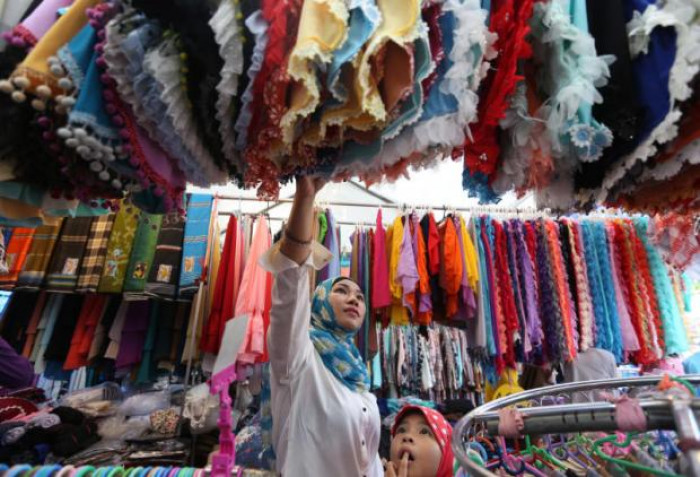
Dazzling jewellery, the finest clothes, colourful hijabs tailored especially for Eid al-Fitr, the joyous day that marks the end of Ramadan, which falls today in most parts of the world. For Muslims, finding a proper costume for the Eid celebration is a serious activity, especially for ladies. But being fashionable as well as culturally observant can be a style challenge
Muslimah, or Muslim women, mostly stick with the traditional style — the excessively intricate embroidery with golden or silver threads, the overuse of sequins, and the mundane choice of colour. It’s not uncommon for Muslim women to consult magazines whose style hasn’t changed for decades
In the past few years however, more young Thai-Muslim designers have responded to a change in the sense of style — covering up according to religion doesn’t always mean outmoded, unfashionable clothes. More and more, Islamic sub-cultural fashion is influenced by Western fashion — usually updated while sticking to the rule of modesty. Today, Muslim customers can look for the less-is-more concept, the innovation of “instant hijab”, denim-coloured headscarves and other wardrobe novelties.
“Muslim women are interested in fashion and dressing up more stylishly,” said Ratiya “Huda” Wongsangiam, founder and designer of the Muslim clothing brand Huda. She said online marketing also has helped promote Muslim fashion not just for Thai customers but the Muslim-dominated countries in Asean as well
Ratiya is among many Thai Muslim designers who have launched their own fashion brands catering to a specific demographic. This subgroup of Thai designers is simply following a natural evolution in global fashion: top-line designer brands such as DKNY, Dolce & Gabbana, Tommy Hilfiger, Oscar de la Renta and streetwear like Uniqlo have added the so-called “Ramadan collection” for years, including abayas and hijabs to satisfy the taste of their Muslim customers from the Middle East to Southeast Asia, especially the festive season at the end of the fasting month.
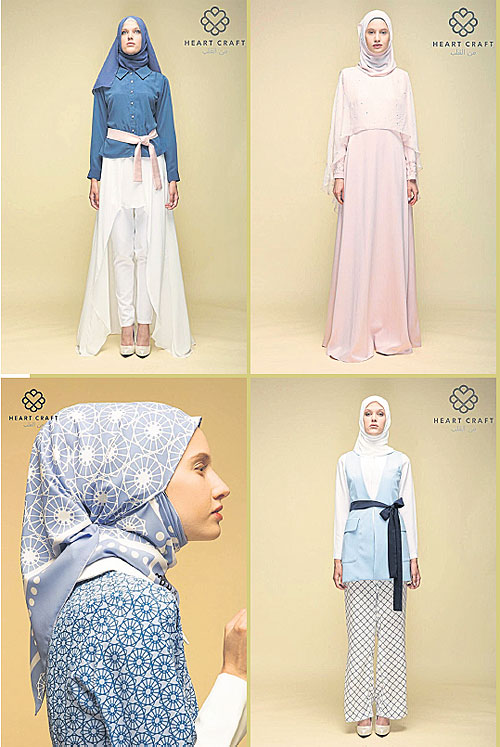
With more than 10 years of experience in Muslim fashion, Ratiya goes for “simple and classic” in crafting her brand Huda
Following the Western discipline of clean lines and no-fuss cutting, she forsakes the shining gaudy gowns that flood the market from Pattani to Ramkhamhaeng. She prefers softer colours and does away with unnecessary decoration, and her upmarket customers are prepared to pay from a few thousands to over 10,000 baht for a dress
“We mostly stick with the international trends to attract the fashion-forward customers,” added Ratiya. “Also, simplicity makes our brands different from those over-decorated costumes in the market.”
An outfit with a matching hijab is a formula for a graceful and devout Muslim look. From the aspect of manufacturers, the overall production of an ordinary headscarf is not complicated — just a piece of cloth with sewn edges — and thus there are numerous hijab brands in the market. To stand out from the pack, some brands introduce original digital-printed graphic patterns on the veils, trying to appeal even to non-Muslims. Other brands come up with stylistic strategies and colour choices.
Femineen is another Muslim clothing brand with more than 10,000 followers on Facebook, and which goes for a more affordable price range of around one thousand baht or less
“We thoughtfully give titles to our colours to make our products more marketable,” said Nassneen Hanafee, who used to work with the fashion house Issue and the founder of Femineen. “For instance, we have hijabs in a shade of blue, so we decide to call it ‘demin’ to make it more fashionable. Now the colour is the best-selling because the name inspires our customers to wear it with jeans, the common item in everyone’s closet.”
These clothes aren’t fitting only for religious holidays and Muslim weddings. Perhaps as a sign that Islamic culture can be part of mainstream society, the updated Muslim clothing means Muslimah can enjoy the practicality of wearing these clothes for secular occasions, such as at work or to non-Muslim ceremonies — preserving their Islamic identity while remaining fashionable. More brands have offered chic wide-leg trousers, instead of the traditional billowing long skirts or a whole-body glittering outfit. Likewise, the “instant hijab”, or ready-to-wear headscarf, has become one of the best-selling items among Muslim ladies.
Show catalogue of Islamic fashion from Thai designer Ratiya ‘Huda’ Wongsangiam, who also runs a collective of Muslim designers called Heart Craft. Photos courtesy of Huda brand
“The growth of Muslim clothing business is about giving a more convenient lifestyle to Muslim women. Muslim women used to get their stylish costumes from common clothing brands such as H&M, ZARA or Topshop. But now they [Thai designers] can provide a modest costume to local Muslim customers,” said Nassneen
As more Islamic clothing brands appear in the market, Thai-Muslim designers founded Heart Craft, a group of young designers who want to actively promote the business and expand its potential
“At the start, Heart Craft was just a group of clothing brands in the Min Buri area. We received support from the Department of Industry Promotion,” said Teeramate Leewan, a member of Heart Craft. “Later on, we launched our own clothing collection under this name.”
“The Muslim fashion industry in Thailand can grow further with the government’s backing,” said Chuleegorn Jantarataweekul, vice-chairwoman of the group. “With financial support from the ministry, Heart Craft is able to do the business matching under the project Bangkok Fashion Cluster, or BFC, with department stores in Singapore.”
In other words, this follows a similar model with other Muslim products such as halal food, with private entrepreneurs receiving state support to promote their goods in specific markets. Like other products, the Muslim clothing brands get a big boost from online and social media marketing. Bangkok-based Thai-Muslim designers said they have been able to sell their products to customers in southern Thailand — a predominantly Muslim region — as well as other countries such as Indonesia, Malaysia or even Japan.
“Eighty percent of our buyers are purchasing the goods through Facebook,” said Ratiya, whose brand has sales of more than 2 million baht a year
“Once someone from Indonesia saw our customers’ product reviews online, so he offered to be our sale representative,” said Nassneen. “But we weren’t ready to expand to that level. We hope to be able to do that in the future.”
Before Facebook and Instagram, where did Muslims shop for new clothes? Even now in fact, the main outlet for clothing remains mosque fairs, where stalls selling all kinds of Islamic goods can be found. Recently at the Islamic Center of Thailand in Ramkhamhaeng, a number of female shoppers could be seen looking for new gowns and hijabs for Eid. Nassneen says her brand Femineen, founded just six months ago, normally earns about 100,000 baht at each event.
“Customers sometimes ask if our brand has a permanent shop. But I think shops aren’t that necessary anymore because social media and the outdoor events on weekends bring retailers and buyers together. Plus, our target markets are students and working women and they definitely don’t have time to visit the shop during weekdays.”
With Dior and other high-fashion designers doing brisk business in rich Middle Eastern countries, Thai-Muslim designers are moving with the trend as well. Though a majority of observant Muslimah have a universal dress code — covering every part of the body except for hands and face — it seems clear that those rules do not always defeat the possibility of beauty. Stylish Muslim fashion can also pose a spiritual question, since the strict interpretation of the faith means hiding beauty while vanity is considered a sin.
“For me, wearing a beautiful dress that is modest is better than baring our skin,” commented Nassneen. “What we’re doing here even upholds Islamic values. Some Muslim girls don’t want to cover their hair and want to show their pretty faces, but our fashionable, Islamic-style clothes encourage them to wear hijabs by making them colourful and stylish
“It shows that Muslim women have their own kind of beauty.”