
Blog
The most sustainable fashion choice? Wear your clothes again, says designer Rina Dhaka

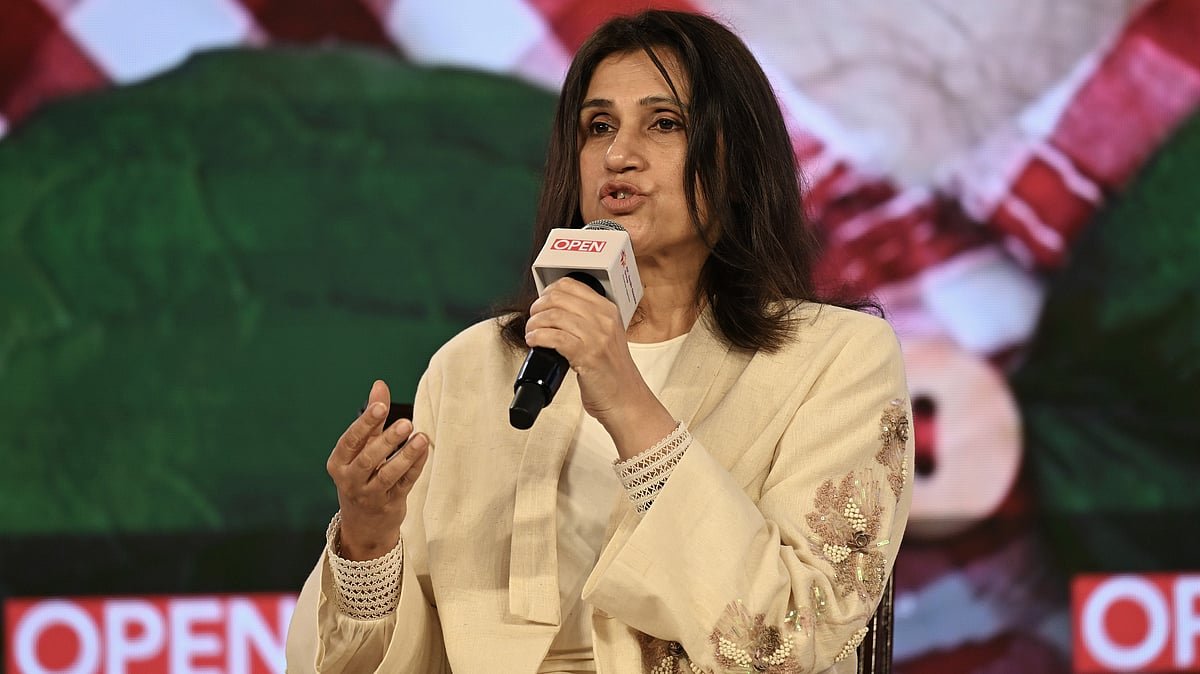
The future of sustainable fashion lies not in buying more “green” clothing but in wearing existing clothes longer, according to veteran fashion designer Rina Dhaka, who believes consumers have as much responsibility for the industry’s environmental footprint as brands
Speaking at OPEN Green Shift, Dhaka argued that many principles now celebrated under the circular economy—from upcycling to recycling and repair—have long been embedded in Indian households and traditional craftsmanship. “We called it katran,” she recalled, referring to the leftover fabric generated during garment production
Sign up for Open Magazine’s ad-free experience
Enjoy uninterrupted access to premium content and insights.
Go Ad-Free
Instead of treating those remnants as waste, designers and craftsmen transformed them into patchwork, quilting, embroidery and decorative details. What began as a practical way to reduce material loss eventually became a distinctive design language
Open Magazine Latest Edition is Out Now!
Greening the Future
23 Jul 2026 – Vol 05 | Issue 30
Securing a sustainable India
“The leftovers created the design which made it unique,” she said, recalling how discarded sequins and fabric scraps often found a second life in new collections
Dhaka said sustainability was once driven by necessity rather than branding
Factories and workshops, she noted, learned to maximise every piece of fabric because reducing waste also lowered costs and improved efficiency. Circularity, in that sense, was a natural outcome of good craftsmanship long before the fashion industry began using terms such as upcycling and recycling
She contrasted those practices with today’s fast-fashion culture, where rapid trend cycles encourage excessive consumption and frequent wardrobe changes
While innovation and technology continue to reshape fashion, Dhaka cautioned against confusing novelty with sustainability
“Our mothers and grandmothers never threw away sarees,” she said, describing how garments were repeatedly repurposed into quilts, cushion covers and household textiles. “It was forever the recycling.”
Perhaps her most striking message, however, was directed at consumers rather than designers
Dhaka argued that repeating outfits should be viewed as a mark of responsibility rather than a fashion faux pas
“The ‘Peter repeater’ is the right guy in today’s life,” she said, observing that men have traditionally reworn suits and shirts for years without hesitation, while women often feel social pressure to avoid being seen in the same outfit twice
She pointed to public figures such as Catherine, Princess of Wales, whose repeated outfits frequently attract media attention, saying such examples should help normalise outfit repetition instead of making it an exception. Rewearing garments, she argued, is one of the simplest ways to reduce fashion’s environmental impact
Dhaka also urged consumers to rethink everyday habits beyond shopping
Washing clothes less frequently, when appropriate, can extend the life of garments while reducing water and energy consumption, she said. Small behavioural changes, combined with repairing and reusing clothing, can collectively make a significant difference
Looking back at decades in fashion, Dhaka said the industry’s biggest sustainability lesson may not come from new technologies but from rediscovering practices that earlier generations considered ordinary
In her view, the circular economy does not begin in the factory. It begins in the wardrobe, where choosing to repair, reuse and repeat clothes can be one of the most meaningful contributions consumers make towards a more sustainable future