
Blog
Colombia to Emerge as an International Fashion Power – Modaes Global


Markets
13 oct 2026 – 05:00
“She was dressed with subtle taste: a lynx-print jacket, a natural silk blouse with very faint floral patterns, ecru linen pants, and sleek shoes the color of bougainvillea.” When Colombian author Gabriel García Márquez had to decide how to describe the protagonist of *The Plane of the Sleeping Beauty*, he focused on her clothing. Decades later, one of Colombia’s most internationally renowned figures today, J Balvin, makes constant references to fashion brands and lifestyles in his song lyrics. Colombia, culture, and fashion are terms that have historically gone hand in hand, with a tradition dating back to the early 20th century but which has exploded in the last decade alongside other cultural expressions (from cuisine to music) and a reclaiming of ancestral roots, driven by a generation of designers who have left behind—because they never experienced it—the stigma of drug trafficking. Colombia, crowned the fashion capital of Latin America, is now grappling with its own chaos: the very chaos that gives it the capacity to be at the creative forefront, but which also prevents it from creating business structures capable of developing internationally viable models.
Pinpointing the exact year of an industry’s origins in any country is difficult. In Colombia, however, the date is almost universally accepted: 1907. That year, Alejandro Echavarría Isaza, a carpenter by trade, launched one of the country’s first textile companies: the now-defunct Compañía Colombiana de Tejidos (Coltejer). A few years later, in 1920, the Fábrica de Hilados y Tejidos El Hato—now known as Fabricato—began operating its looms.
The emergence of the manufacturing industry in the early decades of the 20th century was no accident, and the reason lies in coffee: between 1910 and 1930, Colombia increased its coffee exports at an annual rate of 10%. “While mining was the country’s primary source of income in the 17th and 18th centuries, in the 19th century we began to move into agriculture, particularly coffee,” explains historian William Cruz Bermeo; “These industries created wealth and an emerging social class that had money and changed its habits, leading to the importation of textiles—to the point that Medellín became known as the ‘Manchester of South America,’ even though there was no local production.”
As the business class developed, it began seeking new industries in which to invest and, as has happened in so many other countries, saw the textile sector as one with simple processes and an available labor force. In the first two decades of the 20th century, Colombia’s major textile industries were founded, relying on local raw materials such as cotton and abundant water resources. “The expansion of the coffee industry broadened and consolidated the domestic market, aided in the accumulation of capital across various sectors of the economy, was a key factor in creating a wage-earning labor market, significantly increased the country’s import capacity, and, as a result, it also substantially increased the government’s fiscal resources,” states *The Arduous Transition to Modernity: A History of the Colombian Textile Industry duringthe First Half of the 20th Century*, written by Santiago Montenegro.

Thanks to companies such as Fabricato, Coltejer, and many others—including Compañía de Tejidos de Bello—the first formal industrial jobs in Colombia emerged, concentrated in the Antioquia region, a department in the northwest of the country located primarily within the Andes mountain range and extending to the Caribbean Sea, with Medellín as its most prominent city. In the first half of the 20th century, the textile industry became Colombia’s industrial engine. The industry led to the formation of an urban working class and the development of transportation and educational infrastructure.
Today’s leading players in Colombia’s fashion industry still draw inspiration from that industrial powerhouse. Grupo Crystal, one of the sector’s giants with brands such as Punto Blanco and Gef, traces its origins to the 1930s in a small sock factory in downtown Medellín. From that workshop, called Zigzag, the Crystal Stocking Factory was born, which eventually evolved into its own brand with Punto Blanco (in the 1960s) and Gef (in the 1980s).
According to data compiled in *The Arduous Transition to Modernity* based onthe country’s industrial census, it is estimated that in 1926 there were fourteen textile factories in Colombia, with 47,280 spindles and 1,854 looms. Two decades later, in 1945, the number of factories had nearly quintupled, and the number of looms and spindles had more than tripled. Despite fluctuations stemming from international geopolitics, the Colombian textile industry continued to grow stronger, leading to the emergence of companies specializing in fabrics for formal wear and the expansion of exports.
The 1960s saw the birth of one of the great icons of Colombia’s fashion industry: Lencerías Nacionales de Textiles S.A. (Leonisa). Founded in 1956 by the Urrea brothers, the company launched its first finished-goods plant in the 1960s. That same decade, as a pioneer in the sector, it began exporting women’s lingerie—first to countries like Costa Rica and later to Europe, with Spain leading the way. Leonisa, which pioneered a segment (women’s lingerie and swimwear) in which Colombia now stands out internationally, currently operates forty production plants in the country and sells its products in some twenty markets around the world.
As the textile industry developed, society’s interest in fashion also grew. A key figure at that time, according to Pilar Luna—a journalist and fashion editor with over thirty years of experience and founder of the consulting firm Código Malva—was Susana de Goenaga, better known as Madame Crepé. Based in Bogotá, she created her own world of handmade crepe paper flowers, while also importing pieces from around the world beginning in the 1950s. In Barranquilla (though born in Cartagena), Toby Setton is considered the first Colombian designer; he introduced ready-to-wear fashion with his own brand and factory, transforming the wardrobe of a very conservative society.
The 1970s were a mixed bag for the industry. Following the Great Depression of 1929 and the world wars, when supplies from Europe and the United States were scarce, the Import Substitution Industrialization model gained momentum in Latin America—an economic policy that sought to replace foreign manufactured goods with domestically produced goods to foster internal industrial development, using tariffs, quotas, trade barriers, and public subsidies. In the 1970s and 1980s, the Colombian textile industry benefited from this protection, but at the same time, a weak model was created that was unaccustomed to foreign competition and ultimately collapsed in the 1990s.
On August 7th, 1990, César Gaviria of the Colombian Liberal Party took office as president of Colombia. His administration is remembered for economic liberalization, which—though introduced by his predecessor—reached its peak in 1991 and led to the collapse of numerous textile companies. “Our economy was protectionist until the 1990s; it was completely inward-looking and didn’t know how to export,” says Cruz Bermeo. “When borders opened, very few were prepared, because with maquila manufacturing, you don’t need to go out and knock on doors—people come looking for you.”

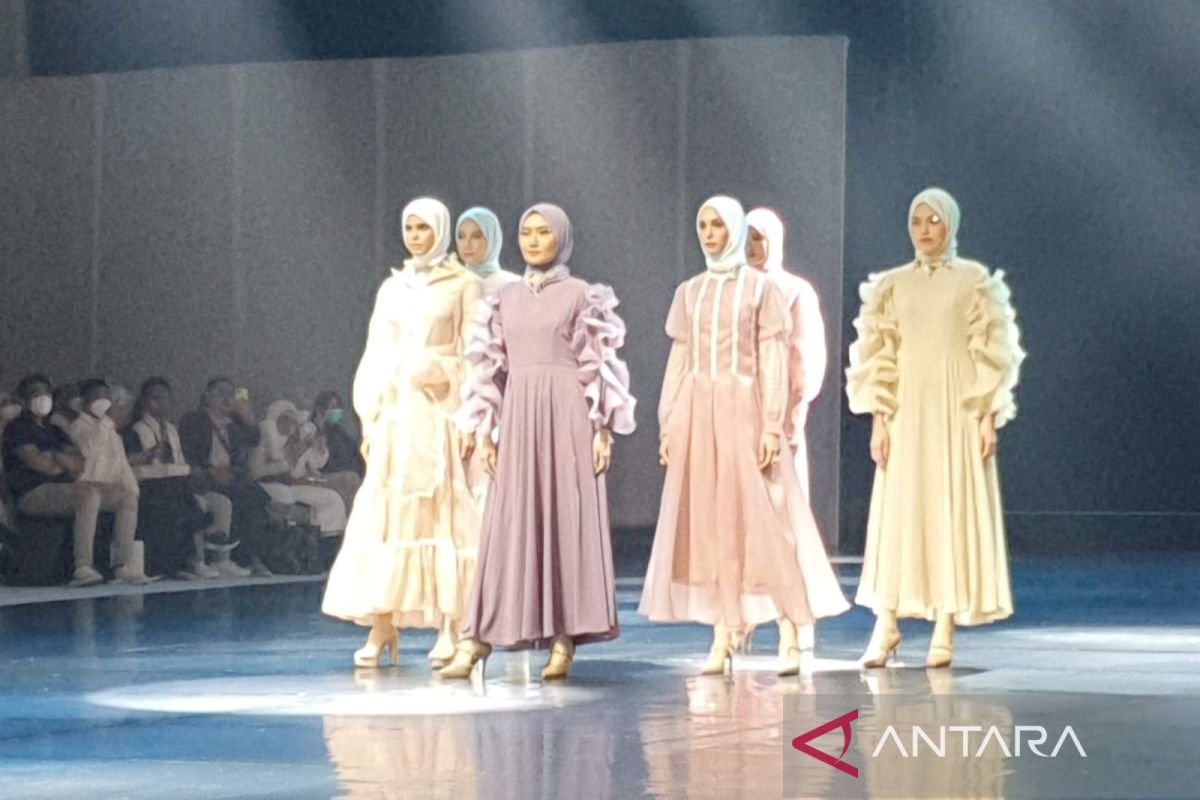
Amid this climate of the country’s gradual economic liberalization and the weakening of the textile industry, fashion began to make its mark. While the first design schools had emerged in the 1950s, by the 1970s—as Pilar Luna points out—fashion shows began to be held in Bogotá (with the Tequendama Hotel as the venue) and fashion “hit the streets.” “Many designers emerged who stood out, not because they had formal training, but because they were different—because of their creativity, their use of color, and their coastal flair,” says the expert. In 1972, the Sandiego Shopping Center opened in Medellín, considered the first modern-style shopping center in Colombia.
“We were primarily a textile industry until the late 1980s: here, the heart of it all was textiles and apparel, with products like those from Leonisa,” says Cruz Bermeo; people began talking about fashion—which is a completely different concept—in the late 1980s with the founding of Inexmoda.” The key role this institution plays in Colombia’s fashion industry is widely acknowledged by all stakeholders in the system.
The Institute for Exports and Fashion (Inexmoda) was founded in 1987 under the leadership of Roque Ospina and seventy Colombian textile companies. Three years earlier, the U.S. government, under President Ronald Reagan, had declared illegal the tax subsidies that the Colombian government granted to fabric manufacturers and apparel producers for exports to the United States, known as Tax Refund Certificates (Certs). To save exports to the United States, Colombian business leaders renounced these public incentives, and with the remaining frozen subsidies (the equivalent of 270 million Colombian pesos), Inexmoda was launched with the goal of creating an institution that would drive the industry forward competitively, without public assistance. Since the organization’s goal was to promote the foreign market, Colombiatex (now one of Latin America’s leading trade shows for fashion supplies) was launched in 1988, and in 1989, Colombiamoda, which every July becomes the epicenter of design in the country.
Huge, unpayable foreign debts, massive fiscal deficits, and volatility in inflation and exchange rates led to what became known as Latin America’s “Lost Decade” in the 1980s. Colombia managed to weather the storm better than its neighbors, and the country’s economy maintained an average annual growth rate of 3.2% during the decade (far below the 5.5% of the previous decade), according to the newspaper El Tiempo. Colombia did, however, its own problems: the intensification of the internal armed conflict against guerrilla groups (the FARC, for example, expanded from six fronts in 1978 to 36 in 1990) and drug cartels (from the Medellín to the Cali cartels). Amid a period of social and political instability, with declining growth rates and a slowdown in employment (though consumption was indirectly buoyed by the illegal drug trade), Colombian fashion showcased its creative chaos, leaving its mark on both design and business.
His first foray into the textile industry was as an industrial mechanic at Hilanderías Pepalfa, but, like Amancio Ortega (founder of Inditex), Arturo Calle began his career working behind a counter selling shirts. In 1988, he opened his first store, becoming one of the pioneers of organized fashion retail in Colombia, recognizing the advantages of direct control over the channel to the end customer. Today, the Arturo Calle chain, which specializes in men’s fashion and is headquartered in Medellín, has more than 100 stores in Colombia and a presence in neighboring countries.
At the same time, Studio F began to make a name for itself. Businesswoman Carmen Faride had launched the brand in the 1950s in Cali, but it was in the 1970s that she opened her first store, which she expanded into a national chain starting in the 1980s—a network that now comprises more than 400 stores. Tennis (founded in 1976 as a contract manufacturer but which moved into retail in the 1980s) and Offcorss (launched in 1979, specializing in children’s fashion, and now with more than 130 stores) also rose to prominence in the 1980s, making retail the cornerstone of their business model.
Their consolidation would come in the 1990s, but it was in the 1980s that Olga Piedrahita laid the groundwork for a different perspective—one that moved away from mass production and embraced symbolism and art. Pepa Pombo (who, as Pilar Luna recalls, revolutionized knitwear), Hernán Zajar, and Alfredo Barraza were joined a few years later by Silvia Tcherassi, the pioneer of “Caribbean chic”—a trend that Johanna Ortiz would later popularize, paving the way for signature design in Colombia.

The Economic Miracle
In 2009, economist Robert Ward, then head of global forecasting for The Economist’s analysis division, coined the term “Civets” to describe six emerging markets with high growth prospects: the first of these was Colombia. The acronym is derived from the name of the civet, a carnivorous mammal resembling a cat and a raccoon, known for its agility and stealth
That year, the country was weathering the international financial crisis—the Great Recession—which it faced with a brief period of economic contraction: Colombia’s Gross Domestic Product (GDP) fell in the first three quarters of that year, but a rebound in the fourth quarter allowed the year to end on a positive note, with a 1.1% increase. That same year, the Spanish economy, for example, contracted by 3.8%, and the U.S. economy by 2.6%.
Susceptible to international disruptions—particularly in fuel and commodity prices—Colombia’s economic performance since then has not followed a straight line, but rather has featured the same undulating terrain as its rugged landscape. From 2010 to 2015, the country posted annual growth rates ranging from 3% to 6.9%, and between 2016 and 2019, it grew at more moderate rates following the drop in international oil prices, the depreciation of the peso, and high inflation, which was exacerbated by the El Niño weather phenomenon.
Like other Latin American countries, dependence on raw materials, low productivity, and informality in the labor market were identified then (and now) as some of the strategic challenges facing a country destined to be South America’s economic leader
In 2020, the pandemic dealt a severe blow to the Colombian economy, causing GDP to contract by 7.2%, but the recovery was exceptionally strong in 2021 (growth reached 10.8%) and continued into 2022 (with a 7.3% increase), driven by household spending, remittances (which accounted for 2.8% of GDP in 2024), the recovery in employment, credit, and the normalization of services
Since then, inflation (a headache throughout Latin America) has been the main obstacle to Colombia’s further economic takeoff. Price increases stood at 10.2% in 2022, and some of their economic effects were felt the following year, when GDP growth slowed to 0.8%. In 2023, the Consumer Price Index (CPI) rose even further, to 11.7%, but fell sharply in the following two years: in 2024, consumer prices rose by 6.6%, and in 2025, by 5.1%. As inflation declined, economic growth picked up speed again, rising 1.5% in 2024 and 2.6% in 2025. Still, the pace is nowhere near what a civet should be capable of.

According to a report by BBVA Research, consumer spending is a key driver of Colombia’s economic growth. Domestic consumption has outpaced GDP growth for several consecutive quarters, meaning that “it now accounts for a larger share of GDP than in previous decades,” the study notes. The rise of Colombia’s burgeoning middle class plays a key role in this trend: as revealed last May by Colombia’s National Administrative Department of Statistics (DANE), for the first time in the country’s recent history, there are more people in the middle class than in poverty. According to the Ministry of Finance, the percentage of middle-class residents increased by 6.5% over four years.
In 2021, 27.9% of Colombia’s resident population belonged to the middle class, while just three years later, that demographic group had risen to 34.4% of the total. In absolute terms, the country has gained 3.5 million middle-class people, bringing the total to 18.2 million. And the fashion industry loves the middle class
Riding the Wave of Reggaeton
In 2023, by which time he was already an internationally renowned artist, Puerto Rican singer Bad Bunny dedicated a song to the Perro Negro nightclub, located in Medellín’s Provenza neighborhood and considered the mecca of perreo. “Every time a reggaeton singer mentions Colombia or any of our cities in one of his songs, it puts us a little bit further on the international map,” says Sebastián Díez, president of Inexmoda, referring to the cultural and tourism boom the country has been experiencing for a decade and which is now at its peak. Although art and gastronomy are also ingredients in this mix, reggaeton is the main one.
“Chaos fuels our creativity, but it also casts a shadow over our structure,” says Inexmoda
Born in the 1990s in Puerto Rico, Panama, and Jamaica, reggaeton has ultimately made Medellín its home, turning the city into the international mecca of this musical genre and fueling a massive industry. He wasn’t the first, but J Balvin is considered one of the pioneers of reggaeton in Colombia, serving as the face of a collective that also includes artists such as Maluma and the “bichota,” Karol G. In 2025, Colombian artists generated more than 468,000 million Colombian pesos on Spotify—more than double the amount from four years ago. Furthermore, 90% of the revenue generated by Colombian artists on the music streaming platform comes from listeners located outside the country.
This new generation of Colombian artists—not to mention Shakira, who can already be considered a legend—has become the great ambassador for a country that has gone from being associated with drugs and drug trafficking to being associated with one of the most widely listened-to musical genres today. Colombia’s image makeover, along with its lower costs compared to other countries around the world, has led, for example, to Medellín ranking among the top ten destinations worldwide for digital nomads. “Colombia is now associated with creativity, identity, and coolness, which has allowed it to rebrand itself and has boosted numerous industries, from airlines to hotels and, of course, fashion as well,” reflects the president of Inexmoda.
The Fashion Landscape
All of Colombia’s major fashion companies have a strong industrial base in the country, from which they have no intention of breaking away. Manufacturas Eliot, with revenue of 1.6 trillion Colombian pesos (around 442 million euros) according to La República, is the country’s largest fashion company. Founded in 1957 and owned by the Douer family, Manufacturas Eliot is part of the Grupo Pash conglomerate, which operates the brands PatPrimo, Seven Seven, Atmos, and Ostu. These brands, which manage their production through Manufacturas Eliot, have a combined total of nearly 400 stores in Colombia and neighboring markets. According to data provided by the company itself, Grupo Pash’s revenue exceeds $3 billion, with more than 11,000 employees.
Grupo Uribe, with revenue of 1.4 trillion Colombian pesos (about $400 million) through Comodín (the conglomerate’s operational and commercial arm), owns the brands Americanino, Chevignon, American Eagle, Naf Naf, Esprit, and Rifle. Known as GCO, Grupo Uribe has managed to keep the legacy of struggling European brands—such as the German brand Esprit and the French brand Naf Naf—alive, first through licensing agreements and later by acquiring them for certain territories. In addition to its own brands, the company holds the Colombian franchise for the Spanish brand Mango. Founded in the early 1900s when John Uribe Escobar began selling fabrics in a small store in Medellín, GCO has its own design teams and local production facilities.
With Punto Blanco at the helm, Grupo Crystal generates approximately 1.1 trillion Colombian pesos (about $350 million) in revenue. Crystal currently has more than 270 stores in Colombia, six manufacturing plants, and a presence in eleven Latin American countries through its own brands—Gef, Punto Blanco, Baby Fresh, Galax, and Casino—as well as the franchise for the Portuguese company Parfois
Cueros Vélez follows closely behind in terms of revenue. With revenue of just over 1 trillion Colombian pesos (about $290 million), the company began its growth in 1996 under the leadership of Juan Raúl Vélez. With its own plant in Medellín, Vélez ended 2025 with a network of 300 stores in Latin America, located in countries such as Chile, Peru, Colombia, Costa Rica, Panama, Guatemala, and El Salvador.
These names—to which we should add others such as Permoda (with the Koaj chain), Leonisa, Studio F, Línea Directa (catalog sales), Totto, and Agua Bendita (as the leading name in swimwear, a segment where operators such as Maaji and Onda de Mar also stand out), have benefited for years from the domestic market and those of neighboring countries. “Colombia is surrounded by nearly 750 million people in an emerging economy, and Europe has never had that; that’s why we’ve been so careful and loyal to that audience,” says Guillermo Criado, president of the Colombian Chamber of Apparel and Related Industries and general manager of Manufacturas Eliot. Thus, the companies that have grown in size within the Colombian fashion industry to date are highly commercial, designed for the mass consumer in Latin America. Another common feature is their value chain: with a few exceptions, the largest groups draw on Colombia’s industrial heritage and centralize their manufacturing within the country, operating with structures that are less competitive than those in Asia, high absenteeism rates, and import tariffs on raw materials. Furthermore, the recent increase in the minimum wage of more than 20% in the country adds further pressure to a vertically integrated structure that is already very rare among fashion giants in Europe or the United States.

Just as happened to U.S. fashion groups during the Great Recession—which suffered greatly due to their heavy reliance on the domestic market because, quite simply, they had not needed to expand abroad until then given their large base of potential customers—Colombia’s largest companies now want to expand abroad. And they need to act fast, because the burgeoning middle class is attracting the major international fashion giants.
Inditex, led by Zara, entered Colombia nearly two decades ago and currently operates more than sixty stores across the country, representing virtually all of its chains. The Swedish group H&M entered the market a decade later, and although it has only about twenty retail locations, it is beginning to gain a foothold in the country by opening stores in secondary cities. Joining them is the arrival of Asian competition, with Shein and Temu: according to estimates by Inexmoda and the Colombia-China Chamber of Commerce, Colombia may be receiving nearly 26.4 million shipments annually from Temu alone. Local retailers, accustomed to competing comfortably on equal footing (with companies that have similar cost structures and operations), are now struggling against competitors offering much more sophisticated products and visual merchandising, along with more competitive prices.
According to data from Inexmoda, Colombia’s formal fashion ecosystem consists of 85,000 companies. Of these, 4,369 companies exported at least once between 2019 and 2025, but the vast majority failed: only ninety companies maintained seven consecutive years of annual exports totaling at least $500,000. In other words: only 0.1% of Colombian fashion companies are consistent exporters. Colombia has a number of companies with annual revenue exceeding 100 million euros—comparable, for example, to that of Spain—but very few of them have a distinctive product and a structure ready to make the leap to the international market. “We have to shake things up a bit: it’s not possible that, with so many design concepts and so much talent, we’re exporting so little,” laments Guillermo Criado, to which Sebastián Díez adds that “Colombia has historically confused internationalizing its business model with exports, and they are two different things.”
That’s what happened, for example, to Studio F. In late 2023, the company opened three stores in Spain, one of the countries with the most competitive fashion retail markets. Within a few years, the company did an about-face and refocused on Latin America. “Competing in the global market isn’t easy with such a commercial product, and the products offered by the vast majority of Colombian brands are extremely commercial,” explains Díez. Studio F’s offering simply could not compete in Europe in terms of product—both in style and in the type of merchandise—since it was accustomed to operating in a country, Colombia, where there are no distinct seasons. Operations and profit margins also failed to meet the company’s expectations, as it was anchored in local in-house production, which drives up costs and limits its speed. Thus, products, operations, local manufacturing, tariffs, exchange rates, and timing are all part of the business chaos that hinders Colombia’s largest fashion groups from expanding abroad, beyond Latin America. “Chaos is our light, but also our shadow,” says Díez.
“We have to shake things up a bit: it’s not possible that with so many design ideas and so much talent, we’re exporting so little,” laments Guillermo Criado
There are exceptions, however. Vélez, Agua Bendita, and Totto—each with three distinct lines—are three of the leading brands, with the first two being long-established companies that, according to various experts, have the greatest international potential. With leather as their distinguishing feature and jackets as their hero product(that is, a brand’s flagship item that accounts for the majority of sales, media attention, and public recognition), Cueros Vélez has spent the last six years repositioning itself, evolving from a belt brand into Vélez, with a distinctive, high-end product. Although still far from the operational excellence of European companies and the retail sophistication of American brands, Vélez now considers itself ready to take on the United States, starting with a partnership with Nordstrom, its own e-commerce platform, and pop-up stores to test the market. For now, it is leaving Europe for a second phase, although in 2026 it will make its mark on the market through the multi-brand retailer Malva, which is opening its first store outside of Latin America in Madrid.
While Vélez remains committed to manufacturing its flagship products in Colombia, Agua Bendita is beginning to explore other options aspart of its international expansion. As explained by Sebastián Pérez Aranga, the company’s general manager since May 2026, international expansion will bring an increase in production, which could take place in other countries, while maintaining the production structure in Colombia to handle the current volume.
Catalina Álvarez and Mariana Hinestroza are the founders of this swimwear brand, established in 2003 in Medellín, which has diversified with a line of dresses (with prices and a look comparable to those of the Brazilian brand Farm Rio) called Agua. Sixty percent of the company’s sales come from outside Colombia, so the weak dollar has worked against it over the past year. With a network of 54 stores (34 company-owned and 20 franchises, across Colombia and countries such as the United States) and a wholesale presence, Agua Bendita exports to 70 countries. Its distinct brand identity paves the way for its international expansion.

Totto is, along with Leonisa, one of Colombia’s most globalized companies and is currently undergoing a relaunch. Founded in 1987 by Yonatan Bursztyn, the company has brought its backpacks and suitcases to more than thirty countries around the world since it began its international expansion in 1992. As of the end of 2025, Totto had more than 500 stores (226 outside Colombia), sold 14 million units worldwide, and achieved revenue of 827,000 million Colombian pesos (approximately $240 million). Although part of its production is local, about 80% takes place in Asia, according to sources close to the company.
Raising their market position to maintain cost structure, having been founded without the burden of local production, or starting from scratch. This is the third path being taken by a new generation of fashion companies in Colombia, which has flourished over the past decade in tandem with the country’s cultural boom. Many of them have ridden the wave of the global streetwear and reggaeton boom, with notable examples such as Monastery, True, Clemont, and Undergold. The latter was founded a decade ago by brothers Simón and Mateo Bermúdez, who built an international brand image through social media; today, more than 15% of their sales come from outside Colombia, with the United States as their top market. The Bermúdez brothers are strong advocates of international sourcing, and while they rely on Colombian expertise in categories such as denim, they manufacture in Turkey or Portugal. Production at Monastery, founded in 2019, is also international. The company has established a network of more than thirty brick-and-mortar stores and 25 multi-brand retailers in Mexico and the United States, where it focuses its international expansion efforts through partnerships with department store chains.
In the realm of designer fashion, Colombia is also beginning to produce new names. Still in the shadow of Johanna Ortiz (with her professionalized business structure), Manuela Álvarez is making her mark with a creative vision that proves Colombia is much more than just “tropical chic.” Trained in Italy, Álvarez already has international distribution, which she combines with a fully local, artisanal production structure—made possible by her high price points. Another standout among Colombia’s new wave of entrepreneurs is Baobab, a swimwear brand founded in 2016 by Isabella Espinosa, which has successfully expanded its reach to 52 countries through more than 400 wholesale outlets.
Undergold, Monastery, Manuela Álvarez, and Baobab—as well as Agua Bendita and Vélez—are some of the Colombian brands that, according to various experts consulted by Modaes, currently have the greatest international potential. What do they have in common? A distinctive product aimed at a global niche market, coupled with a well-established—though still-maturing—operational structure. Having created giants in local industry and distribution, Colombia now aims to take fashion to the next level—a leap that necessarily involves internationalization to achieve the scale needed to compete in the global fashion market. Only those who manage to differentiate themselves and establish a presence beyond their borders will thrive amid the chaos of Colombia.