
Blog
How German Is It

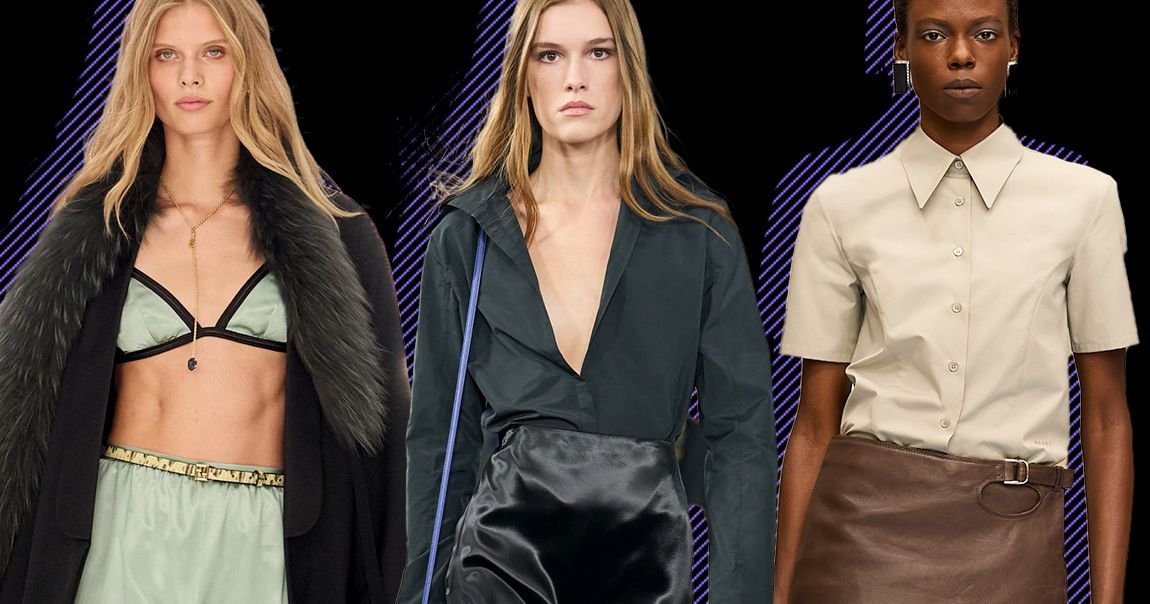
Photo: Photo-Illustration: by The Cut; Photos: Courtesy of Fendi, Jill Sander, and Fendi
Listen to fashion critic-at-large Cathy Horyn read her review
Of the many attractive things about Simone Bellotti, the creative director of Jil Sander, surely the most important is that his work makes you feel something.Last season, watching his second show for the label, I was startled by the erotic subtleties of the clothes, the dirtiness and sense of freedom that came through in the tension between pliable silk, common leather, and scuffed pumps. Bellotti had been looking at photos from the ’60s of bar patrons in Hamburg, the city where Jil Sander started her minimalist brand in 1973. She never offered that feeling in her clothes.
No, I think it was something Bellotti abstracted from those images and from the movies of Fassbinder, a distinctly German idea of pleasure. By doing that, he opened up the possibilities not only for the brand but for minimalism
The other day, in his spring 2027 collection, the clothes again had that sexual pull but with the addition of a feeling of vulnerability. About a third of the way into the show, held in Sander’s modernist showroom with the audience seated tightly together so as to create the sense of a crowd, the style shifted from a classic Jil uniform — the dark three-button suit, a trim black leather coat, a proper dress in cream-colored knit with matching tights — to one that suddenly looked fragile and rumpled, the shoulders hunched slightly forward.
The fronts of suit jackets were folded in several places near the buttons and pressed flat with the shirts underneath similarly manipulated and the collars seeming to escape from the neat frame of the lapels. Bellotti was pulling us in another direction — toward the reality of not always looking strong and powerful, in fact of not even striving for it
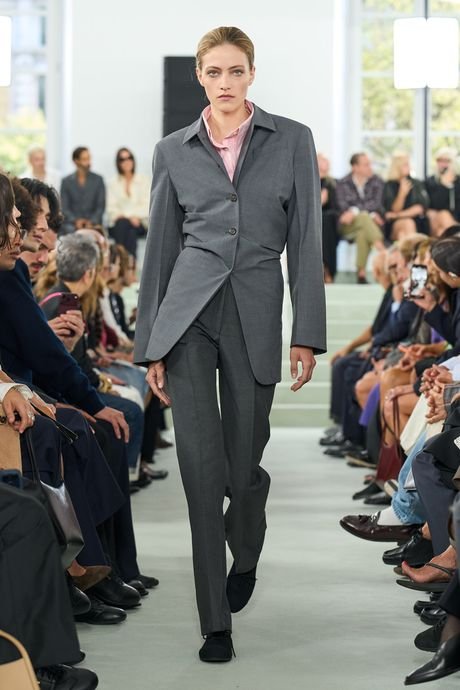
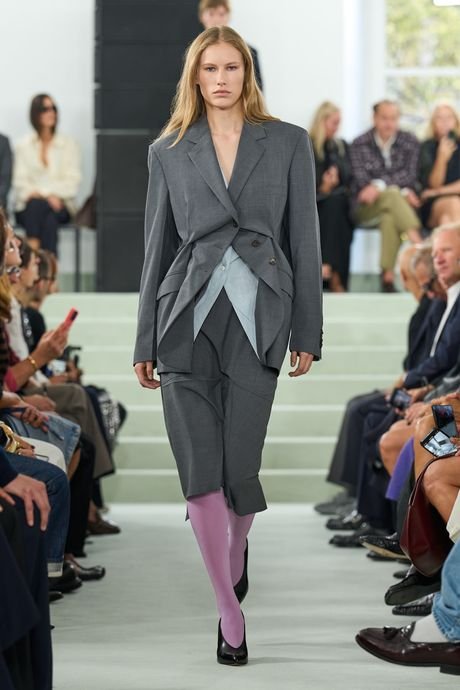
From left:Photo: Courtesy of Jill SanderPhoto: Courtesy of Jill Sander
From top:Photo: Courtesy of Jill SanderPhoto: Courtesy of Jill Sander
I asked him if the look reflected something in the culture. He said, “I think it reflects the extreme presence of power — in the politicians. This kind of heavily masculine energy. I think if we admit it, vulnerability can be even more powerful.” Bellotti then smiled. “Probably I sound naïve.”
That sense of vulnerability was also expressed in gorgeous dresses in ivory and palest pink or peach silk satin that looked crushed in places — “as if stepped on,” Bellotti said — with fluttery backs and in the voluminous nature of other dresses and coats
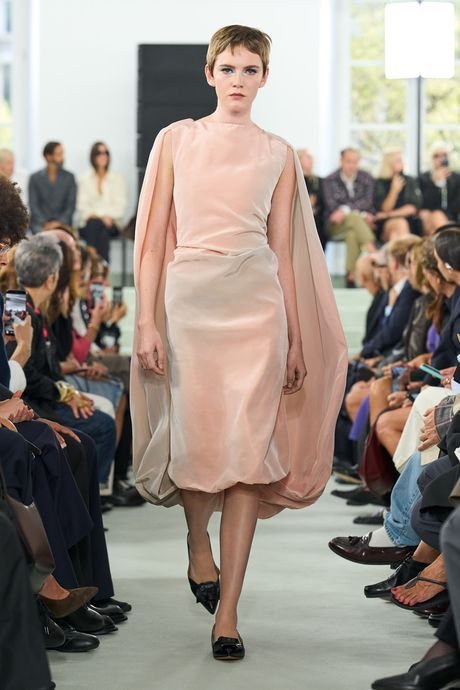
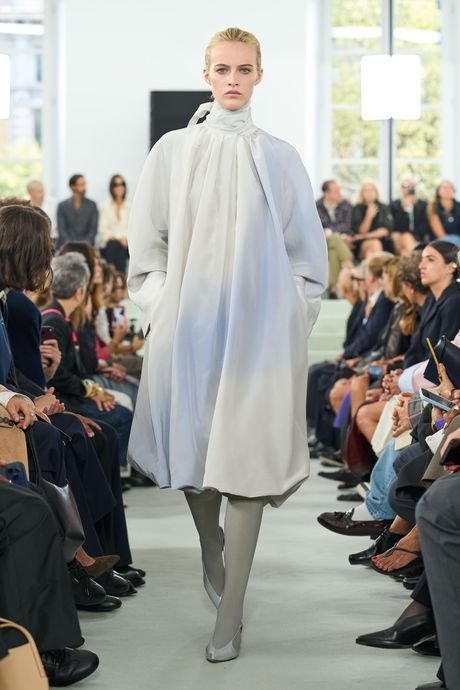
From left:Photo: Courtesy of Jill SanderPhoto: Courtesy of Jill Sander
From top:Photo: Courtesy of Jill SanderPhoto: Courtesy of Jill Sander
Still, he kept the sexual motor running at a purr, aided by the sublime dance beat of Pavel Milyakov, a German musical artist whose brand is called Buttechno. One of the best looks was the plainest: a long-sleeve matte-black shirt with a slim black satin skirt, lavender tights and taupe pumps. In contrast to other collections this week in Milan, Bellotti showed very little skin, though he was certainly focused on the body. He also nimbly used color and texture to convey sexiness — the desire of touch.
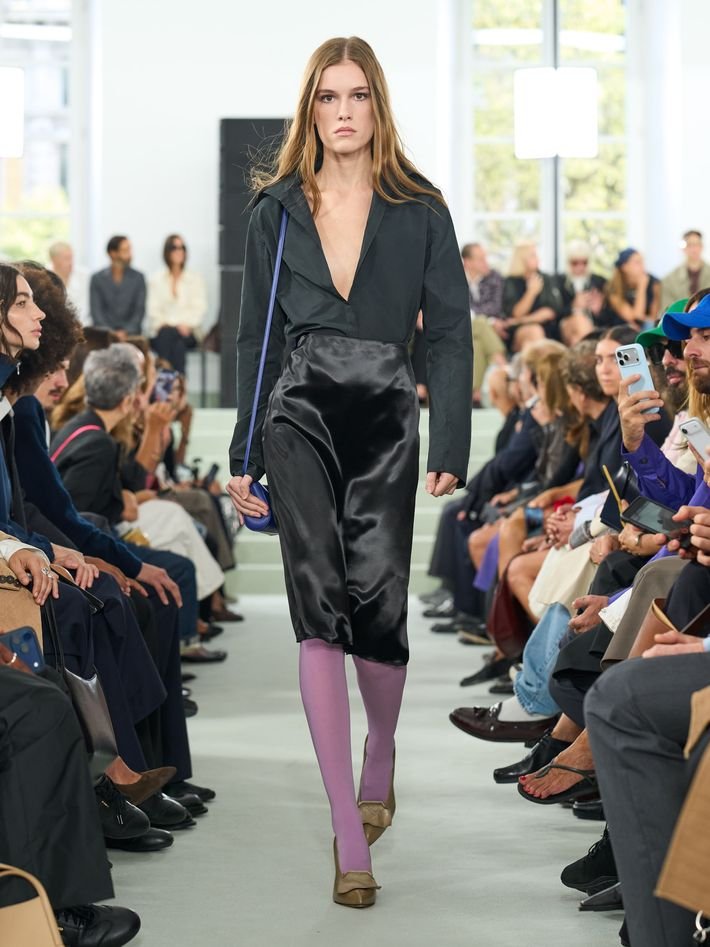
Photo: Courtesy of Jill Sander
Much of fashion today, like the culture it reflects, asks people to sell themselves. To look richer, more powerful, more seductive. It happens every second on the internet. “We have so many illusions,” Bellotti said. “It’s the biggest scam of today.” And, of course, reality is almost always more interesting than fantasy. That’s the power of minimalism if you’re willing to dig into it as deeply as Bellotti has done.
The Fendi show was just plain maddening. Its creative director, Maria Grazia Chiuri, came up with a long, tunnel-like set apparently inspired by a mirrored Italian art installation in mid-’60s. Because the interior of the glass set was heavily illuminated, there were reflections everywhere, including of the audience. Chiuri’s collection was better than her debut in February; at least the clothes looked lighter with ubiquitous bras, lace-edge knickers, and a ’70s vibe.
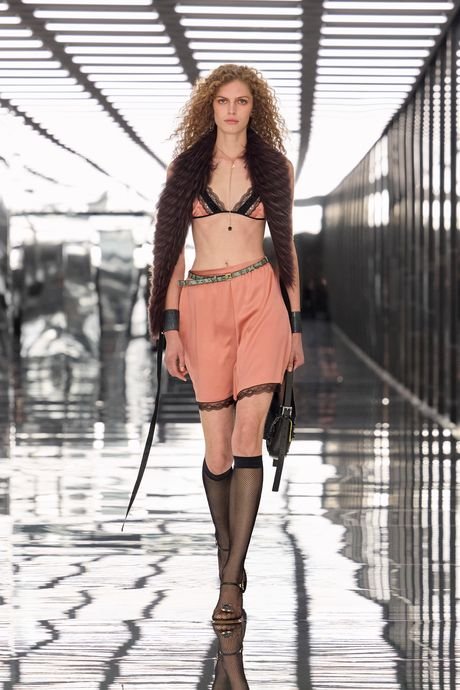
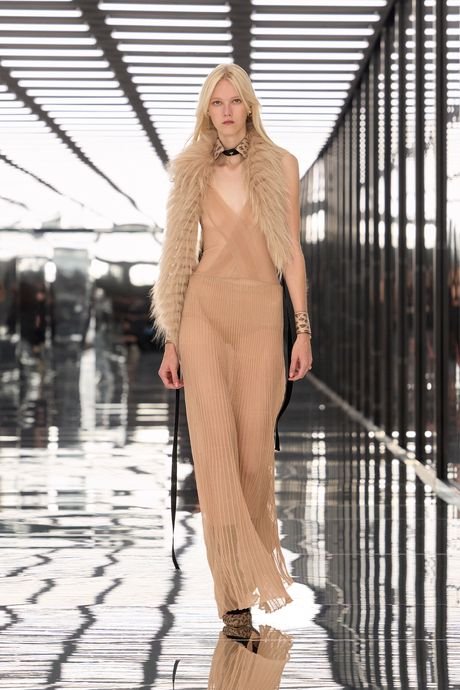
From left:Photo: Courtesy of FendiPhoto: Courtesy of Fendi
From top:Photo: Courtesy of FendiPhoto: Courtesy of Fendi
But I only know that from looking at pictures of the show later. At the time, I felt like I was watching things swimming past in an aquarium. Nothing looked crystal clear. After awhile, to distract — or amuse — myself, I began taking videos of my reflection. I’m sure I wasn’t the only person at sea at Fendi
Meryll Rogge had a great second collection for Marni. “We wanted to come from a place of continuity,” she said, “but we definitely wanted to sharpen things up.” She more than delivered on that aim with looks that had Marni’s telling ’60s edge but with a rougher modern treatment, best conveyed in the opening shifts, including one in raw brown leather with a belt detail and boots that had a kind of industrial mesh sock.Also strong were rangy knee-length coats in goat, including a tawny brown one over an orange miniskirt, combined with shorts and shrunken tailored jackets with trousers, a fresher— and cooler — way to dress up.
This collection, with its somewhat twisted sexuality, makes you even more curious to see what Rogge will do next at Marni
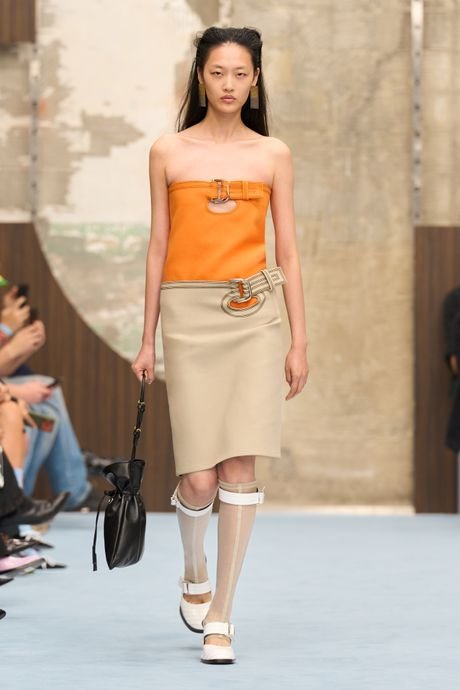
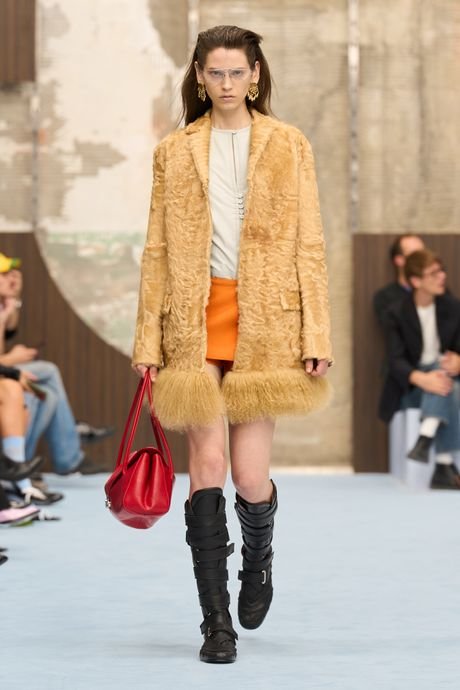
From left:Photo: Courtesy of MarniPhoto: Courtesy of Marni
From top:Photo: Courtesy of MarniPhoto: Courtesy of Marni
See All
How German Is It