
Blog
Unmasking CurrentBody: The Beauty Tech Powerhouse that Won Over Spec-Obsessed Skincare Addicts | LBBOnline



EDITION→
Global
•
USA
•
UK
•
AUNZ
•
CANADA
•
IRELAND
•
FRANCE
•
GERMANY
•
ASIA
•
EUROPE
•
LATAM
•
MEA
Edition : InternationalLanguage : English
HOME
NEWS
CREATIVE LIBRARY
IMMORTAL AWARDS
MEMBER COMPANIES
PEOPLE
JOBS
How LBB WorksPlans & PricingEditorial Toolkit

news
NEWS
CREATIVE LIBRARY
IMMORTAL AWARDS
MEMBER COMPANIES
PEOPLE
JOBS
Login or Register
Brand Insight
Unmasking CurrentBody: The Beauty Tech Powerhouse that Won Over Spec-Obsessed Skincare Addicts
09/09/2026
lbbonline.com
0
LIKE
ADD TO COLLECTION
09/09/2026
Share
Emily Buckwell takes LBB’s Laura Swinton Gupta inside CurrentBody’s marketing strategy and explains how bringing science and influencers together built a beauty tech leader
Do you remember the first time you saw someone wearing a red light mask? Maybe it was in a social post or a TV show. The smooth pale plastic or silicone punctuated with glowing red eyeholes and mouth opening and the very real human eyes staring out from beneath. If you thought you’d accidentally happened upon a clip from Doctor Who, you wouldn’t be alone
These days, the devices have become pretty ubiquitous, particularly if you spend any time in the beauty communities and corners of social media. They’ve become something of a comic shorthand in movies and comedies to denote self-care, usurping the ol’ cucumber slices on the eyes
But beneath the pop-culture ubiquity lies a powerhouse sector: the global beauty tech market is projected to hit nearly $90 billion this year. When CurrentBody, part of The Beauty Tech Group, launched its Series One LED light therapy mask back in 2018, they had to overcome two massive hurdles to capture that market. One, to convince people that using different light wavelengths to tackle ageing and other skin issues is backed by legitimate science. And the second, more deeply emotional challenge: making them seem normal rather than something out of a sci-fi horror.
From Sci-Fi Horror to Social Feed Staple: Normalising the LED Mask
“It was definitely a real challenge in the early days,” says Emily Buckwell, associate communications director at CurrentBody. “The science on LED light therapy was already there, but consumer awareness wasn’t, so it was about finding the right balance between educating people and normalising the idea of actually wearing the mask. Anything new tends to be met with a bit of scepticism, so getting the right people to wear it, celebrities and influencers who people already trust, was key to breaking through that. Now it’s rare to scroll through your feed without seeing someone in one, and we’ve even had the mask feature on Emily in Paris, which really shows how far that shift in attitude has come.”
Eight years later and CurrentBody frequently tops ratings and rankings for light-based skincare products, and it’s being name-dropped by celebs as diverse as Kim Kardashian and professor Hannah Fry. Its portfolio of products has also expanded beyond its signature red light to encompass more colour wavelengths and even a radio frequency device. The masks have been joined by a helmet, neck skin device, therapeutic panel and more.
In an increasingly crowded field, Emily says that CurrentBody differentiates its brand by emphasising its scientific credentials – for example it is collaborating with the University of Manchester on its product development pipeline
“CurrentBody stands apart through science, not gimmicks. Every product is backed by testing and clinical data, and if it can’t prove results, we won’t put it out to the market,” says Emily. “As pioneers in this space, we’re constantly refining what we do as technology and research move forward, while keeping devices non-invasive and hands free so they’re realistic to build into daily life. Consistency, not novelty, is what gets people results.”
Their overall strategy rests on two key pillars: educate and provide. “We need to inform readers about the benefits of LED light therapy, showcasing the statistics and clinical studies behind it, and then point them to the right place to make a purchase if it’s a product we’d recommend for them.”
The ‘Hi-Fi Nerds’ of Skincare: Winning Over Spec-Obsessed Beauty Enthusiasts
On the science or ‘educate’ part of that strategy, CurrentBody has been very intentional about backing up its claims and making independent research into its own products as well as the general evidence about the effect of lightwaves on skin readily available on its online store. Their products are FDA-approved and they’ve developed their own testing standards for their products called Veritace. And once you start digging into their online store, there’s also an abundance of links to independent research into light-based tech. It may subvert stereotypes about your typical skincare enthusiasts, but customers are keen to research the products deeply in a manner that’s reminiscent of petrol heads or hi-fi nerds (though, if you frequent r/skincareaddiction, this probably is not so surprising).
Emily explains that it’s been important to make this information readily available. “Our LED light therapy products are an investment, so this isn’t a purchase people make on a whim the way they might a lipstick or a perfume. It takes real consideration. Customers spend time researching the technology itself and the clinical studies behind it, and they want to see real results from other customers, which is why we always make sure before and afters are readily available. That evidence is a key part of the journey for people who want to feel confident before they buy.”
The second part of that strategy is ‘provide’, or signpost potential customers. That’s been largely achieved through a savvy blend of paid and organic creator and influencer marketing, a massive emphasis on earned media, and an extensive affiliate marketing programme with beauty influencers and bloggers
They’ve benefited from shoutouts from celebrity fans (the aforementioned nod from Prof. Hannah Fry, mathematician and science broadcaster and creator, on the Table Manners podcast was a particular coup for a brand that leans on its scientific credentials so heavily) and their products have been named best on the market by heavyweight publications like British Vogue, the Guardian and the Independent. Emily explains that whether through PR, their social media content or their affiliate programme, everything is bound by the same approach to transparency.
“It’s always important to us that the press try our products and give a genuine review, as that authenticity is a key part of the customer journey,” she says. “For us, it always comes back to the same principle, we want the content to be informative, and everything still must come back to the clinical data, with full transparency about the results.”
Breaking the Silo: Merging Hardware with Topical Skincare
Beyond creator marketing and press coverage, another key growth driver for CurrentBody is brand partnerships, particularly those that break down the barrier between hardware and the potions ‘n’ lotions of more traditional skincare. Beauty tech has historically sat apart from general day-to-day skincare in an isolated niche
Challenging that divide, CurrentBody partnered with Trinny London, a topical skincare brand that shares their commitment to clinically backed products. The collab frames hardware and lotions as complements rather than competing categories
“Skincare on its own can only do so much—tools are what take results to the next level,” says Emily. “The Trinny London partnership was about bringing formulation and technology together to offer so much more than either could alone. Both brands share the same belief that clinical validation matters, so demonstrating how skincare and beauty tech go hand-in-hand felt like a genuinely natural fit.”
For CurrentBody, strategic partnerships like this serve a dual purpose: they demystify the technology by embedding it into familiar skincare routines, while granting the brand instant access to dedicated topical skincare communities
The Rise of Male Skincare and Gen Z Prevention
As the brand has become established and the practice of using such devices has become normalised, the team has noticed a change in who is buying the product. Emily reflects that five years ago, if asked about the ‘typical’ customer she would have easily said women aged 30 to 50. Now things are less clear cut. Younger people are keen to use the technology for prevention, older people want to “look and feel their best for longer”. And the other group that’s growing is men.
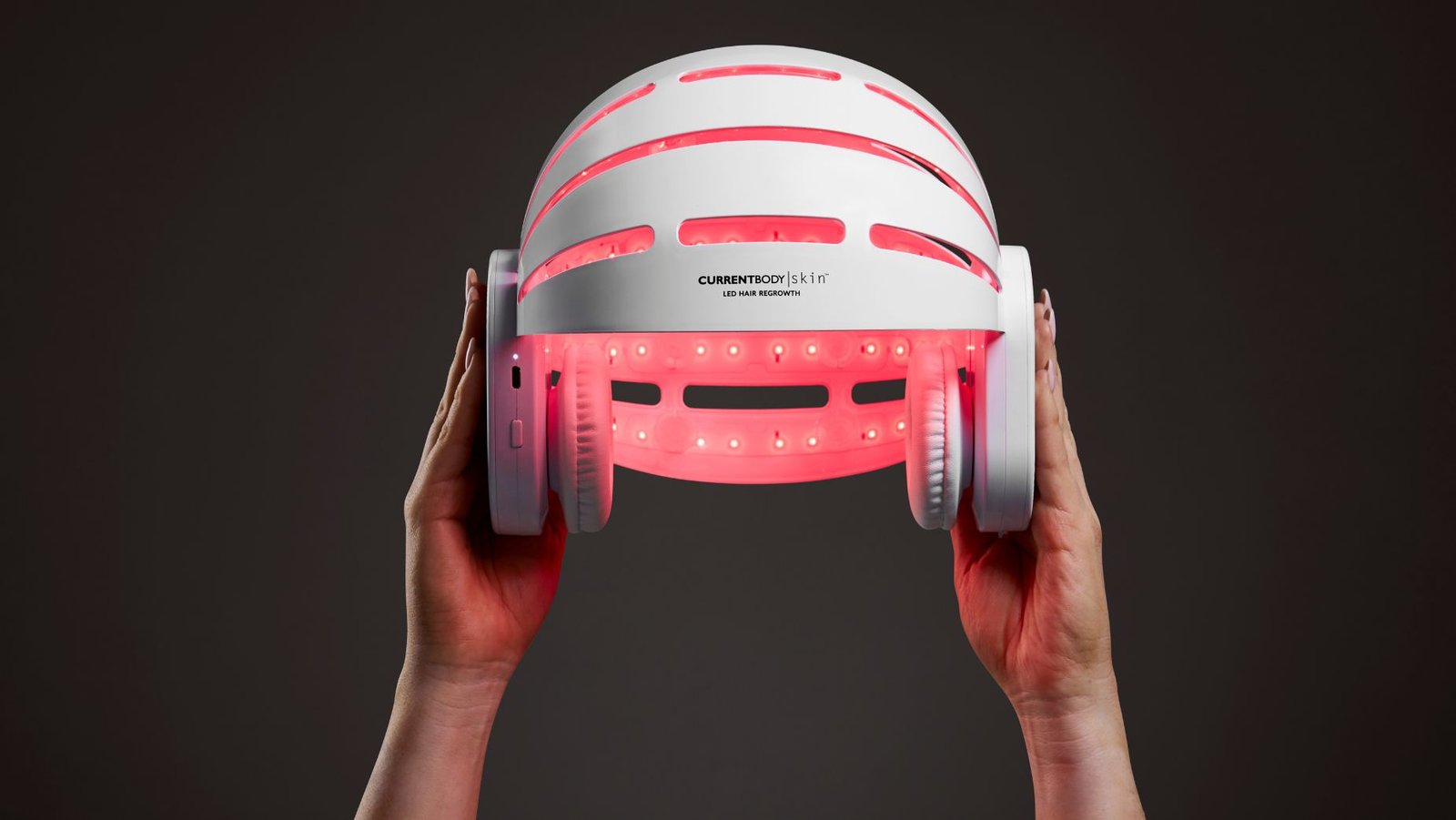
“Men are increasingly investing in themselves and becoming educated about skincare,” says Emily. “It wasn’t always something men felt comfortable engaging with, but that’s shifting, and rightly so. Although our audience is still predominantly women, we’re seeing real growth in engagement from men. Our LED Hair Growth Helmet is a great example of this.”
Indeed, one male celebrity who has been linked to CurrentBody’s products is Cillian Murphy, whose groomer has spoken about his use of the product
Pivot to Powerhouse: From B2B Marketplace to At-Home Tech Innovator
Lightwave technology is just one subsection of the booming beauty tech market, which in 2026 is estimated to be worth between$79 billion and $87 billion. It’s expected to grow to $146.04 billion by 2030. That the CurrentBody brand and its parent company Beauty Tech Group (which also includes ZIIP which leverages electric currents and Tria Laser which uses lasers to tackle hair removal and skin ages) have managed to carve out a space at the forefront of this growing sector, going head to head against more established tech businesses is due to a mix of serendipity and strategy.
CurrentBody did not start life selling its own technology. When it launched in 2009 it was an ecommerce marketplace to sell industrial-grade beauty tech devices to professional clinics and clinicians. But its founders Laurence Newman and Andrew Showman realised that their trusted brand and knowledgeable customer base put them in a great position to develop and sell their own devices. They also had developed such a deep understanding of the sector and products available that they could easily spot gaps in the market, such as a need for simpler devices and softer, flexible masks. It’s a pivot that has paid off; in October 2025 The Beauty Tech Group entered the London Stock Exchange with a valuation of £300 million.
Strategically, this drove an evolution of the business’s approach to marketing. “There were many shifts, but one of the most important was our messaging,” reflects Emily. “We were no longer speaking to industry experts who already understood the science, we were speaking to everyday consumers. That meant a real shift in focus towards education, and adapting our language so it felt accessible rather than technical, without losing the credibility that had always been core to who we are.”
And that evolution continues. CurrentBody’s product development stretches to 2031 and is shaped by the data and customer feedback they’ve received over the years. But whatever changes, the ambition and principles that have underpinned the brand’s growth remain intact
“The Beauty Tech Group was founded on a simple idea, that professional beauty technology could be miniaturised safely and effectively for use at home. That ambition hasn’t changed,” says Emily. “By working with leading research partners, such as the University of Manchester’s dermatology department, we’re already developing the next generation of devices that will continue to redefine what’s possible in at-home beauty technology.”
And as the business continues to push the boundaries of beauty tech, consumers too are becoming more discerning, educated and demanding. Skincare enthusiasts aren’t afraid of digging into the science and neither are the team at CurrentBody and the Beauty Tech Group
“Beauty tech will become more mainstream, and consumers will become increasingly educated on the products available,” says Emily. “The sector will need to keep pace with that growing demand, as consumer knowledge starts to catch up with what we already know.”
CreditsAdd my Credit
More News from LBB Editorial
“Simpler, Faster, Better”: Keeping Creative Love Alive with Broken Heart Love Affair’s New Model09/09/2026
Clay Matthews’ New Face Raises Eyebrows in Sportsbook’s Bet Against AI Slop09/09/2026
Bold Beans Heads to Soho with Pop Up Deli and Shop09/09/2026
ALL THEIR NEWS
Work from LBB Editorial
SildenafilDurex
09/09/2026
SimboliArmani
08/09/2026
And We Shall Dance AgainGucci
04/09/2026
ALL THEIR WORK
SUBSCRIBE TO LBB’S newsletterEnter your email
FOLLOW US
Events
DPA + SLA (+ US Add.)
MyLBB Score
About Us
Contact
Editorial Toolkit
Help & FAQ
Privacy Policy
Main Terms & Conditions
Newsletters
Create your own LBB icons
How it works
Plans & Pricing
LBB’s Global Sponsor

Language:English
© 2005-2023 LBB Ltd·Privacy and Cookie Policy·Terms and Conditions
v2.25.1