Blog
Waterproof Gear Relied on PFAS. Not Anymore. Here’s What to Know.

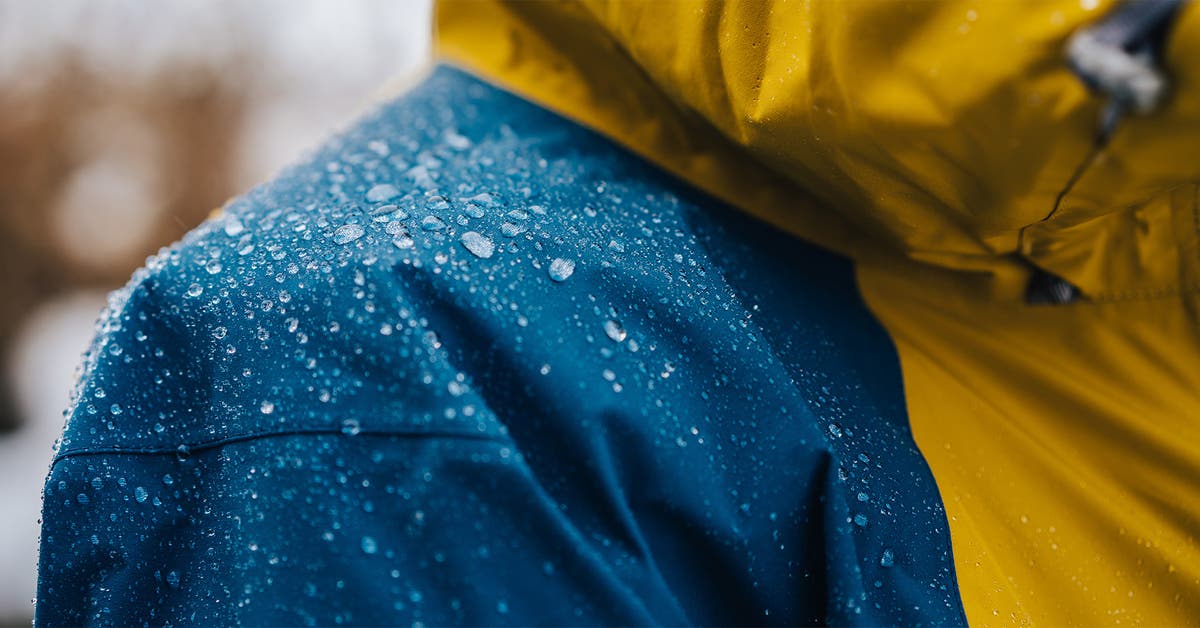
I remember buying my first rain shell when I was still in college. I sought out the Gore-Tex label specifically, because based on its reputation I knew that the breathable waterproof coating would keep me bone-dry as I sloshed across the sleet-drenched New England campus to class and on sodden trips to the coast for my research. When I eventually moved to New York City, that jacket cocooned me through soaked commutes and drizzly upstate hikes. I felt protected but not claustrophobic.
That protection, it turns out, was due to a class of toxic chemicals, known as PFAS and PFCs, that as of January 2025 are now banned from apparel for sale in California and New York. The outdoor-apparel industry has already been moving away from PFAS-based waterproofing; Gore-Tex for one, released a new PFAS-free membrane in 2022
This might seem like a good time to ditch your old rain jacket. But not so fast — your best bet may actually be to hold on to it for as long as it’s useful
Here’s what you need to know about what to do with your PFAS-treated gear and what to expect if you’re shopping for something new
How to consider risk from old raincoats
All of that may sound like a pretty scary trade-off for staying dry. But the scientists I spoke to said they still believe it is relatively safe to keep wearing your old Gore-Tex jacket
“Wearing the jackets is unlikely to harm the person wearing them,” said Arlene Blum, a biophysical chemist at University of California Berkeley, a mountaineer, and an environmental health advocate, , soil, and air near the manufacturing facility.”
Still, if you want to be extra safe, consider wearing your PFAS-treated gear more sparingly, for those times when you really need an additional level of protection
There is some evidence that your jacket may expose you to PFAS, including by absorption through the skin. Goodrich said she believes that skin absorption is, relatively, “a minor route of direct human exposure.” She listed “water, food, and food packaging” as more direct concerns for PFAS accumulation in the body. And as Wirecutter has covered, there are some steps you can take to reduce your exposure through those routes, including filtering your tap water.
To lower potential exposure through the skin, Goodrich suggested wearing a barrier, such as a long-sleeve shirt, underneath when it’s practical
There may also be some risk of inhaling PFAS from deteriorating waterproofing coatings, according to research into occupational hazards from firefighting gear
But we consulted three authors of studies of firefighting gear, who said the risk of inhalation is likely to be much lower for your water-repellent gear than what has been found for firefighters. Firefighting gear has “significantly more PFAS than a plain Gore-Tex jacket,” said Graham Peaslee, a physics professor at the University of Notre Dame who co-authored a study on firefighter textiles and PFAS.
That’s because your raincoat is not subjected to the same level of extreme stressors (such as high heat and UV light) that degrade the finishes on firefighting gear. And your old jacket has less PFAS now than it did when you first bought it, which is why most rain gear finished with a durable water repellent (DWR for short) needs to be re-treated periodically with after-care products such as Nikwax to restore the water repellency.
There’s a bonus to maintaining your old raincoat that way: Using your existing gear as long as you can makes for a lighter environmental footprint
“The biggest risk is when these garments are disposed,” said Peaslee ver chemicals can leach out of the landfill and reenter the environment, polluting water used for drinking and irrigation
“For all of us who drink the water and eat the irrigated food, it is the end-of-life disposal of these garments that is a significant threat,” said Peaslee
When you decide that it’s time to retire your old PFAS-treated coat, it’s a good idea to contact the manufacturer or retailer where you purchased it; many companies now offer buyback or takeback programs
How water-repellent gear is (and isn’t) changing
The good news is that while PFAS are disappearing from outdoor gear, in many cases it was overkill anyway
One example is Patagonia’s Black Hole line of travel bags, said Matt Dwyer, who leads materials innovation at Patagonia. “When we looked at that product and found that it used a durable water-repellent coating, we realized it didn’t actually need it where we were using it, so we just stopped,” said Dwyer in an interview. (Wirecutter’s own testing of the new Black Hole packing cubes supports this claim.)
Blum, a mountaineer, noted that “most use of outdoor garments is for casual activities like birdwatching or walking the dog,” where the highest possible performance is unnecessary. “Maybe if you’re climbing Mount Everest,” she said. But Blum shared that she has been wearing PFAS-free jackets from The North Face and Black Diamond for mountaineering for five years without issue: “My jackets would work fine on Mount Everest without PFAS.”
In other words, for staying dry, many PFAS-free alternatives are available already. Some have been around for years, including waxed fabrics (centuries!), polyurethane coatings (usually listed as PU, consisting of a flexible plastic coating over a woven back, creating that classic rubbery raincoat feel), silicones, and hydrocarbons
And new high-performance replacements for PFAS treatments are as effective as the old coatings, say industry representatives. They declined to share details about the PFAS-free chemistry, but we know that these replacements aim to pair waterproofing performance with thin, lightweight profiles and that coveted breathability
They include C0 (used by companies like Rumpl and J.Crew), Nikwax’s Direct.Dry (launched with Outdoor Research in 2024), Fjällräven’s Eco-Shell, Marmot’s NanoPro, and Nemo’s Osmo, among others
And one of the most widespread replacements comes from Gore-Tex itself: a waterproof, breathable membrane called ePE (short for expanded polyethylene). This new Gore-Tex membrane has been adopted by leading outdoor-apparel brands such as Patagonia, REI, and Arc’teryx (it’s used in the men’s and women’s Arc’teryx Beta Jacket, which we recommend in our raincoat guide). Gore-Tex claims that ePE offers a performance improvement on the old ePTFE coating it became famous for, and that ePE is thinner and has a smaller carbon footprint.
At Wirecutter, we’re actively testing apparel and outdoor gear that uses new PFAS-free coatings, like the Arc’teryx Beta Jacket. Staff writer Claire Wilcox, who covers outdoor blankets, sleeping bags, and tents, found that some PFAS-free DWR coatings seem better at repelling water than others and listed coatings on products from Mountain Hardware, Nemo, and Patagonia as notably high performers.
Crucially, PFAS are used in the outdoor industry for more than just waterproofing, and companies will need to thoroughly vet their supply chains for potential
For added assurance, look for the Bluesign label, a third-party certification that assesses and reviews chemicals used in textiles for wearer, worker, and environmental safety; as of January 2025, the certification will no longer permit PFAS in any of its approved products. Oeko-Tex also prohibits PFAS in the textiles it certifies
PFAS are a glaring example of how slow people may be to learn about chemical toxicity in the products that everyone uses every day. As Dwyer shared, Patagonia switched its DWR to longchain PFAS from shortchain PFAS less than 10 years ago, believing the longer chemical structure to be safer. “We finished that transition, everybody was psyched, and like that same week, scientific data and journalism came out that said, ‘Hey, you know, what you just switched to might be just as bad as what you switched from,’” he recalled.
Companies are tight-lipped about what exactly is in their new PFAS-free replacement coatings, but they assure us that the replacements are safe. For our part, at Wirecutter, we can only give advice based on what we know. And we are absolutely certain about one thing: Taking good care of your garments will help them last as long as they can. That’s a clear win for your wallet and the environment.
This article was edited by Hannah Rimm and Maxine Builder
Meet your guide
What I Cover
I focus on the intersections of shopping, sustainability, and environmental health. I also lead and advise on standards for reporting on environmental impacts and green marketing claims of products in Wirecutter’s coverage
-
Wirecutter’s Best Fitness Gear
Here are 75(ish) of our top fitness picks to help you get your year started right
-
Forever Chemicals Are Everywhere. Here’s How to Limit Your Exposure
by Joe Fassler
It’s hard to avoid PFAS, toxic compounds linked to a host of health problems. But you can take meaningful steps to reduce your risk
-
Lawn and Garden Gear to Get Your Yard Cleaned Up
by Harry Sawyers
Here’s everything you need to keep your yard tidy, no matter what winds up on the ground out there
-
Yes, Your TV Is Probably Spying on You. Your Fridge, Too. Here’s What They Know
by Rachel Cericola, Jon Chase, and Lee Neikirk
Devices in your home are quietly collecting information about you. Some of that data may be shared, analyzed, and sold by organizations you’ve never heard of. Maybe it’s fine. Maybe not.
Advertisement
SKIP ADVERTISEMENT