
Blog
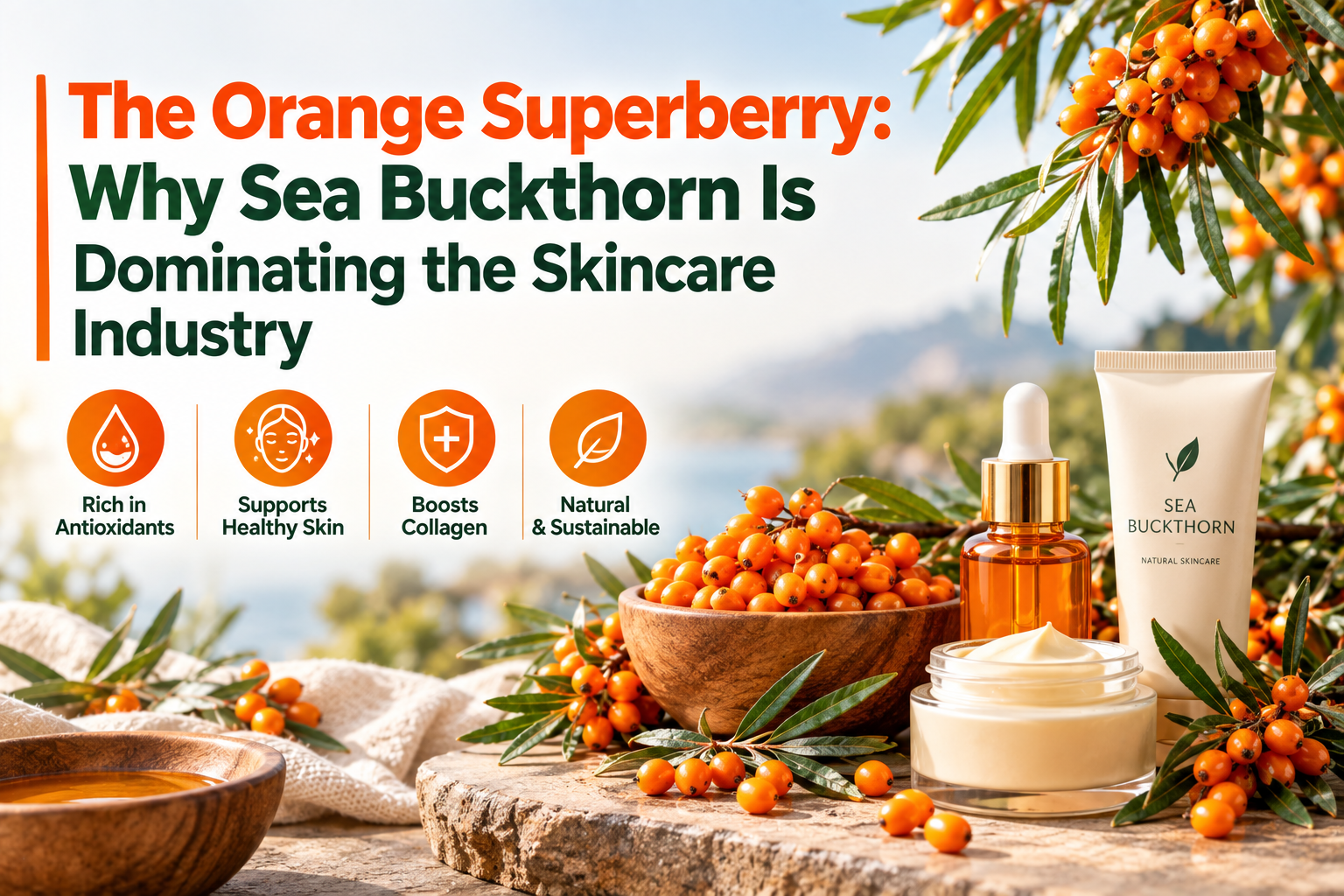
The Orange Superberry: Why Sea Buckthorn Is Dominating the Skincare Industry- Expert View by Spherical Insights


The Orange Superberry: Why Sea Buckthorn Is Dominating the Skincare Industry- Expert View by Spherical Insights
RELEASE DATE:
Sep 2026Author:
Spherical InsightsSea buckthorn is emerging as a high-potential beauty ingredient, driven by growing demand for natural skincare, antioxidant-rich formulations, skin-barrier care, wellness products and multifunctional botanical ingredients.
Request Free SampleSpeak to Analyst
Sea buckthorn is emerging as a high-potential beauty ingredient, driven by growing demand for natural skincare, antioxidant-rich formulations, skin-barrier care, wellness products and multifunctional botanical ingredients
For years, the beauty industry has moved from one “miracle” ingredient to another. Argan oil, rosehip oil, snail mucin, niacinamide and centella asiatica have each enjoyed their moment in the skincare spotlight. Now, a small, intensely orange berry is emerging as the latest ingredient attracting the attention of beauty brands, dermatologists and consumers: sea buckthorn
The timing is notable. In December 2025, beauty publication Byrdie called sea buckthorn oil the new “it” ingredient for skin, pointing to its combination of antioxidants and fatty acids and its appeal for hydration, skin tone and the appearance of fine lines
The ingredient has also begun appearing in newer beauty and wellness launches. In April 2026, People included an Octavia Morgan body oil among notable beauty launches, with sea buckthorn oil appearing alongside avocado, argan, jojoba, coconut and rosehip oils. People.com By July, sea buckthorn had moved further into the ingestible beauty space when Kourtney Kardashian’s wellness brand Lemme launched Skin Firming & Hydrating Gummy Rings containing sea buckthorn alongside ceramides, hyaluronic acid and vitamins C and E.
These developments point to a broader shift: sea buckthorn is moving from the world of specialist botanical skincare into mainstream beauty and wellness
Ready to lead the Sea buckthorn market?
Discover the regional trends and growth factors shaping the industry. We’re here to assist with expert, personalized data
Call +1 303 800 4326 or Send us a message for a personalized consultation
An ancient berry enters modern beauty
Sea buckthorn has recently started gaining popularity as an active component of the cosmeceutical industry due to the high content of essential fatty acids, antioxidants, vitamins, and carotenoids it possesses. Known as “Fruit of the Vitamin Tree,” this small yellow-orange berry (Hippophae rhamnoides) has been widely used in traditional cuisine and medication. Now, the oil extracted from it has found a place in the cosmeceuticals meant for dry, irritated, damaged, and aged skin.
One of the most distinguishing features of this natural compound is its fatty acid composition, which includes omega-3, omega-6, omega-9 and omega-7 or palmitoleic acid-rare fatty acid among plant oils. It may be beneficial for skin barrier maintenance, hydration, and recovery, and the antioxidants found in the substance are believed to help to protect skin from oxidation and environmental impact.
The ingredient can be also found in ingestible beauty products. For example, Lemme’s Skin Firm & Hydrating Gummy Rings, containing sea buckthorn along with vitamin C and E, cost $30 for a three-week supply
Market Stats
- The global sea buckthorn market size was valued at USD 0.41 billion in 2025 and is projected to reach approximately USD 1.01 billion by 2035, expanding at a CAGR of 9.65% during the forecast period.
- The global skincare market size was valued at USD 152.11 billion in 2025 and is projected to reach approximately USD 300.25 billion by 2035, exhibiting a CAGR of 7.12% during the forecast period.
From Multifunctional Botanical to Skin-Barrier Powerhouse
Sea buckthorn is emerging as a versatile botanical with applications spanning beauty, food, nutraceuticals, pharmaceuticals, wellness and animal nutrition. In cosmetics, its oil is used in serums, creams, facial oils and hair-care products, while the food and beverage industry incorporates its berries into juices, jams, teas and functional foods. Its rich combination of fatty acids, vitamins, carotenoids and antioxidants has also attracted interest from nutraceutical and pharmaceutical companies.
Its growing popularity in skincare comes at a time when skin-barrier health has become a major consumer focus. Rather than relying solely on aggressive exfoliation or quick-result products, consumers are increasingly seeking formulations that help maintain hydration, comfort and skin resilience. Sea buckthorn fits this trend because its oils contain fatty acids that may support the skin’s lipid barrier, while its antioxidants are being investigated for their potential role in managing oxidative stress and inflammation.
A 2025 review in Frontiers in Pharmacology highlighted sea buckthorn’s flavonoids, unsaturated fatty acids, vitamins and carotenoids, including their potential relationship with skin health and barrier integrity. Laboratory research has also reported regenerative effects from certain sea buckthorn seed-oil fractions on keratinocytes and fibroblasts. However, these findings remain preliminary, and further human clinical research is needed to establish how effectively topical products deliver these benefits.
While research continues to explore sea buckthorn’s potential benefits for skin health, beauty brands are already taking the ingredient beyond facial skincare. Its growing presence in body oils, creams and moisturisers reflects the “skinification” of body care a trend where consumers are applying face-care principles and premium ingredients to the rest of the body
Recent launches highlight this shift. In April 2026, People featured an Octaargan, jojoba, coconut and rosehip oils. Who What Wear has also highlighted body-care products combining sea buckthorn with ceramides, essential fatty acids, phospholipids and phytosterols
Its versatility is becoming a major advantage. From serums and facial oils to body care, hair products and ingestible beauty, sea buckthorn is crossing traditional category boundaries. For brands, it offers a distinctive botanical story while responding to growing demand for multifunctional, plant-based beauty ingredients
Unlock exclusive market insights. Blog news—Download the Brochure now and dive deeper into the future of the Market
Where Sea Buckthorn Is Used in Beauty
Sea buckthorn is becoming a versatile ingredient across the beauty industry, with applications ranging from facial skincare and body care to hair products and ingestible beauty. Its appeal comes from its combination of fatty acids, carotenoids, vitamins, antioxidants and other bioactive compounds, which gives brands multiple ways to position the ingredient
- Facial oils & serums: Sea buckthorn oil is used in facial oils and serums designed to nourish and moisturise dry or dehydrated skin. Its fatty-acid content makes it particularly relevant to formulations focused on maintaining the skin’s lipid barrier and improving softness.
- Moisturisers & creams: It is incorporated into moisturisers, night creams and intensive treatments aimed at dry, rough and compromised skin. Its emollient properties can help leave the skin feeling smoother and more conditioned.
- Anti-ageing products: The antioxidant-rich profile of sea buckthorn makes it attractive in products targeting visible signs of ageing. Formulations may use it alongside ingredients such as vitamin C, vitamin E, peptides and hyaluronic acid.
- Brightening products: Its naturally occurring carotenoids and antioxidants have made sea buckthorn popular in products focused on radiance and a more even-looking complexion. However, it should not be considered a replacement for established pigmentation treatments.
- Body care: The ingredient is increasingly appearing in body oils, lotions, creams and scrubs, particularly products targeting very dry or rough skin. This reflects the growing “skinification” of body care, where consumers are seeking facial-quality ingredients for the entire body.
- Sensitive and irritated-skin formulations: Sea buckthorn’s fatty acids and bioactive compounds are being investigated for their potential soothing and barrier-supporting properties. It is therefore of interest in formulations designed for dry, stressed or uncomfortable skin, although clinical evidence remains limited.
- After-sun care: Because of its lipid and antioxidant content, sea buckthorn oil is used in some after-sun and recovery-focused formulations designed to moisturise and replenish skin following environmental exposure. It should not, however, be confused with sunscreen or used as a substitute for UV protection.
- Hair care: Sea buckthorn oil is finding applications in hair oils, masks, conditioners, leave-in treatments and scalp products. Its fatty acids and other nutrients make it appealing for products focused on conditioning, softness and moisture.
- Lip care: Its rich, oil-based texture makes sea buckthorn suitable for lip balms, lip oils and intensive lip treatments, where it can provide emollient and conditioning benefits.
- Ingestible beauty: The ingredient is also moving beyond topical products into supplements, capsules and beauty gummies. This connects sea buckthorn with the growing “beauty-from-within” trend, where consumers seek ingredients associated with skin health through both topical and dietary products.
Top 10 Countries Driving Sea Buckthorn’s Cultivation
- China
China remains one of the world’s most important centres for sea buckthorn, with the plant cultivated extensively as well as found growing naturally. Its berries and oil are used across several sectors, including food and beverages, traditional health practices, cosmetics and environmental restoration
- Russia
Russia has considerable experience in growing and developing sea buckthorn varieties. Over the years, researchers and agricultural producers have worked on cultivars suited to different conditions, supporting applications ranging from food products to health, cosmetic and industrial uses
- India
India’s Himalayan belt is an important Ladakh, Himachal Pradesh, Uttarakhand, Sikkim and Arunachal Pradesh. In Ladakh, efforts to process the berry into products such as juice, oil and other value-added goods are creating new possibilities for the wellness and personal-care sectors
- Mongolia
Mongolia is another significant sea buckthorn-producing region, with both naturally occurring plants and cultivated plantations. The berry is increasingly being viewed as a commercial res, supplements and other value-added ingredients
- Finland
Finland’s cold climate provides suitable conditions for sea buckthorn cultivation. The crop is commercially grown for its berries and oil, while its association with natural nutrition and plant-based wellness has helped maintain consumer and industry interest
- Germany
Germany has developed expertise in sea buckthorn cultivation and processing. The ingredient has particular relevance in the country’s natural-product and organic beauty sectors, where botanical oils and plant-derived ingredients are widely used in skincare and wellness formulations
- Estonia
Estonia has established commercial cultivation of sea buckthorn and uses the crop primarily in food and wellness products. Its development as a Northern European crop has also encouraged interest in the berries as a
- Canada
Canada is exploring sea buckthorn as a potentially valuable crop because of the plant’s ability to withstand cold climates. Agricultural and research initiatives have examined its suitability for producing berries and oil for food, nutraceutical and other value-added applications
- Sweden
Sweden has contributed to research and cultivar development involving sea buckthorn, particularly in relation to growing the plant under Nordic conditions. Its nutritional characteristics have supported interest in applications spanning food, wellness and natural-product development
- France
France has experience with sea buckthorn cultivation and research, while interest in botanical ingredients has created opportunities for its use in natural beauty and wellness products. Sea buckthorn oil and extracts are particularly relevant to premium formulations seeking plant-derived active ingredients
Unlock exclusive market insights. Blog news—Download the Brochure now and dive deeper into the future of the Market
Top 10 Countries Driving Sea Buckthorn’s Cultivation
- SIBU
- SeabuckWonders
- Aromtech
- Puredia Corporation
- Biosash
- Kiantama
- Leh Berry
- WellWith
- Juicy Chemistry
- G. Organica
- SIBU Beauty- United States
SIBU is a specialist sea-buckthorn company focused on skincare and wellness products. Its portfolio includes sea buckthorn oil, facial serums, creams and supplements. Publicly verified annual revenue: Not disclosed. Company-level revenue estimates are available from commercial databases, but they should be labelled as estimates rather than official figures
- Seabuck Wonders- United States
SeabuckWonders has operated in the sea-buckthorn category for around three decades and sells supplements, body-care products, oils and skincare. A third-party business database estimates its annual revenue at approximately US$4.5 million, but this is not company-reported revenue
- Aromtech- Finland
Aromtech is a specialist producer of berry oils and sea-buckthorn ingredients. Its SBA24 sea-buckthorn oil is marketed internationally, and the company says its supplements are sold in more than 30 countries. The company has supplied more than 650 million sea-buckthorn capsules through its Membrasin business
- Puredia- Hong Kong/China
Puredia specialises in organic sea-buckthorn ingredients maceutical, nutraceutical and other applications. The company says it has more than 30 years of experience in the pharmaceutical and nutraceutical industries
- Biosash Business-India
Biosash is particularly relevant to the Indian market, offering sea-buckthorn juices, oil capsules, skincare, hair care and personal-care products. Revenue for FY2024–25: approximately ₹19 crore This is one of the few companies in this group for which a recent revenue figure is publicly available
Unlock exclusive market insights. Blog news—Download the Brochure now and dive deeper into the future of the Market
Conclusion
The use of sea buckthorn as an ingredient is transitioning from that of a botanical to a versatile one with increasing uses in beauty, skincare and nutraceuticals. The combination of fatty acids, carotenoids, vitamins and antioxidants contained in sea buckthorn has made it a favoured ingredient for brands interested in plant-based multi-functional ingredients, while the increased importance placed on the health of the skin barrier, hydration and protection from free radicals may add further impetus to its demand. It is already clear from the increasing uses of this ingredient in facial oils, serums, body and hair care products, even ingestible beauty. Clinical studies and appropriate marketing will play key roles in future growth. In the face of technological advancement, processing improvements and increasing demand for botanical beauty ingredients, there may come a time when sea buckthorn will be more than just an interesting niche ingredient.
Need help to buy this report?
Inquiry Before Buy