
Blog
Faster Vs. Smarter Fashion – Fibre2Fashion

Faster Vs. Smarter Fashion
Pic: Shutterstock
Table of Contents
Key Takeaways
- Fashion’s greatest challenge is not speed or technology but a consumption model built on constant novelty.
- While fast fashion accelerates production, smarter fashion uses AI and data to optimise the same cycle.
- True sustainability requires shifting focus from endless growth towards durability, conscious design, informed consumption and stronger emotional connections with clothing.

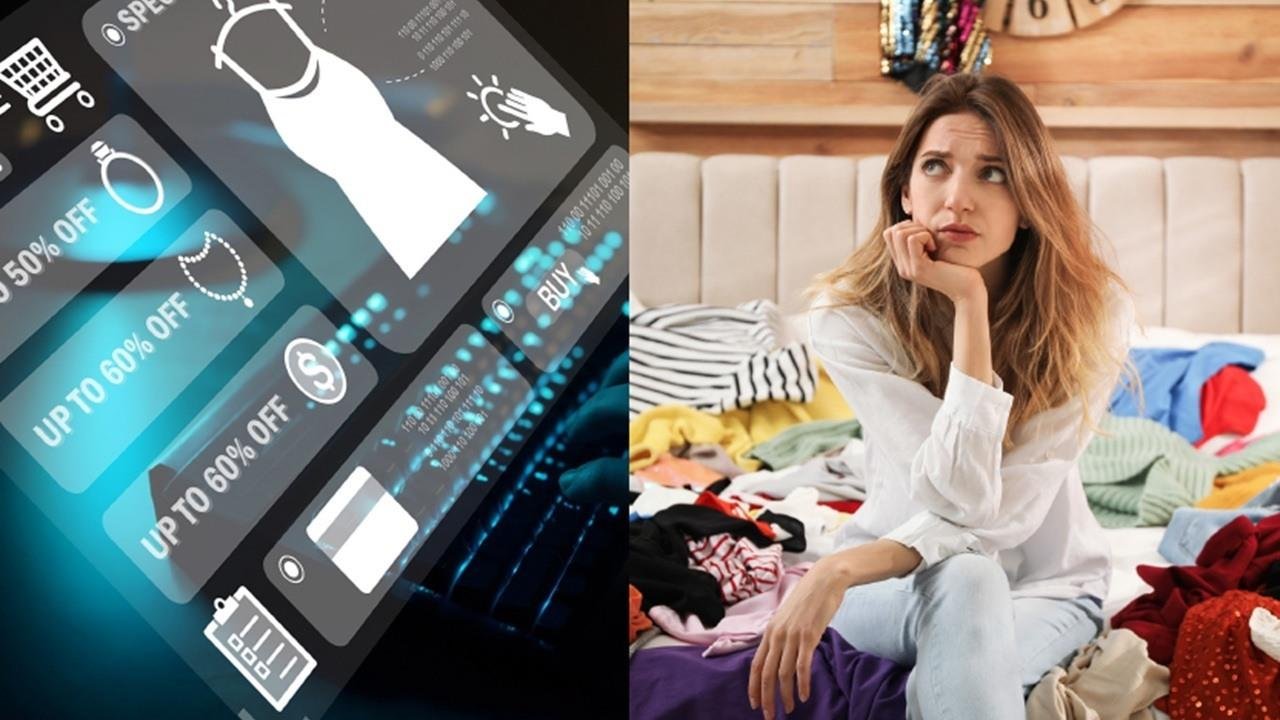
Fashion has always reflected the rhythm of society. In one era, clothing represented status, craftsmanship, and tradition. Today, fashion reflects acceleration. Trends move rapidly, collections appear continuously, and consumer attention has become the industry’s most valuable currency. Clothing no longer enters the market seasonally. It arrives constantly
For years, fast fashion has dominated conversations surrounding the industry’s environmental and ethical failures. The criticism appears straightforward. Fast fashion produces too much, too quickly, at prices that encourage disposability. The consequences are visible in polluted waterways, textile waste, exploitative labour systems, and rising carbon emissions. In response, the industry has increasingly embraced the language of smarter fashion. Artificial intelligence, predictive analytics, automated inventory systems, and digital supply chain technologies are now presented as the future of responsible fashion.
Yet this narrative creates a misleading contrast. Faster fashion and smarter fashion are often treated as opposites when, in reality, they frequently operate within the same economic and cultural framework, as both are designed to sustain continuous consumption. While one relies on production speed, the other relies on technological optimisation
The real problem facing fashion is not merely speed. It is the industrial obsession with endless novelty, perpetual growth, and manufactured desire. Faster fashion makes this logic visible. Smarter fashion makes it more efficient. However, neither of them automatically addresses the deeper issue at the heart of the industry: a system built on convincing consumers that satisfaction is always temporary.
The future of fashion therefore cannot be understood through the simplistic binary of fast versus smart. The conversation must instead examine how technology, marketing, consumer psychology, labour structures, and economic incentives collectively shape a culture of overconsumption
How Fashion Became Addicted to Speed
Historically, fashion operated through relatively stable cycles. Designers released seasonal collections, manufacturers followed long production timelines, and consumers purchased garments intended to remain relevant for extended periods
The rise of globalisation, digital retail, and advanced logistics radically altered that structure. Brands such as Zara and H&M revolutionised the industry by shortening the time between design and retail distribution. Consumers no longer waited months for trends to arrive
The emergence of social media intensified this transformation dramatically. Platforms built around visual engagement turned fashion into a continuous public performance. Outfits became content. Personal style became digital identity
Companies such as Shein pushed this model further by combining ultra-fast manufacturing with algorithmic trend detection. Clothing could move from online inspiration to retail availability in remarkably short timeframes. Trends that once lasted years now disappear within weeks
Fashion companies no longer compete solely on design quality or craftsmanship. They compete on responsiveness. The faster a brand can interpret trends and deliver products, the more culturally relevant it appears. Thus, speed became the industry’s defining language
Why Fast Fashion Became so Powerful
Fast fashion succeeded because it fulfilled several consumer desires simultaneously. It offered affordability, immediacy, variety, and accessibility. For many consumers, especially younger demographics, it democratised fashion participation
Historically, trend-driven fashion remained financially inaccessible to large segments of society. Fast fashion changed that equation. Consumers could experiment with style without making major financial commitments
This accessibility explains why fast fashion remains deeply embedded within consumer culture despite growing criticism. Many consumers face financial limitations while simultaneously navigating social environments shaped by appearance and digital visibility. Affordable fashion provides a practical solution within that reality
Criticism of Fast Fashion
At the same time, the consequences of this model are substantial. The environmental impact of large-scale garment production has become increasingly difficult to ignore. Textile manufacturing consumes enormous quantities of water and energy. Chemical dyeing contributes to pollution, while massive production volumes generate equally massive waste streams
Labour conditions within global supply chains also remain deeply concerning. Manufacturers operating under intense cost pressure frequently depend on low-wage labour systems to meet production demands. In such a scenario, workers often face unstable employment conditions and limited protections
The Rise of Smarter Fashion
As criticism of fast fashion intensified, the industry began repositioning itself around technological innovation. The solution, many companies argued, was not necessarily slower fashion but smarter fashion
Smart fashion includes technologies and operational systems designed to improve efficiency across production and retail processes. Artificial intelligence predicts purchasing behaviour. Machine learning analyses trend data. Automated logistics systems optimise distribution. Demand forecasting tools reduce unsold inventory
On the surface, these innovations appear promising. Better forecasting could reduce overproduction. Smarter inventory systems might minimise waste. However, efficiency alone does not guarantee sustainability
Many smart systems are designed primarily to increase consumer engagement and purchasing frequency. Recommendation algorithms encourage additional shopping. Personalised marketing increases conversion rates. Predictive systems identify emerging trends faster than competitors
In practice, smarter fashion often accelerates consumption through more sophisticated mechanisms. This reveals a deeper contradiction within the industry. Technology is frequently marketed as evidence of responsibility even when it continues serving growth-driven business models
For example, a company may reduce unsold inventory while simultaneously increasing total sales volume. This shows that operational efficiency can co-exist with intensified consumption. The issue here is not technology itself. Technology can support positive change, but the problem is the purpose technology serves
The Psychology of Endless Newness
Fashion’s acceleration cannot be explained solely through manufacturing systems. It is deeply connected to human psychology and digital culture
Modern consumers exist within environments designed to reward novelty. Social platforms prioritise fresh content because continuous engagement drives advertising revenue. Fashion fits perfectly within this structure because clothing communicates identity visually and immediately
Consumers increasingly experience pressure to appear updated and aesthetically aligned with rapidly changing trends. Digital visibility transforms private consumption into public presentation
This environment encourages emotional restlessness. The satisfaction associated with purchasing new clothing often fades quickly because the surrounding culture continuously introduces newer aesthetics. Consumers are not simply buying garments. They are purchasing temporary proximity to relevance
Influencer culture amplifies this dynamic further. Many creators depend on constant visual variation to sustain audience attention. Fashion content frequently revolves around trend forecasts, styling transformations, and new product discovery
Even luxury fashion has adopted aspects of this accelerated model. Many high-end brands now rely heavily on rapid collaborations, limited releases, and social media visibility. Scarcity and urgency have become universal marketing tools across price segments
The result is an industry where speed functions not only as an operational strategy but also as a psychological mechanism
Sustainability as Image Management
As environmental awareness increased globally, sustainability became one of fashion’s most valuable marketing terms. Nearly every major retailer now promotes some form of ethical or environmentally conscious initiative
However, sustainability messaging often operates alongside unchanged production logic. Brands launch ‘conscious’ collections while continuing large-scale manufacturing. Marketing campaigns emphasise eco-friendly packaging while product turnover remains relentless. In short, environmental language becomes integrated into branding strategies designed to maintain consumer trust
In addition, many companies now emphasise data-driven efficiency as evidence of environmental responsibility. Reduced inventory waste is positioned as sustainability progress. While such improvements matter, they do not necessarily address the scale of production itself. Efficiency gains become limited if overall consumption continues rising
Fashion therefore faces a fundamental contradiction: companies are expected to increase sales continuously while simultaneously reducing environmental impact. These objectives do not always align
Labour in the Age of Speed and Automation
Fashion sustainability conversations often prioritise environmental concerns while overlooking labour realities. Fast production cycles place enormous pressure on manufacturing systems. It is because suppliers are expected to produce large volumes quickly and cheaply while adapting to constantly changing demands
In addition, cost reduction frequently occurs at the expense of workers operating within vulnerable economic conditions. At the same time, smarter fashion introduces additional labour concerns linked to automation and technological centralisation
As companies increasingly invest in AI-driven logistics and automated systems, questions emerge regarding employment displacement and economic concentration. Technological advancement may improve efficiency while simultaneously reducing labour opportunities in certain sectors
Technology also strengthens the influence of large corporations with access to advanced data infrastructures. On the other hand, smaller manufacturers and independent businesses may struggle to compete within increasingly digitised ecosystems
The future of fashion labour therefore involves two overlapping risks: exploitation through speed and marginalisation through automation
Why Efficiency is not Enough
One of the most persistent misconceptions surrounding fashion innovation is the assumption that efficiency automatically produces sustainability
In many industries, increased efficiency actually encourages greater usage because lower costs and faster systems stimulate demand. Fashion is no exception
A company that becomes more efficient at manufacturing may simply produce and sell more products overall. Faster distribution systems may increase purchasing frequency. More personalised marketing may intensify consumer engagement. This exposes the limitations of purely technological solutions
The fashion industry often frames innovation as a way to preserve existing consumption patterns while minimising consequences. Consumers are encouraged to believe they can continue purchasing at current levels because technology will eventually solve the associated environmental problems
However, material production always carries ecological impact. Even the most advanced systems require energy, transportation, infrastructure, and raw re
The question therefore becomes unavoidable: can fashion remain environmentally sustainable if consumption continues expanding indefinitely?
The Influence of Digital Platforms
Fashion today operates inside algorithmic environments. Digital platforms do not merely display trends; they actively shape them. What gains visibility online increasingly determines what becomes commercially successful offline. The relationship between fashion and technology has therefore become inseparable. Trends are no longer created slowly through cultural movements alone. Instead, they are accelerated, amplified, and sometimes manufactured entirely through digital exposure.
This transformation is largely driven by the mechanics of digital platforms themselves. Recommendation systems now determine visibility, while viral aesthetics spread globally within hours. Consumers are constantly exposed to streams of aspirational imagery designed to trigger emotional responses and sustain engagement. Fashion content operates within an attention economy where visual immediacy often matters more than longevity. As a result, aesthetic trends are increasingly packaged for instant recognition rather than lasting relevance. Consumers absorb hundreds of visual references each day, often without fully recognising their cumulative influence. The outcome is an environment in which desire is continuously renewed before satisfaction has time to settle.
Algorithms further reinforce this cycle because novelty consistently drives engagement. Fashion therefore becomes deeply intertwined with the commercial logic of digital ecosystems. Platforms benefit when users remain emotionally stimulated and continuously exposed to new content, while brands respond by accelerating production and shortening turnaround times. Trend cycles compress because digital systems reward immediacy rather than reflection. As aesthetics evolve faster, engagement becomes more commercially valuable for both platforms and retailers alike.
This acceleration gradually reshapes consumer behaviour in subtle yet powerful ways. Shopping is no longer experienced as a distinct activity but becomes embedded within entertainment itself. Consumers move seamlessly between scrolling, discovering, desiring and purchasing, often without interruption. In such an environment, emotional impulse increasingly replaces deliberate evaluation. Digital systems are intentionally designed to minimise moments of pause, making fashion consumption more reactive than considered.
As a result, purchasing decisions increasingly emerge from visual stimulation, social validation and perceived urgency. Limited-time trends create anxiety around missing cultural relevance, while influencer culture intensifies the pressure by presenting constant consumption as aspirational and socially rewarding. Consumers are encouraged to associate novelty with confidence, success and self-expression. The emotional appeal of purchasing therefore extends beyond ownership alone and becomes tied to participation within digital culture itself.
Digital commerce further intensifies this behaviour by removing friction from the shopping experience. One-click purchasing, targeted advertising and personalised recommendations reduce the psychological distance between interest and consumption. Consumers no longer need to actively search for products because products are continuously delivered to them through algorithmic recommendation systems. Shopping consequently becomes passive, immediate and highly individualised. At the same time, brands increasingly rely on behavioural data to predict consumer preferences with remarkable precision, making convenience one of the strongest drivers of modern overconsumption.
Within this environment, consumers are encouraged to respond quickly rather than reflect deeply. The speed of digital culture leaves little room for long-term consideration or emotional permanence. Clothing is increasingly valued for short-term visual impact rather than its enduring place within personal style. Continuous exposure to new aesthetics normalises constant replacement, gradually reshaping not only shopping behaviour but also the emotional meaning attached to fashion itself. The result is a culture in which attention moves faster than attachment.
Rethinking Fashion Beyond Consumption
If both faster fashion and smarter fashion remain tied to acceleration, what alternative framework might exist?
The answer may lie in redefining fashion’s relationship with value. For decades, value has largely been measured through visibility, relevance and constant newness. A healthier framework would instead prioritise longevity, emotional connection and thoughtful ownership. Fashion would become less dependent on endless replacement and more rooted in personal meaning. Achieving such a shift would require cultural change as much as industrial reform.
A more balanced fashion culture would prioritise durability, intentionality, craftsmanship and emotional longevity over disposability. This does not mean eliminating creativity or trend evolution. Fashion will always respond to cultural change. The challenge is ensuring that creativity does not become dependent on perpetual excess. Designers can continue experimenting without producing endless volumes of short-lived garments. Innovation becomes more meaningful when it is guided by purpose rather than speed and algorithmic visibility alone. Fashion can remain dynamic without functioning as a system of constant replacement.
At the same time, consumers are increasingly seeking clothing that feels meaningful rather than merely current. Quality, comfort, personal identity and emotional resonance become more important when fashion is approached intentionally instead of reactively. Many consumers are beginning to question whether constant consumption truly delivers lasting satisfaction. The emotional fatigue associated with relentless trend chasing has become more visible, encouraging people to build wardrobes that reflect individuality and stability rather than temporary digital relevance. This signals a growing desire for deeper and more enduring relationships with clothing.
Design philosophy also plays an important role in this transition. Garments created for longevity often emphasise versatility, construction quality and enduring appeal rather than extreme trend specificity. Timelessness does not imply simplicity or a lack of creativity. Instead, it reflects the ability to create clothing that remains emotionally and aesthetically relevant beyond a single trend cycle. Designers who focus on wearability and craftsmanship often foster stronger consumer attachment over time. Fashion gains greater cultural depth when garments are intended to exist beyond momentary visibility.
Education remains equally significant. Many consumers still possess limited understanding of textile quality, garment construction and care practices. Fashion literacy can influence purchasing behaviour far more effectively than guilt-driven messaging. When consumers understand how clothing is made, they often develop greater appreciation for durability, value and responsible consumption. Educational awareness can also shift attention away from quantity-driven shopping habits. In the long term, a more informed consumer culture may become one of the strongest forces shaping a more sustainable and thoughtful fashion industry.
Conclusion
The debate between faster fashion and smarter fashion often distracts from the industry’s deeper crisis. Speed alone is not the problem, just as technology is not an automatic solution. Both models frequently operate within the same underlying system: a culture driven by endless consumption and manufactured dissatisfaction.Fast fashion made overconsumption highly visible through cheap pricing and rapid production cycles. Smarter fashion, however, risks presenting similar patterns of excessive consumption in a more acceptable form through technological sophistication and sustainability branding. In both cases, the system continues to depend on constant replacement and perpetual demand.The real challenge facing fashion is therefore not simply how to produce clothing more efficiently, but how to redefine success beyond continuous expansion. This requires questioning the assumption that growth must always be tied to increasing consumption, accelerated turnover and endless novelty.Fashion itself will always evolve. Trends will continue to emerge, and creativity and self-expression will remain essential aspects of human culture. The objective is not to eliminate change, but to prevent change from becoming synonymous with disposability.Ultimately, the future of fashion will not be determined by whether brands become faster or smarter. It will depend on whether the industry learns to become more conscious of the systems it has created and the desires it continuously encourages.
Fast fashion prioritises rapid production and low prices, while smarter fashion uses technologies such as AI, automation and predictive analytics to improve efficiency. Both can still encourage frequent consumption
No. Technology can reduce waste and improve operations, but if it mainly drives higher sales and faster purchasing, its environmental benefits remain limited
Social media, influencer culture, algorithm-driven recommendations and constant trend cycles create pressure to stay visually relevant, encouraging repeated purchases
Long-lasting product design, better garment quality, consumer education, transparent supply chains, responsible technology use and a greater emphasis on durability over constant replacement can support a more sustainable industry
References:1. https://www.vogue.com/article/solving-fashions-biggest-issues-overproduction-and-overconsumption
2. https://www.vogue.com/article/overconsumption-can-we-ever-put-the-genie-back-in-the-bottle
3. https://www.greenpeace.org/international/story/73504/4-reasons-why-fast-fashion-will-never-be-green/
4. https://www.theguardian.com/fashion/2024/jan/18/its-the-industrys-dirty-secret-why-fashions-oversupply-problem-is-an-environmental-disaster

Tags :
Our Clientele
‘)
]);
});
owl1.trigger(‘refresh.owl.carousel’);
},
error: function (data) {
console.log(data);
},
complete: function () {
isLoadingClients = false;
}
});
}