
Blog
Fashion’s Implementation Challenge


Across four sessions at this year’sGlobal Fashion Summitin Copenhagen, brands, manufacturers, recyclers, policymakers and solution providers sat down to tackle microplastic pollution, circular design, impact prioritisation, and textile-to-textile recycling. Participants were encouraged not only to exchange perspectives, but to test ideas, identify barriers and collectively explore practical pathways forward.
While the topics differed, a common theme quickly emerged. Fashion no longer faces an ambition challenge alone. Increasingly, the challenge is implementation. The shift from commitments and long-term ambitions towards practical, scalable action has been a growing focus across the industry, and the discussions on the Workshop Stage offered a snapshot of how that challenge is being approached across different areas of the value chain.
The question is no longer simply what the industry wants to achieve, but how those ambitions can be translated into meaningful, scalable action
From ambition to implementation
This shift was evident across every conversation. On circular design, participants agreed that circularity will only scale once it is embedded into business strategy and backed by measurable KPIs, leadership commitment, and commercial incentives. Success depends not only on designing products differently, but on ensuring the systems around them, from business models to value chains, are able to support circular outcomes. A similar conclusion emerged in discussions on impact prioritisation. Rather than waiting for perfect data or complete supply chain visibility, participants explored how organisations can prioritise the impacts that matter most and begin taking action through structured decision-making frameworks today.
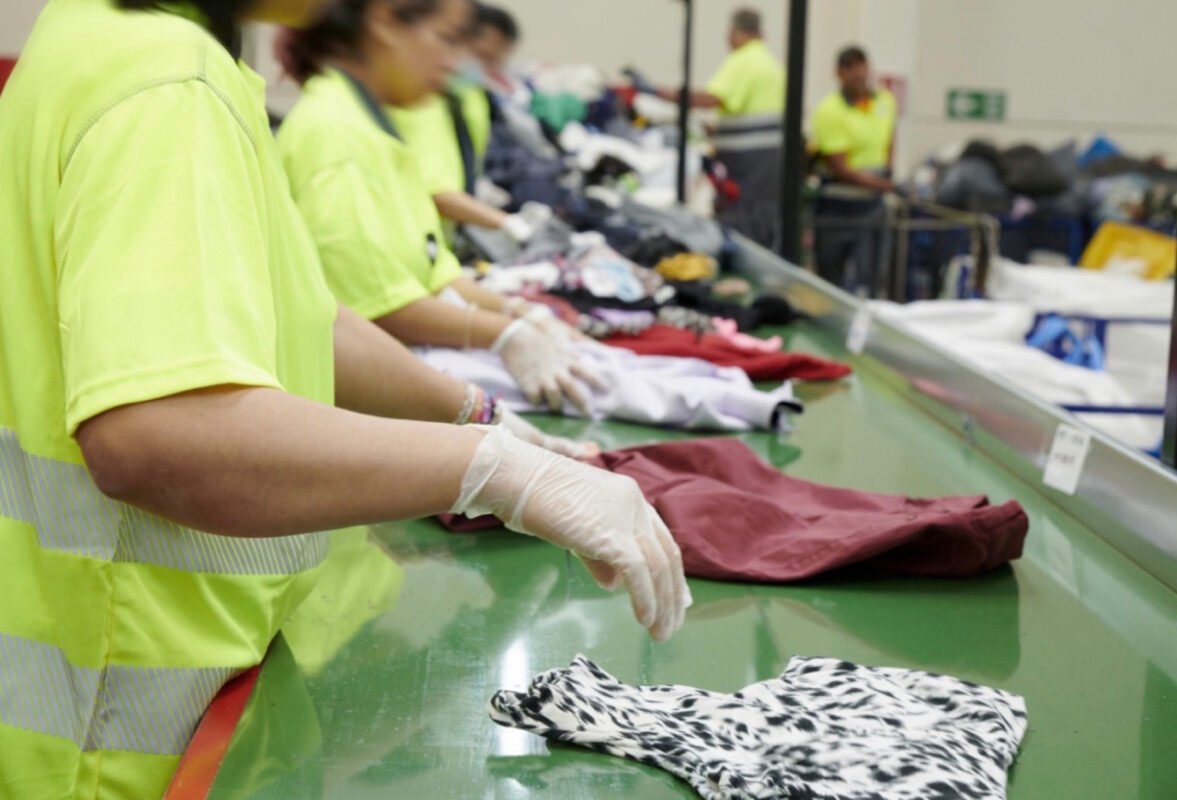
Meanwhile, discussions on textile-to-textile recycling challenged another common assumption. Participants noted that recycling technology is no longer the primary barrier to progress. Instead, attention is increasingly shifting towards the infrastructure needed to make circular systems work at scale, from collection and sorting to feedstock quality, transparency, and market demand. Taken together, these conversations pointed towards an important shift. Many of the solutions already exist. The challenge now lies in creating the conditions that allow them to succeed.
Building a shared language
One of the strongest themes to emerge across all four sessions was the importance of creating greater alignment. Whether discussing microplastics, circular design, impact assessment, or recycling systems, participants repeatedly returned to the need for common definitions, shared methodologies, and consistent ways of measuring progress. Without this shared language, collaboration becomes more difficult, progress harder to evaluate, and successful solutions more challenging to replicate across the industry.
Discussions on impact prioritisation highlighted how common frameworks can help organisations align internal decision-making and strengthen collaboration across value chains. Conversations on circular design similarly emphasised the importance of clearer indicators and measurable approaches to implementation, while those on recycling explored how standardised sorting criteria and feedstock specifications can help strengthen circular textile systems. Rather than being technical details, these shared frameworks are increasingly becoming the foundation that allows innovation to move beyond individual organisations and scale across the wider industry.
Collaboration as an enabler of change
If there was one message that united every discussion, it was that no organisation can address fashion’s sustainability challenges alone. Across sessions, collaboration was not presented as an aspiration but as a practical necessity. Participants explored how stronger partnerships between brands, suppliers, recyclers, innovators, policymakers, and other stakeholders can accelerate implementation, reduce fragmentation, and enable systemic progress.
The conversations also demonstrated that collaboration extends beyond bringing more stakeholders into the room. It requires the harder work of aligning on standards, sharing knowledge, building common infrastructure, and developing solutions that can be adopted across the value chain rather than within individual organisations
From conversation to collective action
By bringing together diverse perspectives in an interactive setting, the Workshop Stage created space to move beyond identifying challenges and towards collectively exploring practical solutions. While each session focused on a different aspect of fashion’s sustainability transition, they all pointed towards the same conclusion
Fashion’s biggest sustainability challenges are increasingly systemic rather than technical. Progress will depend not only on continued innovation, but on the industry’s ability to build the shared frameworks, infrastructure and partnerships that enable innovation to scale. The conversations offered a reminder that the future of fashion will not be shaped by ambition alone. It will be shaped by the industry’s collective ability to turn ambition into implementation.
Europe is rewriting the rules of fashion. The question now is whether this new system will actually work
As Copenhagen Fashion Week hosts its Spring/Summer 2027 season, it does so not only by celebrating its twentieth anniversary, but by reinforcing Copenhagen’s position as one of the world’s leading fashion capitals
A new sustainability dimension is increasingly shaping boardroom discussions: financial resilience